Kid Confident ad: "These finally made it click.."

Kid Confident
71 active ads🇺🇸
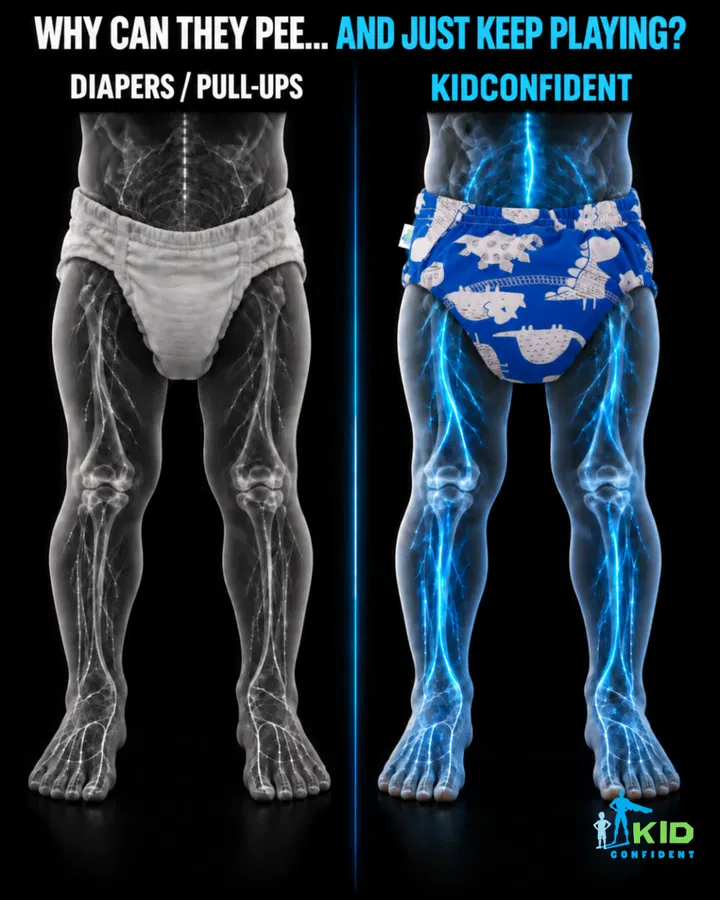
My son’s potty-training problem finally made sense when I realized what happened in the 3 seconds AFTER he peed. For weeks, we had the same weird problem. I’d put him on the potty, he’d insist he didn’t have to go, and then five minutes later he’d pee in his pull-up. But the accident wasn’t the strange part. It was what he did immediately after. Nothing. He wouldn’t stop playing or look down. Half the time he wouldn’t even tell me. If I didn’t notice the sagging pull-up myself, I honestly don’t know how long he would’ve kept going. At first I thought he was distracted. Then stubborn. Then I started wondering if everyone telling me “he’s just not ready” was right. So I did what every potty-training article tells you to do. Timers every 30 minutes. Potty after waking up. Potty before leaving. Stickers. Rewards. Celebrating every successful pee like this kid had just won an Olympic medal. Some of it helped. But there was one problem I couldn’t get around. The more I reminded him, the more I realized I was basically doing the potty training FOR him. I watched the clock. I noticed the squirming. I asked if he had to go. I told him when to sit. If I remembered, we sometimes made it. If I forgot, accident. And one night, after cleaning up another one, I had a thought that completely changed what I started paying attention to. How does a toddler actually learn what “I have to pee” means? Because think about it. We teach them where the potty is. We teach them how to pull their pants down. We tell them what to do when they need to go. But there’s one part we can’t do for them. They have to recognize what’s happening in their own body. And that’s when I noticed something sitting right in front of me. His pull-up. The thing I had specifically bought because it was so good at keeping him dry. For years, that was exactly what I wanted. Pee happens, moisture gets absorbed, kid stays comfortable, crisis avoided. Except now I was trying to teach him to notice pee. And I had him wearing something designed to make the evidence disappear as quickly as possible. That was my “wait... are we doing this backwards?” moment. Because suddenly the fact that he could pee and keep playing made a lot more sense. He wasn’t necessarily choosing to ignore the accident. The wetness just wasn’t very noticeable. And that matters for a reason I’d never really thought about. A huge part of learning comes from feedback. Something happens. You experience the result. Your brain starts connecting the two. But I was trying to build that connection while minimizing one of the most obvious pieces of feedback he could get. So I figured I’d solved it. Regular underwear. That experiment lasted approximately one morning. Because yes, regular underwear gives them feedback. It also gives your couch feedback. And your rug. And their pants. And occasionally your socks. That’s when I realized the actual problem wasn’t choosing between pull-ups and underwear. I needed something in between. Something that would let him notice wetness without making every little accident a full-blown cleanup. And apparently, that’s what training pants were originally supposed to do. Not just look like underwear. Actually help with the training part. That rabbit hole is how I found KidConfident. What caught my attention wasn’t the prints or even the absorbency. It was something they call Feel & Learn. The inside is cotton, so wetness can remain noticeable to the child. But underneath that are absorbent layers designed to help contain smaller accidents. Basically, instead of trying to make the accident completely disappear, they make the feedback manageable. And once I understood that distinction, the entire product made sense. Because an accident can actually teach them something. First they notice, “I’m wet.” Then they start connecting that feeling with, “I peed.” And over time, the goal is for them to get better at connecting what they feel in their body with what comes next. That’s the part I’d been missing. Potty training isn’t only teaching a child where pee belongs. Eventually they have to become aware of what their own body is telling them early enough to do something about it. Timers can’t do that part for them. Stickers can’t do it. I can’t stand beside my son forever asking, “Do you have to go?” At some point, the signal has to become his. Which made me rethink another behavior that had been driving me crazy. He’d sit on the potty, swear he didn’t have to pee, then have an accident shortly afterward. I used to hear “I don’t have to go” and think he was refusing. But what if he genuinely wasn’t good at recognizing the sensation yet? That’s a very different problem. And it’s why, when we switched to KidConfident, I wasn’t initially looking for zero accidents. I was watching what happened AFTER them. Did he stop what he was doing? Did he look down? Did he tell me? Did the accident actually register? Because before a kid can consistently act on a signal, it makes sense that they first have to start noticing it. That little reaction I used to overlook became the thing I cared about most. And suddenly the term “training pants” made a lot more sense too. Pull-ups have a job. Regular underwear has a job. Training pants are for the awkward stage between them. You want enough protection that you’re not terrified to let your toddler sit on the couch, but enough feedback that an accident isn’t completely hidden from the person who actually needs to learn from it. And once I understood that, I couldn’t unsee what we’d been doing. We kept trying to get better at reminding him when the real goal was for him to eventually need fewer reminders. We kept focusing on preventing accidents when some accidents could actually provide useful feedback. And we kept asking, “Why doesn’t he tell me BEFORE?” without thinking enough about how he learns what “before” feels like in the first place. So if your toddler can pee in a pull-up and just keep playing, tells you only after they’ve gone, sits on the potty and then has an accident five minutes later, or seems completely dependent on your reminders... I wouldn’t automatically assume they need another potty-training method. I’d pay attention to something much simpler. What happens in those first few seconds after an accident? Do they actually notice? Because if the answer is “barely,” changing the feedback they get while learning might make more sense than adding another timer, reward chart or potty-training trick. That’s the entire idea behind KidConfident. Enough wetness feedback for them to notice. Enough absorbency to help protect against little accidents. And an underwear-like design that helps bridge the gap between diapers and regular undies. They also give you 60 days to try them with their Parent Promise. But even if you never buy a pair, I wish someone had told me this sooner: When potty training feels stuck, don’t only watch what happens before the accident. Watch the 3 seconds after it. That might tell you more than you think. See how KidConfident works: KidConfident Feel & Learn Training Pants
Performance Signals
- Status
- Still running
- Time Running
- 14 days
- Active Period
- Oct 4, 2026 → Today
- Advertiser live ads
- 71
- First Seen
- Nov 1, 2026
Creative & Links
- Meta page ID
- 199589393248506
- Format
- Image
- Placements
- FACEBOOK, INSTAGRAM, AUDIENCE NETWORK, WHATSAPP, THREADS
- Country
- 🇺🇸 United States
- Landing Page
- kidconfident.co/pages/btsof-01
- Original Ad
- Open in Meta Ad Library
More from Kid Confident
See every ad this brand runs, with run dates, countries and the AI hook and angle of each.
Start 7-day free trialKid Confident
kidconfident.coKid Confident
Shop Infos
- Created
- Mar 8, 2024 · 2y 8m
- Category
- Health › Health Conditions
- Live ads
- 71
- Peak ads (7d)
- 71
Search every indexed Meta ad by niche, format, country and run time, save creatives to boards and track the brands behind them. 7-day free trial.