Elvera ad: Support Healthy Digestion Naturally

Elvera
764 active ads🇱🇹
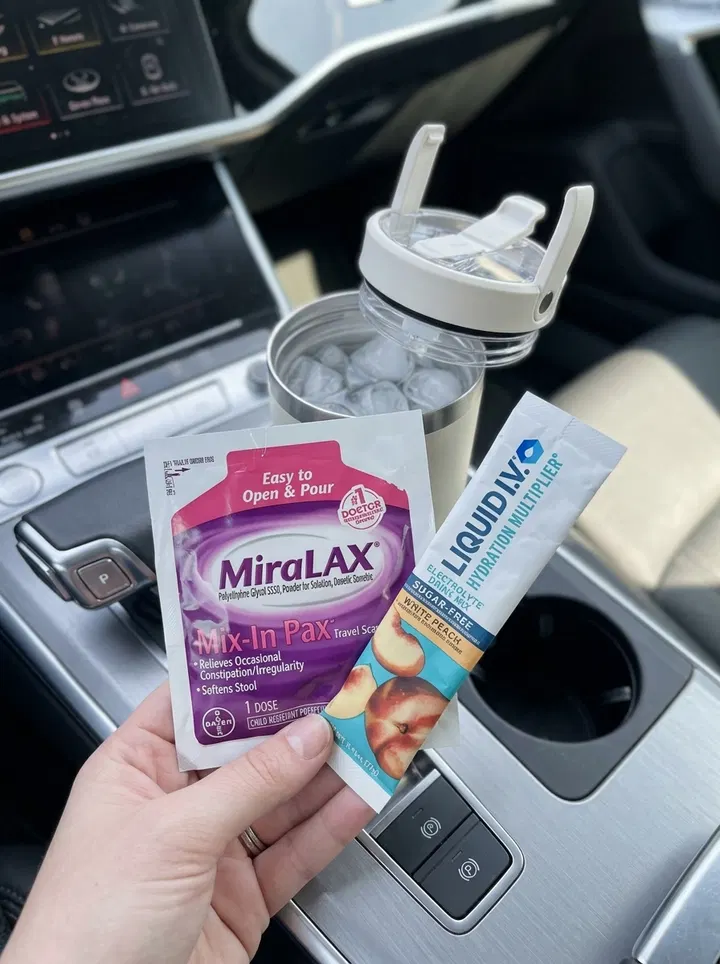
I took care of my 85-year-old neighbor for her inheritance, but she left me nothing — the next morning, her lawyer knocked and said, "Actually, she left you ONE THING." Her name was Dolores Meade. Everyone on the block called her Mrs. Meade and nobody called her Dolores except the mailman, and she didn't like the mailman. I was nineteen. Just aged out of foster care. No family. No one. I'd been renting the basement apartment in the duplex next to her house for two months when she knocked on my door on a Saturday morning and said: "You. The tall one. My rain gutters are full of leaves and I'm not climbing a ladder at my age. I'll pay you forty dollars." That was the beginning. She didn't need a caretaker. She needed someone to do the things her body wouldn't let her do anymore. Gutters, storm windows, the heavy bags of salt for the water softener. She was sharp. Funny in a way that took you off guard because she'd say something devastating with a completely straight face and then go back to watering her tomatoes like nothing happened. One afternoon she watched me reset a sticking hinge on her back door and said: "You've got a craftsman's hands. Somebody should've put you in a trade." Nobody had ever said a thing like that to me. Nobody had ever looked at the one thing I was good at and given it a name. She insisted on cooking me dinner every Tuesday and Thursday. I told her she didn't have to do that. She told me she wasn't asking. "You eat like a boy who raised himself," she said once, watching me microwave a gas station burrito through her kitchen window. "Come over at six. Bring nothing. Don't be late." I came over at six. I brought nothing. I wasn't late. For four years. Every Tuesday and Thursday. Pot roast. Chicken and dumplings. A meatloaf she said was Chester's recipe but she'd changed so many things about it that Chester wouldn't recognize it anymore. She talked about Chester sometimes. Her husband. Thirty years at the tool plant on Delaney and he never once called in sick. Dead eleven years by the time I met her. She said it started in his gut and ended in a hospital room. She didn't talk much about the end at first. She kept Chester's photo on the mantle and his work boots by the back door and his reading glasses on the side table next to his chair and she never moved any of them in the four years I knew her. Two more things of Chester's sat on the shelf above the stove. A dented green lunchbox with the paint chipped off the corners. And a brown prescription bottle with Chester's name on the label, empty for eleven years. I moved them both every Sunday to get down the pill organizer and I never once asked her about either one. I sorted her pills every Sunday night. The plastic Monday-through-Sunday organizer, the four prescriptions, the calcium she took with dinner. I'd sit at her kitchen table on Sunday evenings and fill the little compartments while she told me stories about the neighborhood, about Chester, about the world. She watched me. I didn't know how carefully. I thought the arrangement was simple. She needed help. I needed something I couldn't name. She gave me forty dollars for the gutters and what she really gave me was a kitchen table to sit at and a person who expected me to show up. In four years in the foster system nobody ever expected me to show up. Mrs. Meade expected it. And not showing up was not an option. "Herb. You're three minutes late." "I was..." "You were across the street. I watched you sit in your car for four minutes looking at your phone. Come in. The chicken is getting dry." It was on one of those Sunday evenings that I told her the one thing I didn't tell anyone. That I'd had trouble going to the bathroom for as long as I could remember. That it started in high school, right around the time I was taking pills for my skin. Two years of them. And my stomach was never the same after. She didn't say anything for a long moment. Just set down the pill she was holding and looked at me. "Chester's doctor gave him pills for his sinuses every winter," she said. "Every single winter. Nobody ever asked what they were doing to the rest of him." She picked the pill back up. Put it in the compartment. Didn't say another word about it that night. I didn't think anything of it. I didn't know she was already turning it over. She was the closest thing to a mother I'd ever had. I didn't say that to her. I think she knew. She got sick fast. The kind of fast that doesn't give you time to prepare. Three weeks from normal to gone. I drove her to the hospital. I sat in the waiting room. I went home and sorted her pills into the organizer even though she wasn't there to take them because I didn't know what else to do with my hands. She died on a Thursday. One of our dinner nights. I found out about the will from her lawyer. He called me and said there'd be a reading. That I was invited. He said it in a way that made me think being invited meant something. The lawyer's office was small. Wood paneling. A conference table that seated eight. I sat at the end. There were four of us. Me. A woman from the church. Mrs. Meade had been a member for forty years. A representative from a children's charity. And a woman I'd never seen before, mid-forties, wearing a gray blazer and checking her phone. The lawyer opened the folder. The house, a three-bedroom colonial Mrs. Meade had owned since 1971, went to the children's charity. To be sold, proceeds to the organization. The savings account went to the church. All of it. Building fund. The jewelry, Chester's mother's ring, a pearl necklace Mrs. Meade wore to church every Sunday, two bracelets I'd seen in the velvet box on her dresser, went to the woman in the gray blazer. A great-niece. I learned later she'd visited twice in four years. Once at Christmas. Once when Mrs. Meade was already in the hospital. That was it. The lawyer closed the folder. The church woman shook his hand. The great-niece signed something and left without looking at me. I sat there. Four years. Every gutter. Every storm window. Every bag of salt. Every Tuesday and Thursday. Every Sunday evening sorting pills at her kitchen table while she told me about Chester. Nothing. Not a sentence. Not a mention. Not my name anywhere in the document. I drove home with my hands tight on the wheel and my jaw clenched and I told myself I didn't do it for the money. I told myself it wasn't about that. And it wasn't about the money. It was about the fact that she didn't think of me at all. Four years of showing up and she walked out of this life without putting my name on a single piece of paper. I sat in my apartment that night and I was twenty-three years old and I had no one again. The knock came at 8:15 the next morning. Her lawyer. Standing on my doorstep in a coat and tie, holding something under his arm. A dented metal lunchbox. Green. The paint chipped at the corners. The kind of lunchbox a man would carry to a factory in 1965. "Mrs. Meade left specific instructions," he said. "This was to be delivered to you separately. Not at the reading. The morning after." He held it out. "She was very clear about the timing." I took it. It was heavier than it looked. "There's a letter inside," he said. "And a key. She asked that I tell you the key opens a safe deposit box at First National on Carroll Street. Box 7414. She added your name to the access list six months ago." He paused. "She also asked me to tell you, and these are her words, 'He's going to be angry. Tell him to read the letter before he does anything stupid with that key.'" That sounded exactly like her. I closed the door. Set the lunchbox on my kitchen table. Sat down and stared at it. I didn't open it. I was too angry. Too raw. I'd spent the night convincing myself I meant nothing to her, and now here was this object, Chester's lunchbox, I recognized it from the shelf above the stove, with a letter inside that I didn't want to read because what if it made it worse? What if it was an apology? What if it was an explanation that didn't explain anything? I picked it up. Carried it to the closet in my hallway. Set it on the top shelf behind a box of winter clothes. Closed the door. I was twenty-three. I was grieving. I was angry at a dead woman for not loving me the way I thought she did. I didn't open that lunchbox for twenty-five years. I'm forty-eight now. Sitting in a paper gown on an exam table. The paper crinkles every time I shift my weight. The doctor pulls up my chart on his laptop. Turns the screen toward me. "Herb, you've been on MiraLAX for six years now. Last visit you told me a full scoop wasn't doing much anymore. And you're still going three, four days between." "It's slowing down." "That's what concerns me. I'd like to move you to something called Linzess. It's a prescription. Different mechanism. It works on the lining instead of pulling water in. It's the next step when the osmotic laxatives plateau." "No." The word came out before I'd thought about it. He looked at me. "Herb, this is a straightforward..." "I said no. Not yet. Give me time." He leaned back. Put his hands on his knees. "I can give you ninety days. But if things don't change, we're having this conversation again. And the conversation after that one is not one either of us wants to have." I drove home. Sat on the edge of my bed. My hands were shaking and I didn't know why. I knew the signs, even if I hadn't named them yet. The bloating that started after lunch and didn't let go until the next morning. The mornings in the bathroom, straining for thirty minutes, staring at the tile, coming out with nothing. The MiraLAX container next to the coffee maker that I went through like sugar. The scoop that used to be half. Then full. Then heaping. The days between. Three, then four, then five. Then back to three but only because I doubled the dose. And something about the way he'd said it. A prescription. The next step. Different mechanism. Take this. Trust me. And then it hit me. Chester. Chester, dead at seventy-one. The photo on the mantle. The work boots by the back door. The reading glasses on the side table. The brown prescription bottle on the shelf above the stove. Chester's name on the label. Kept for eleven years, the way Mrs. Meade kept everything of his. I'd moved it with two fingers every Sunday night for four years to get to the pill organizer. Antibiotics. That bottle was his antibiotics. The ones his doctor called in every winter for his sinuses. And Mrs. Meade's voice, from a Sunday evening twenty-five years ago: Chester's doctor gave him pills for his sinuses every winter. Nobody ever asked what they were doing to the rest of him. I got up. Walked to the hallway closet. Reached past the winter coats, past the boxes I'd never unpacked from my last move. Back behind everything. Top shelf. The lunchbox was still there. Dusty. The green paint still chipped. Twenty-five years in a closet. I carried it to the kitchen table. Sat down the same way I used to sit when I sorted her pills. The latch was stiff. I had to work it with my thumb. It opened with a click that echoed off the walls. Inside: a sealed envelope, yellowed at the edges. My name on the front in her handwriting, the same handwriting I'd seen on grocery lists and recipe cards for four years. Steady. Precise. The handwriting of a woman who'd learned penmanship when penmanship still mattered. And a key. Small. Brass. Taped to an index card that read: First National. Carroll Street. Box 7414. I picked up the envelope. Slid my finger under the seal. The paper was dry and it tore unevenly. A stack of pages. Her handwriting filling every line. Herb, If you're reading this, I'm gone. And if you're reading this the morning after the will reading, you're angry. I know you. You're sitting at your kitchen table with your jaw tight and you're thinking I forgot you. I didn't forget you. I could never forget you. You were the best thing that walked into my life after Chester died and I need you to understand that what I left you is worth more than the house or the savings or Chester's mother's ring. I left you Chester. Not his things. His story. The one his doctors never told him. The one I spent the last four months of my life figuring out because it was too late for Chester but it is NOT too late for you. Chester took antibiotics for his sinuses every winter for fifteen years. Every time the pressure set in behind his eyes and the congestion wouldn't clear, his doctor called in a prescription. Sometimes two rounds back to back if the first didn't do it. He took every pill, every time, the way the doctor told him to. He needed them. They worked. His sinuses cleared and he went back to the plant and that was that. Nobody ever followed up on what those pills were doing to the rest of him. It started slow, Herb. The way everything that matters starts slow. Around year four or five of those winter prescriptions, Chester started having trouble going to the bathroom. Not the kind of trouble you bring up at dinner. The kind you deal with alone. He'd be in there for thirty minutes. Nothing. Or next to nothing. Hard, dry, like his body had forgotten how to do the one thing it's supposed to do every morning on its own. He told his doctor. His doctor said eat more fiber. Drink more water. Chester ate his vegetables and drank his water and it didn't make one bit of difference. Then somebody at the drugstore told him about MiraLAX. A scoop in his coffee every morning. That was the beginning of the end, and neither of us knew it. Year one on the MiraLAX, it worked. Half a scoop and things moved. He thought the problem was solved. Year three, half a scoop wasn't enough. He went to a full. Then a scoop and a half. His doctor said that was fine. Keep going. Year five, even a full dose wasn't reliable. Days between. Three, then four. I'd watch him come out of the bathroom with his jaw set and his eyes tired and neither of us said a word about it. Year seven, his doctor added a second product. A different pill. For the same problem. Two products now, doing the job Chester's body used to do on its own. Year nine, he woke me up at three in the morning. He was gray. Sweating. Couldn't stand up straight. His stomach was hard and swollen like something had stopped inside him. We went to the emergency room. They told us he was impacted. Severely. That means everything had stopped. Completely. I won't describe what they had to do, Herb. I'll say it was the worst night of our marriage and we'd been married forty-one years. After that, it kept happening. Three more times in the next two years. The last time, the surgeon said there was nothing left to do. The wall of Chester's colon was too thin. Too worn. He needed a colostomy bag. Chester was sixty-nine years old. A man who dug that whole garden out of clay with a spade was sitting in a recliner with a bag attached to his side, and the look on his face told me he'd already decided he was done. He died two years later from an infection after a follow-up surgery. Seventy-one years old. Fifteen years of antibiotics nobody followed up on. Ten years of laxatives that covered what was wrong without ever fixing it. And I buried my husband anyway. For years after he died, I accepted it. Bad luck. Weak stomach. These things happen. That's what the doctor said. That's what the church said. That's what the world says when a man dies of something that started with a pill nobody thought twice about. Then I got angry. And when I get angry, I don't yell. I read. I spent four months at the library. At the computer. Printing articles. Talking to a pharmacist at the Walgreens on Fifth Street who was patient enough to explain things to an old woman who wouldn't stop asking why. Here's what I found, Herb. And I'm going to say it plain because I'm not a scientist and I'm not going to pretend to be: Chester's antibiotics cleared his sinuses. That's what they do. That's all they were supposed to do. And his sinuses got better every time. But the pills didn't just stay in his sinuses. They went everywhere. Including his gut. And what they did there, nobody checked. Nobody asked. Nobody followed up. European researchers gave twelve healthy men a four-day course of antibiotics and tracked what happened to the bacteria in their gut for six months. Most of the bacteria came back within a few weeks. That's what Chester's doctor would have told him. "Your gut bounces back." But nine species that had been in every single one of those men before the antibiotics were still undetectable six months later. Nine species. Gone. From four days of pills. Four days. Nine species. Still gone at six months. And those were young, healthy men who had taken one course. Now count Chester's courses. Fifteen winters. Sometimes two rounds back to back. Twenty-five, maybe thirty courses over fifteen years. The pharmacist at the Walgreens explained which nine, and why it mattered so much. Those weren't random bacteria. They were the ones that made a chemical called butyrate. I had to ask him to write the word down. He said butyrate is the signal. It's what tells the muscles in your colon to squeeze. To move things along. Not water. Not bulk. Not fiber. A chemical signal, made by bacteria, that starts the wave that pushes everything through. Without the signal, everything sits. The food sits there. The waste sits there. Nothing moves until you force it with a powder or a pill. And the powder doesn't rebuild the signal. It just pushes water into the colon so things slide through. Every day. Every scoop. For the rest of your life. That's what MiraLAX did for Chester. It forced what the signal used to do on its own. And every year the dose went up because forcing is not fixing. The pharmacist explained it to me in a way I could finally understand. He said to think of Chester's gut like a town after a flood. The flood came through. Wiped out half the town. Most of the families came back. Cleaned out their basements. Reopened their stores. Life went on. But nine families never came home. And those nine were the ones who ran the power station. The town has houses. It has streets. It has stores. But there is no electricity. That is what Chester's gut was. A town with no power. And every scoop of MiraLAX was a generator running in somebody's driveway. It kept the lights on for an hour. It never rebuilt the power station. Nobody told Chester. Nobody told me. Not in fifteen years of prescriptions. And nobody ever checked whether the bacteria that make the signal were still there. Not once. Fifteen years of antibiotics and ten years of laxatives and not one doctor in all that time ever looked at the one thing that actually mattered. Here is the part that made me sit down on the floor of the pharmacy, Herb. Nobody ever checked whether Chester had anything in his body to feed the bacteria that survived. Because the survivors can repopulate. They can rebuild. But only if they're fed. And they are picky about what they eat. There is a compound. The pharmacist called it anthocyanins. That's his word, not mine, and he had to write it down for me twice. It's what makes a dark berry dark. That deep purple, almost black. The color isn't decoration. The color IS the compound. And what it does is feed the bacteria that make the signal. Not replace them. Not ship in new ones from a bottle. Feed the ones that survived the flood so they can repopulate on their own. Published research showed that people who took the right kind of dark berry saw their gut bacteria start to come back. The species that make butyrate expanded. The ones that protect the lining of the colon expanded. Not because something was shipped in from outside. Because something already there finally got fed. The pharmacist said most people go their whole lives on almost none of them. They aren't in the bread or the meat or the potatoes. Chester ate the way everybody around here eats. He had almost nothing in him. Fifteen years of antibiotics. And not one person ever asked whether my husband had a single one of these compounds in his body. The dose matters as much as the compound. The pharmacist wrote the number down for me: thirty-six hundred milligrams of the berry they come from, every day, concentrated. Not a spoonful of syrup. Not a splash. That is what the studies that showed results actually used, and almost nothing you can buy comes anywhere near it. Where they come from, and how you have to get them, is in the box. I couldn't fit it all in a lunchbox, and I know you, Herb. If I handed you a folder full of medical studies at twenty-three, you'd throw it in the same closet you're about to throw this box in. I also put a checklist in the box. The pharmacist helped me write it. Five things to look for when you find it. Five things that matter. Follow it exactly. Don't skip steps. Don't buy the cheap one. And don't reach for a probiotic, Herb. I know you will. That was the first thing I tried for Chester. There's a study in the box that will show you why it's the wrong answer. Promise me you'll read it before you buy anything. You'll need all of this someday. I know because I watched you. When you weren't looking, I saw you excuse yourself from my dinner table three times in one evening and come back looking pale. I saw you hold your stomach walking to your truck after Thursday supper. I saw the small brown bottle in your glove box, the one from the drugstore. The kind that makes you go. And I know about the pills you took for your skin when you were sixteen. You told me that yourself, sitting right here at this table. Two years of them. And your stomach was never the same after. I noticed the things you didn't want me to notice because that is what I do. That is what I did with Chester for our whole marriage and I wasn't fast enough. I won't make that mistake twice. When your doctor tells you to take something stronger for your gut, and he will, someday, open the box. Read what I found. And then decide for yourself. Chester trusted his doctor. I trusted his doctor. We were all trusting the wrong thing. Don't trust the next prescription, Herb. Ask what took the signal away in the first place. That is the question that would have changed my husband's life. I won't let it go unasked for yours. I love you like you were my own. Dolores I read it three times. Then I put my head on the kitchen table and I cried. Not the angry crying from the night before. A different kind. The kind that comes when you realize someone saw you, really saw you, and you didn't know it. The kind that comes twenty-five years too late. She hadn't forgotten me. She'd been watching me the entire time. The way she watched Chester. The way she watched everything. Quiet, careful, noticing the things no one else noticed. She saw me excuse myself from her table. She saw the bottle in my glove box. She saw a pattern she recognized because she'd watched it take her husband, and she spent her last months alive trying to make sure it didn't take me. And she was right. Twenty-five years later, sitting at my own kitchen table with a MiraLAX container next to the coffee maker and a doctor pushing a prescription, she was right about all of it. I drove to First National the next morning. Hadn't been inside a bank in years. Showed my ID. They looked up the box. My name was there, just like the lawyer said. Added six months before she died. The safe deposit box was small. Inside it was a manila folder, thick, held shut with a rubber band that snapped when I tried to slide it off. Studies. Printed from medical websites and research journals. Some highlighted in yellow, some in pink. Margin notes in her handwriting, the same steady hand as the letter, but smaller, more cramped, as if she was running out of time and trying to fit more on each page. And paper-clipped to the inside of the folder, a single index card. Her handwriting. Block letters. Underlined twice at the top: HERB. FOLLOW THIS. DO NOT SKIP STEPS. Must be COLD-EXTRACTED. Not syrup. Not "from concentrate." Heat destroys the anthocyanins and the anthocyanins are the only part that feeds the bacteria that matter. If it was cooked, you are buying nothing. Must say EXTRACT. (Not "blend." Not "powder." Not "syrup." Extract means they concentrated it so that one serving carries the weight of a bowlful instead of a spoonful. "Blend" means whatever they want it to mean. If the front of the bottle won't say extract, it isn't one.) Must be a REAL DOSE. The equivalent of 3,600 milligrams of the berry in every serving. (This is what the studies that showed results actually used. Most bottles are a fraction of it. Don't settle for less.) Must be THIRD-PARTY TESTED. (This means an outside lab checked what is really in the bottle and published it. If they won't show you what's in it, don't buy it.) Don't trust the reviews. Trust the label. That was Mrs. Meade. Even from the grave, she was handing me a grocery list and telling me not to come back with the wrong thing. I set the checklist on the passenger seat and started reading the studies. The first printout had a section highlighted in yellow and a note next to it in her hand: "THIS. This is what happened to Chester." I had to put the folder down before I finished the first page. The studies described what the letter explained in plain language. Researchers tracking what happens to the gut after antibiotics. Species that vanish in days and stay vanished for months. The nine that were still undetectable at the six-month mark in every study she'd found. And it mattered enormously which nine. They weren't random. They were the bacteria that produce butyrate. Published data showed that women with slow-transit constipation had roughly half the butyrate of healthy controls. Half the signal. That is what "I sit there for twenty minutes and nothing happens" actually is. A town with no power. Chester's MiraLAX never touched the missing bacteria. Ten years. The dose went up every year. The bacteria that made the signal never came back. I sat in my car in the bank parking lot and stared at the page. Mrs. Meade had written in the margin: "They kept giving him more powder when what he needed was for someone to feed what was left." She'd read past the laxatives, too. There were pages on why every step of the standard progression fails the same way. MiraLAX forces water in. The prescription pills work on different channels but still push from the outside. Every step up the ladder does the same thing, louder. Not one of them asks why the signal went dead in the first place. Mrs. Meade had written next to a chart of the treatment pipeline: "They gave him a stronger push. Nobody gave him anything to push with." Then I found the section she'd flagged for me. The one she knew I would need. The probiotic section. She'd drawn a box around the entire page in red ink. At the top, in her hand: "HERB. YOU WILL WANT TO BUY THIS. READ FIRST." The study was clear. Researchers gave people probiotics after antibiotics. Compared them to people who took nothing at all. The people who took nothing recovered faster. The probiotic group's native bacteria came back, in the researchers' words, "markedly delayed and persistently incomplete." Taking probiotics after antibiotics had actually slowed recovery down. Mrs. Meade had written beside it: "Chester took probiotics for three years after I read something in a magazine. His doctor said they couldn't hurt. This study says otherwise." The next note: "The bacteria that make the signal cannot survive inside a capsule. The pharmacist said they die on contact with air. His word was 'strictly anaerobic.' They cannot survive in a bottle on a shelf. The species that run the power station are not for sale. That is a fact of biology, not marketing." I kept reading. My hands were shaking. Not from the cold. From anger. From grief. From the realization that an old woman with a library card and a patient pharmacist had figured out what Chester's doctors missed in fifteen years. The next section of the folder answered the only question her letter had left me holding. What feeds the survivors. She'd written it across the top of the page in block capitals, underlined twice, the way she wrote anything she didn't want misread. ELDERBERRY. COLD-EXTRACTED. HEIRLOOM. Underneath, in her ordinary hand: "The pharmacist said the dark color is the compound itself. The deep purple. Not decoration. The compound. And it feeds the ones that survived the flood." She'd printed studies from European research groups. She'd highlighted the same kind of finding in two of them with the same yellow marker: In one study, people who took standardized dark berry polyphenols for three weeks saw a species that protects the lining of the colon expand threefold in some of them, and keep climbing for weeks even after they stopped. Gut diversity went from hundreds of species to over nine hundred. In a separate study, one week of elderberry expanded the two biggest butyrate producers. The ones that make the signal. The ones that run the power station. Not because something was shipped in from a capsule. Because something already there, barely hanging on, finally got fed. Mrs. Meade had underlined the word "fed" three times. And clipped to the back of that study, a single page with five words across the top in red pen. NOT A PROBIOTIC, HERB. I read that page twice, because I'd been planning to drive to the health food store on my way home. She'd written at the bottom, in her smallest handwriting: "A probiotic sends in strangers. The ones your gut actually needs for this cannot survive in a capsule. And the study shows that sending strangers in after antibiotics actually slows down the recovery of whoever is still there. You are not adding help. You are crowding out the survivors." Below that, circled: "Feed what survived. Don't crowd it out." She'd written in the margin of the next study, in her own words: "Most of what they sell you is trying to replace what's gone. This is the only thing I found that feeds what stayed." I found one more margin note, near the back. She'd written "too late for Chester" and then crossed it out. Pressed so hard with the pen that the cross-out tore the paper slightly. Underneath it, the one she let stand: "In time for Herb." She'd assembled all of this in four months. Dying. Printing studies at the library. Asking a pharmacist to explain words she'd never heard before. For me. I closed the folder. Pressed it against my chest. And I sat in that bank parking lot and let twenty-five years of anger dissolve into something I didn't have a word for. She didn't leave me nothing. She left me everything. I went home and did what any man in my position would do. I ignored what she told me. Not completely. I read it. I understood it. I set the checklist on my kitchen table next to the folder and I told myself I'd follow it. But I also drove to the health food store on Route 9 and bought a forty-dollar bottle of probiotics from the refrigerated case. Fifty billion CFU. The label looked serious. The woman at the counter said it was their best seller for gut health. Mrs. Meade's folder had an entire section explaining why probiotics were the wrong answer. She'd drawn a box around it in red ink. She'd written my name at the top. I bought them anyway because I'm the kind of person who reaches for the obvious fix even when a dead woman specifically told him not to. Mrs. Meade knew me better than I knew myself. I took those capsules for three weeks. Every morning with breakfast. Waiting for things to change. It got worse. Not a little worse. The bloating went from bad to constant. My gut felt like something was fighting in there, and whatever was fighting was losing. The days between went from four to six. I was more backed up than I'd been in over a year. On a Wednesday night I was sitting at the kitchen table staring at the bottle and Mrs. Meade's folder was right there. Right next to it. Where it had been the entire time. I opened it to the section on probiotics. The one with the red box. The one with my name at the top. The one I'd skipped. The study. Researchers gave people probiotics after antibiotics and compared them to people who took nothing at all. The people who took nothing recovered faster. The probiotics had crowded out whatever native bacteria were trying to come back. Three weeks. I had been making it worse. Doing exactly what Mrs. Meade told me not to do. She'd written the warning. She'd boxed it in red. She'd said DON'T REACH FOR A PROBIOTIC. And I did it anyway because I was forty-eight years old and still the same kid who tries to fix a gutter with the wrong screws. I put the probiotic bottle in the trash. And then I did what I should have done from the start. I sat down with Mrs. Meade's checklist and I went through every elderberry product I could find online, one by one, checking each against her five criteria. The gummy vitamins. Elderberry syrup cooked at high heat, pressed into a gummy with sugar and gelatin. Failed step one. Store-brand elderberry capsules. "Elderberry blend" on the label. Blend. A word that means whatever they need it to mean. Failed step two. The few that were honest extracts. 200 milligrams. 400. One at 800. Against the thirty-six hundred in her studies. Failed step three. I was crossing off everything. Then I found one that passed all five. Elvera. Cold-extracted heirloom elderberry, never heated. Step one. The word EXTRACT right across the front of the bottle instead of "blend." Step two. 3,600 milligrams equivalent per serving, the exact dose in Mrs. Meade's studies. Step three. Third-party tested in the USA, results published. Step four. And I didn't order it because of the reviews. I ordered it because of the label. Step five. Every line on her checklist. Check. Check. Check. Check. Check. I could almost hear her: "See? Was that so hard?" I ordered it. More expensive than the probiotic from the health food store. Mrs. Meade didn't send me to a safe deposit box to save twenty dollars. It came four days later. I took the first capsule after dinner and sat down on my back porch and waited. Nothing dramatic that first night. I didn't expect dramatic. The probiotic had taught me what happens when you rush. Day three. I woke up, went to the bathroom, and something was different. Not a miracle. Just different. Like my body remembered how to do a thing it had forgotten. I went on my own. Without the MiraLAX. Without the straining. Without the thirty minutes of staring at bathroom tile and walking out with nothing to show for it. I sat there for a minute afterward, not because anything was wrong, but because I couldn't remember the last time that had happened. That could have been coincidence, I told myself. But I'd taken the probiotic for three weeks and things had gotten worse. Not once had my body done what it just did. This was different. This was real. Week one: the bloating. I was getting dressed for work and my pants buttoned without me holding my breath. The gut that had been pressing against my belt for years was quieter. Not flat. Just quieter. Like something had stopped swelling from the inside. Week two: the mornings. I woke up and my body just worked. Not every single day. But more days than not, I went on my own. No MiraLAX. No planning. No sitting on the edge of the bed wondering whether today would be a good one or a bad one. I hadn't had a week like that in six years. Week three: I was in my shop. I'd gone into furniture-building, the slow kind, hand-cut joinery, the craft Mrs. Meade had told me to make a life out of when I was nineteen. I was halfway through a mortise joint and I realized my gut wasn't on my mind. Not in the background. Not slightly. Not at all. For the first time in years, I was just working. That evening I walked into the bathroom and went without thinking about it. The way you're supposed to. The way Chester used to, before the antibiotics took what they took and nobody followed up. That's when I started crying. Because that was what Mrs. Meade had been trying to give me. Not a supplement. Not a study. The simple act of going on your own, in your own body, without forcing it. The thing Chester lost. The thing nobody helped him get back. Week four: I realized I hadn't opened the MiraLAX container in three weeks. It was still sitting next to the coffee maker. Same spot. Same scoop resting on the lid. I hadn't touched it. Not because I was being brave. Because I hadn't needed it. I moved it to the cabinet under the sink. Then the garage. Then, on a Sunday, I dropped it in the trash on my way to church. That felt like the biggest thing I'd done in years. Week eight: went back for my follow-up. The doctor pulled up my chart. Looked at the screen. Looked at me. Back at the screen. "Herb." A pause. "You're not on MiraLAX?" "No sir." "How long?" "Seven weeks. Maybe eight." He scrolled. Read it again. His eyebrows pulled together. "And you're going on your own? Regularly?" "Most mornings. Sometimes I skip a day. But it comes back on its own." He closed the laptop halfway. Leaned forward. "Whatever you're doing, don't stop." "No Linzess?" "No Linzess. Not with what I'm hearing. Not even close." He opened the laptop again. "I want to see you in six months. I want to make sure this holds. But Herb, six months ago we were heading toward a prescription. And the conversation after that one was not going to be pleasant." He didn't ask what I was taking. Didn't endorse it. Didn't say the word "supplement." Just shook his head the way a mechanic shakes his head when you bring in a car he expected to be totaled and it runs clean. I drove to the cemetery that afternoon. Her headstone is small. Gray granite. Next to Chester's. Dolores Mae Meade. Beloved wife of Chester. I stood there with the folder in my hands. The one she'd assembled. The studies. The margin notes. The checklist on the index card. "You left me everything," I said. The wind moved through the trees. "I thought you forgot me. For twenty-five years I thought you forgot me. And you were the only person who ever really saw me." I set my hand on the stone. Cold granite. The October sun low behind me. "Chester would be proud of you. You figured out what his doctors couldn't. And you left it for a kid who wasn't smart enough to open it. Or follow the checklist." A long pause. "Thank you, Mrs. Meade." I drove home. Set the folder on my kitchen table. Took a capsule with a glass of water. And I sat in the same chair where I used to sort her pills and I took it. That was seven months ago. I haven't touched MiraLAX in months. Linzess never happened. The "next step" the doctor warned me about never came. I stopped planning my mornings. I stopped counting the days between. I stopped staring at bathroom tile wondering if today would be another nothing day. Regular. On my own. Most mornings, the way it's supposed to be. Not forcing the signal. Feeding what makes it. That's the line Mrs. Meade would have used if she'd lived long enough to see it work. I'm forty-eight years old. I grew up with no one. But I had Mrs. Meade. And Mrs. Meade left me the one thing that mattered more than a house or a savings account or a ring. She left me the truth about what happened to her husband. And what she found changed my life. I'm writing this because Mrs. Meade can't. She spent four months assembling research for one person. Me. She didn't have Facebook. She didn't have a platform. She had a library card and a pharmacist and a lunchbox and not enough time. If she'd had more time, she would have told everyone. I know that because I knew her. She would have knocked on every door on the block. So I'm knocking for her. You're standing where I stood seven months ago. Where Chester stood for ten years. Chronic constipation. A laxative you've been taking so long you've stopped thinking of it as a product. Days between that keep stretching. A doctor who keeps saying "let's try something stronger." You have every one of Chester's markers. And your doctor is saying the same words his said. The next step. The prescription. A different mechanism. One path leads where Chester's led. Fill the prescription. Take it every morning. Watch things move and trust that the movement means you're healing. Hope the dose stays the same. Hope the bloating is just what you eat. Hope the days between stop stretching. And every year, sit in that room and hear "we'll adjust the dose" while the bacteria nobody is testing for stay gone and the signal nobody is measuring stays dead. Chester walked that path for ten years. Perfect compliance. Every scoop, every morning. They gave him a bag at sixty-nine. Then they buried him at seventy-one. There's another path. The one Mrs. Meade spent her last four months building. The one I was too angry and too young to walk for twenty-five years. Ask what took the signal away in the first place. Find out whether the antibiotics you took at sixteen, or twenty-five, or every winter for a decade, wiped out the bacteria that matter and nobody ever checked. Count your courses. Not the ones you remember. All of them. Feed what survived. Track your own progress. Walk into your next appointment and tell your doctor you haven't touched the MiraLAX in six weeks. That's what I did. That's what Mrs. Meade wanted me to do. It's what she wished she'd known in time for Chester. She ran out of time for Chester. She didn't run out of time for me. And you're reading this now. Which means she didn't run out of time for you, either. P.S. The product Mrs. Meade's checklist led me to is called Elvera. You can check availability here: https://tryelvera.com Cold-extracted heirloom elderberry. 3,600 mg equivalent per serving. Third-party tested in the USA. No fillers. When I first ordered it, I didn't know they had a 30-day money-back guarantee. I wish I had. Would have saved me the anxiety during those first weeks of waiting. If Elvera doesn't work for you, you get every penny back. No questions asked. In ten years of laxatives, nobody ever offered Chester a refund when the scoop stopped working and the dose kept climbing. The system doesn't do refunds. Elvera does. Mrs. Meade would have appreciated that. She hated wasting money almost as much as she hated being lied to. P.P.S. Here's what I'd tell you to do, because it's what I did: take a capsule after dinner. Give it a few days. You're not going to feel fireworks. What you're going to notice is the absence of the problem. A morning where you go on your own and don't think about it. A day where the bloating just isn't there. That's not placebo. I took a forty-dollar probiotic for three weeks and things got worse. The first week on Elvera, things started working the way they used to before the courses nobody followed up on. That's cold-extracted anthocyanins feeding the bacteria that have been starving since the antibiotics took what they took. Not forcing. Feeding. Mrs. Meade's checklist had a note at the bottom I didn't mention: "If nothing changes in two weeks, the dose is too small and you bought the wrong one." Even from a safe deposit box, she was still telling me what to do. P.P.P.S. Right now, Elvera has a buy-two-get-one offer. Three bottles for $67.20. That's what I ordered. Mrs. Meade didn't send me to a safe deposit box to save fourteen dollars, and she wouldn't want you settling for the cheap one either. More than a hundred thousand women have ordered Elvera. They also include a free gut health guide with every order, which I read cover to cover the first night. It's not a sales brochure. It's the kind of thing Mrs. Meade would have printed out at the library and stuck in the folder. If Elvera is in stock when you check, don't wait. Chester ran out of time. Mrs. Meade ran out of time. You still have yours. P.P.P.P.S. For the ones reading this about somebody else. The daughters up at midnight because your mother hasn't gone in five days and she's adding another scoop to her morning coffee. The husbands watching your wife plan every trip around bathroom access and never saying it out loud. The women watching someone you love take the same path Chester took, year after year, scoop after scoop, while the doctor keeps saying "let's try something stronger." This is for you too. The missing bacteria don't care whose body they're in. Mrs. Meade didn't do this research for herself. She did it for her husband, too late, and then she did it for a nineteen-year-old with nobody, twenty-five years early. She left a lunchbox for someone she loved enough to sit in a library for four months while she was dying. You're reading this because somebody, maybe you, loves someone that much. Mrs. Meade would have understood. She was you. P.P.P.P.P.S. Do not forget about their 30-day money-back guarantee.
Performance Signals
- Status
- Running at last crawl (Nov 1, 2026)
- Time Running
- 58 days
- Active Period
- Sep 2, 2026 → Nov 1, 2026
- Advertiser live ads
- 764
- First Seen
- Oct 28, 2026
Creative & Links
- Meta page ID
- 1055450287657689
- Format
- Image
- Placements
- FACEBOOK, INSTAGRAM, AUDIENCE NETWORK, MESSENGER
- Country
- 🇱🇹 Lithuania
- Landing Page
- tryelvera.com/pages/real-constipation-solution
- Original Ad
- Open in Meta Ad Library
More from Elvera
See every ad this brand runs, with run dates, countries and the AI hook and angle of each.
Start 7-day free trialElvera
tryelvera.comElvera
Shop Infos
- Created
- Nov 14, 2025 · 1 year
- Category
- Health › Food & Drink
- Live ads
- 764
- Peak ads (7d)
- 764
- Copies of this ad
- 1
Search every indexed Meta ad by niche, format, country and run time, save creatives to boards and track the brands behind them. 7-day free trial.