OnAce ad: The group goes on without you.

OnAce
🇩🇪
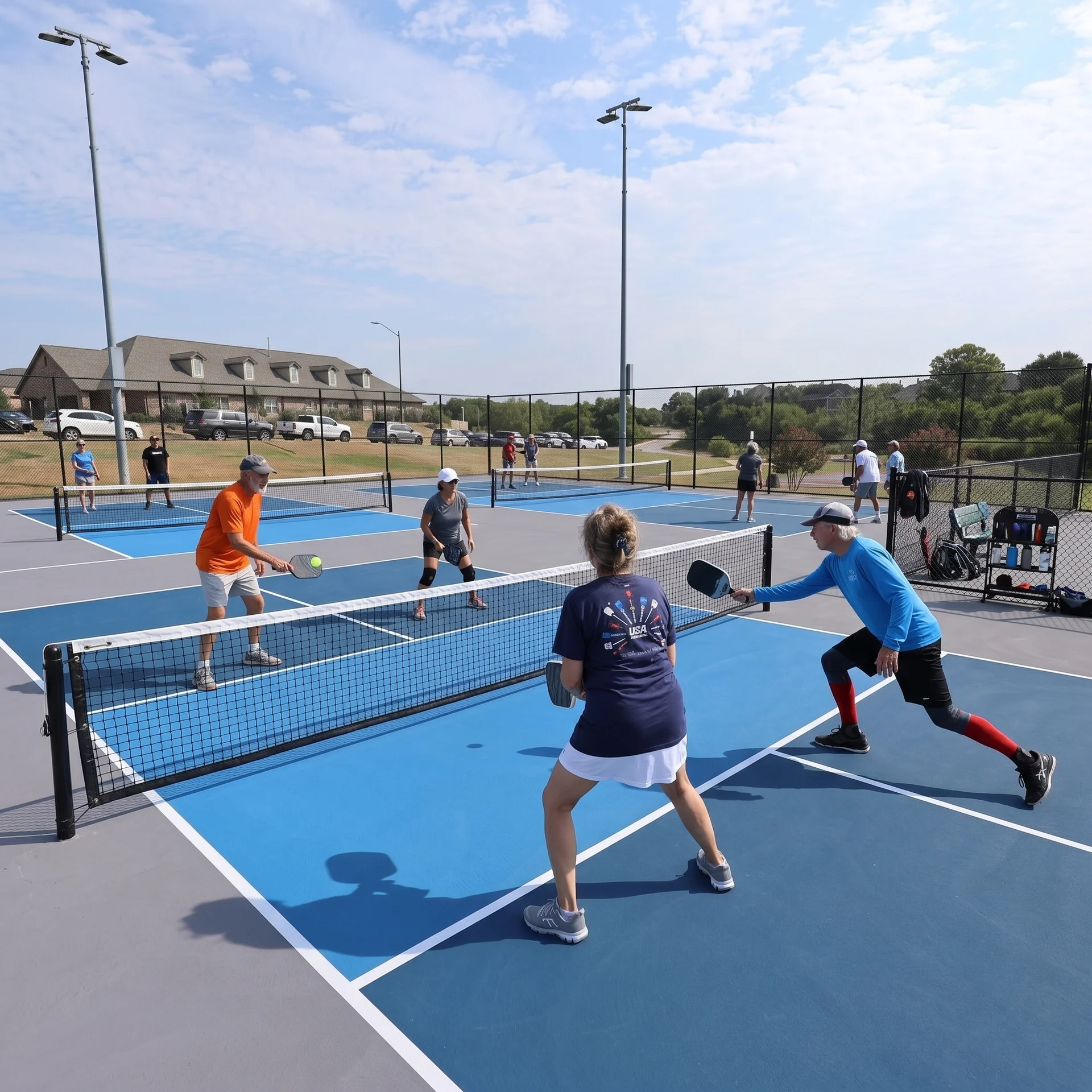
I put the last $80,000 my wife and I had against the billion-dollar shoe industry that laughed at me. Fourteen years inside it. One meeting where I showed them why their shoe does nothing for pickleball movements. One sentence from the man in charge that made me walk out and empty my savings. By the end of this you'll know what's missing under your foot, and why it took one guy and a garage to put it there. That meeting was three years ago. They've sold millions of pickleball shoes since. Every one of them is still missing the same thing, and every one of them was shipped on purpose. But you need to know who this is about first. Because it isn't about me. It's about you, if you play three or four times a week, feel fine on the court, and then pay for it on the drive home and on the first step out of bed the next morning. It's about you, if you've got a drawer full of inserts that each helped for a few weeks and then stopped. It's about you, if a doctor has looked at you for two minutes and said the word "age." What I showed that room explains all of that. It explains why everything you tried worked for a while and then quit. And it explains why the people who build your shoes already know, and decided it wasn't worth fixing, because they profit from it. Read this to the end. Then go pull the insole out of your court shoe. You'll see what I saw. My name is Dan. I spent 14 years in product development at a court shoe brand you've almost certainly worn. Tennis, padel, pickleball. If you bought a court shoe between 2011 and 2025, there's a high chance my signature is on the spec sheet. I also play. I started pickleball at 52 because my wife made me. Three weeks later I was on the court four times a week. Tuesday league, Thursday open play, Saturday and Sunday mornings. It became my whole social life. Like it probably did for you. Month nine was the first time I limped to the car. I didn't think anything of it. Three hours at the kitchen line, you're going to be sore. By month eleven I was lying in bed in the morning dreading putting my foot on the floor. Hand on the nightstand. Then the wall. Then the doorframe. My wife said I walked to the coffee maker like something was broken. On the court I was fine. Once I was warm, I played through. It was after. The drive home. The stairs that night. And the first step the next morning, every single time, like a nail going into my heel. Then my Tuesday group started to notice I was slower at the kitchen. Nobody said anything. They just started texting the other guy first. So I did what you did. Ice. Rest. A brace. Two weeks off the court, which felt better, right up until the first session back. Drugstore inserts. Then the "performance insole" my own company sold for $45. Then $400 custom orthotics from a podiatrist who cast my foot standing still. Then a brand-new pair of court shoes with the word PICKLEBALL printed on the tongue. Every one of them helped. For two weeks. Three at the most. Then I was back to the wall and the nightstand. The podiatrist gave me the sentence you've heard. "You're 53. It's wear and tear. Ice it, cut back to twice a week, more cushion." I was 52 the year before. Nothing hurt the year before. The thing that changed wasn't my birthday. So I did what I'd done for 14 years at work. I measured it. Three months of nights and weekends. Video. Pressure plates. The lab after everyone went home. And then, in the spring of 2022, the company called the meeting. You have to understand what that meeting was. We were a tennis shoe company. A big one. And pickleball had just gone from a thing your aunt did to the fastest growing sport in America. Every brand in the building wanted a pickleball shoe on the shelf before summer, and the man at the head of the table had flown in to make sure we were first. The plan took four minutes. Take the tennis model. New colorway. Print PICKLEBALL on the tongue. Ship in 90 days. Forty people in the room and not one of them looked up from their phone. I was the last item on the agenda. Thirty minutes. Twelve slides. Half the room had already started packing up. Slide one. An hour of pickleball and a set of tennis, frame by frame, counting something nobody counts. Not shots. Stops. Tennis, you run. The foot rolls heel to toe, the load goes into the length of the foot. About 40 hard sideways stops in a set. Pickleball at the kitchen line, you never run. Split step, stop, reach, stop. Over 200 hard sideways stops an hour. Five times as many, on a court a quarter of the size, every one landing on the same spot on the foot. A few phones went down. Slide three. The pressure plate. Walking puts one times your bodyweight through the foot, straight down. A hard stop at the kitchen line puts three to four times your bodyweight through the foot, and it comes in from the side. Then I held up the insole from the tennis model. The one we were about to ship in the pickleball shoe. On the spec sheet it's "liner, standard." Same flat walking foam, same supplier, same mold as our running shoe. It costs 80 cents. I pressed my thumb into the middle of it, under the projector, in front of the whole room. Flat. Nothing in it to catch a load coming in from the side. And I told them what catches it instead. The band under your arch. Your plantar fascia. Every stop, every game, three or four times a week. Each sideways stop that nothing catches pulls a few fibers in that band apart. The tears add up faster than the body can close them. After months of that it's not an inflamed band anymore. It's a degenerated one. Hundreds of small tears that never get the chance to heal before the next session opens them again. That's why a player feels fine on the court. A warm, moving band doesn't hurt. It's the drive home and the first step the next morning, when it's cooled and tightened, that he feels all of it. And that's why everything he's tried stops working. Ice, rest, a brace: they calm an inflammation that isn't the problem anymore. The inserts, the orthotics, the liner in the new shoes: all built for walking, heel to toe, one times bodyweight. Soft foam that goes flat at three to four. Orthotics cast standing still. Nothing along the outer heel and arch, where the sideways stop actually lands. So the load goes right past them and into the band. Nothing he's tried changes the sideways load. And that's what's doing the tearing. Slide nine was the fix. A firm zone built into the insole along the outer heel and arch, right where the stop lands, that holds its shape at three to four times bodyweight. Not foam. Structure. Everywhere else the foot stays free to flex. Then I said the sentence. "We are putting a walking insole into a sport that doesn't walk." Nobody moved. Then the head of engineering, a guy I'd sat next to for a decade, said it out loud. "He's right." The man at the head of the table clicked his pen. "That's really cool, honestly. Great work." And in the same breath: "But we're not putting two years of development and margin into that. Nobody sees what's inside. They look at the outside. We're not touching the margin for something they can't see." And then the sentence I still hear. "Besides, if the liner's flat after three months, they buy a new pair. That's not a problem. That's good for our business." People nodded. Phones came back up. I said that if they wouldn't build it, I would. That's when the room laughed. Not mean. Worse than mean. The way you laugh at someone who's about to waste two years of his life. The man with the pen didn't even look up. "Go ahead, Dan. You'll never get it off the ground." I handed in my notice the following Monday. Here's what they were right about. It wasn't easy. I had slide nine and a garage. No lab, no supplier, no budget. What I had was $80,000 my wife and I had put away over twenty years. I put all of it in. The first prototype had the firm zone in the right place and the wrong foam under it. It held for three weeks. Then it went flat, exactly like the 80-cent liner. The second one slid inside the shoe on every hard stop. That was eight months and most of the money. Somewhere in there, two investors drove up to see it. Nice guys. They liked it. Then they opened a spreadsheet and asked if we could swap the core for a cheaper foam to get the margin up, since the customer wouldn't see it anyway. Same meeting. Different room. I thanked them for coming. The third prototype is the one. The firm zone along the outer heel and arch, holding its shape at three to four times bodyweight. We call it the Side-Catch. And under the heel, a PORON core. The expensive stuff. It compresses on the hit and pushes back, instead of going flat the way standard foam does after a few weeks of play. Press a thumb into it in month three. It still pushes back. Fourteen months. $80,000. One guy in a garage, building the thing forty people in a meeting room decided you didn't need. Here's what it does. When you plant and brake, the load lands on the Side-Catch instead of on the band. Every stop that used to pull fibers apart now lands on the insole. And once the sideways load stops reaching the band, the tearing stops. A band that isn't torn open every session can finally do what it hasn't been able to do for months. Close the tears. Not because of something you do to it afterward. Because the damage stops happening in the first place. It's the first insole built for the sideways load. Everything else in your drawer was built for walking. I wore it for a season before I let anyone else touch it. Session one, I felt the insole, not the difference. By the third game the hard stops landed on something solid instead of folding under me. Week two, I got out of bed and was halfway to the bathroom before I realized I hadn't touched the nightstand. Week four, I played Saturday and Sunday. Monday morning I stood up like a normal person. Month three, I pulled it out and pressed my thumb into the heel. Still pushed back. Then I gave thirty pairs to players at my club. All over fifty. All playing at least three times a week. All with the drawer. Linda, 61, had cut back to two days a week because of the mornings. She's at five days now. She told me the first thing she noticed was that she stopped planning Sundays around what Saturday would cost. Ray, 63, thirty years of tennis before pickleball, thought he was done. "I feel so weak," he told me, "it's not fun anymore." Week three he texted me a photo of his old insole next to the new one, both with a thumbprint in them. One had bounced back. One hadn't. The text said "I'm an idiot." Thirty pairs became three hundred, because those thirty people have friends, and their friends have the same drawer. Today it's me, my wife, and three people from my club in a unit the size of a double garage. No investors. Nobody opening a spreadsheet and asking what we can take out. The core is still PORON. The brand I worked for still ships the 80-cent liner. In every pickleball shoe, in every color, under every name. They know. I showed them. They decided it was good for business. So this is me getting it off the ground. If you feel fine on the court and pay for it on the drive home and the next morning, nothing you've tried touches the sideways load. That's what's doing the tearing. If you've got a drawer full of inserts that helped for three weeks, they were built for walking. It wasn't your fault. It was a mismatch. If your doctor said "age," ask him what changed in eleven months. Age doesn't show up in eleven months. Two hundred sideways stops an hour on flat foam does. It's called OnAce. Pull the 80-cent liner out, drop the OnAce in, trim it to the old one if you need to. Takes a minute. Wear it for 60 days. Open play, league night, back-to-back weekends. Judge it on your own stairs the next morning, not on my word. If it's not still pushing back in month two, send it back and you get every dollar. No forms. That's a longer trial than any court shoe on the market gives you, and the reason is simple. I've already seen what happens on slide nine. The people who laughed at me haven't. Right now it's buy two pairs and save 50%, so both pairs of court shoes are ready to go. Tonight, pull the insole out of your shoe. Press your thumb into the middle. That's what's missing. That's what the garage was for. ~ Dan, 14 years in court shoe development, 4 days a week at the kitchen line P.S. Linda's thumb test: old liner, no bounce. OnAce, month three, still pushing back. She keeps both in her bag to show people.
Performance Signals
- Status
- Running at last crawl (Oct 29, 2026)
- Time Running
- 11 days
- Active Period
- Oct 10, 2026 → Oct 29, 2026
- First Seen
- Oct 29, 2026
Creative & Links
- Meta page ID
- 970145292858936
- Format
- Image
- Placements
- FACEBOOK, INSTAGRAM, AUDIENCE NETWORK, THREADS
- Country
- 🇩🇪 Germany
- Landing Page
- onace.store/products/pickleball
- Original Ad
- Open in Meta Ad Library
More from OnAce
See every ad this brand runs, with run dates, countries and the AI hook and angle of each.
Start 7-day free trialOnAce
onace.storeOnAce
Shop Infos
- Created
- Oct 17, 2025 · 1y 1m
- Category
- Health › Apparel › Footwear
- Copies of this ad
- 1
Search every indexed Meta ad by niche, format, country and run time, save creatives to boards and track the brands behind them. 7-day free trial.