Neralle ad: “She turned my cake box around.”

Neralle
🇺🇸
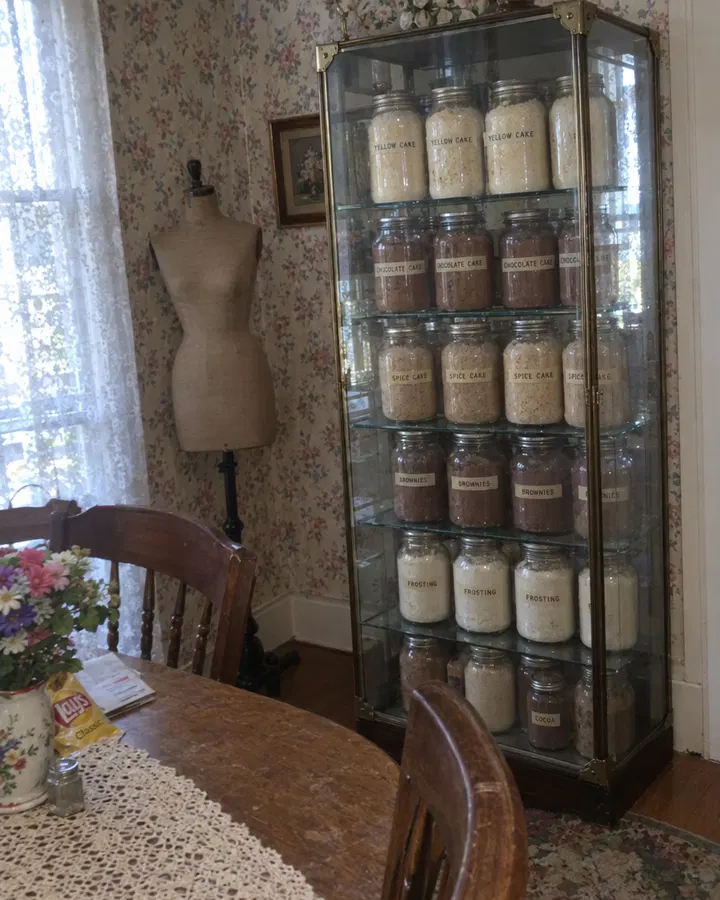
At my granddaughter's seventh birthday party, her other grandmother picked my empty cake box up off the kitchen counter and turned it around so the whole room could see it. "Oh honey, it's fine," she said. "Nobody expects you to bake." My daughter laughed with everybody else. A year later, at that same counter, that same grandmother said six words to me. I'm saving them for last, because I had to earn them. My name is Donna. I'm 64. I did alterations at a bridal shop in Toledo for thirty-four years. By my count I've hemmed about eleven hundred wedding dresses, and I can take a bodice in by a sixteenth of an inch without a tape measure. For thirty-eight years, every birthday in my family has been Grandma Donna's cake. Yellow cake, chocolate frosting, rainbow sprinkles, in the same dented 9x13 pan I got at my wedding shower. The 7 candle I bought for that cake is still in the pocket of the cardigan I wore that day. Nobody lit it. If you're the one who makes the birthday cakes in your family, please read this to the end. Until now I've only told it to one person. Lily's party was the second Saturday in June, at my daughter Jenny's new house out in Sylvania. Jenny asked me to come early and bake the cake there, because Lily wanted to help. So at nine in the morning Lily was up on a kitchen stool in her nightgown, waiting on the beaters, which is the only reason any child helps with a cake. I let her crack two of the three eggs. By two o'clock there were thirty people in that house. Kids from Lily's class. Neighbors I'd never met. And Jenny's husband Matt's side of the family, which means his mother, Gail. Gail sold houses for twenty years. Her face was on the bus benches. She came in at one-thirty carrying a three-layer coconut cake on a glass stand with a glass lid, holding it out in front of her like the ring bearer at a wedding. Nobody had asked her to bring a cake. I'd been asked. She set it on the island right beside mine. Mine was in the 9x13 with the chocolate frosting swirled on and the sprinkles Lily put on by the fistful. Hers was white and tall, with toasted coconut pressed all the way up the sides. I had left my box by the sink with the bag folded inside it, meaning to take it out to the recycling. I never got there. At two-fifteen, with the kitchen full, Gail picked it up. She turned it around so the picture faced the room. Then she took the readers off the beaded chain around her neck, put them on, and read the side of it out loud. All of it. Every long word. She read a couple of them twice, slower, the way you sound a word out for a child, and the kids from Lily's class laughed at how they sounded. "Grandma Gail, what's that one?" Lily said. "Nobody knows, sweetheart," Gail said. "That's the point." Everybody laughed again. Then she set the box down, patted my arm, and said, "We always did from scratch on our side. But this is so sweet of you, Donna." I have stood in a fitting room with pins in my mouth while a bride's mother screamed at me, and kept pinning. At that counter I couldn't think of one thing to do with my hands. I looked at Jenny. Jenny was looking at the cakes. When it was time for candles, Gail asked Lily which cake she wanted. Lily looked at mine, and then at the tall white one, and she picked Gail's. She was seven. Of course she did. They sang over the coconut cake. My 7 candle was still in its little plastic sleeve next to my pan. By five o'clock Gail's glass stand had nothing on it but crumbs. My cake had two squares cut out of twenty-four. One of them was mine. I wrapped the rest in foil and drove it home on the passenger seat. At a red light on Central Avenue I put my hand in my pocket and found the candle, and I sat through the green until somebody honked. That night I threw the rest of the cake in the trash before my husband Gene could see it and be nice about it. I had done it right. For thirty-eight years I did exactly what the back of that box said. Three eggs, never two. The oil measured at eye level. The pan greased with the butter wrapper the way my mother did it. The toothpick in the middle at twenty-eight minutes. I never once cut a corner on a birthday. And I decided Gail was right. Somewhere in thirty-four years of working Saturdays and raising two kids, I had turned into a woman who doesn't bake. I just opened boxes. So I tried to be the other kind. My grandson Caleb turned five in August. I got up at six that morning with a from-scratch recipe I'd printed off the computer. I bought cake flour, which I had never owned. I sifted. I creamed butter until my wrist ached. By eight there were eleven dishes in my sink, and the middle of the cake sank five-eighths of an inch. I measured. I covered it in frosting out of a tub to hide it. A scratch cake with a store tub on top. Caleb didn't care. I did. For Jenny's birthday in September I gave up and bought a cake at the grocery bakery. Thirty-eight dollars. Jenny said it was lovely, and it was. But I hadn't made it. This time I hadn't even tried. Every Thursday I drive Irene Novak to the grocery store. Irene is 87. She owned the bridal shop I worked in all those years, and she quit driving the week she backed into her own mailbox twice. That Thursday in the car I told her about the party. I hadn't told anybody, not even Gene. Irene listened the whole way to the store without a word. In the parking lot she said, "Do you still have the box?" I said I'd thrown it out. "Buy another one," she said. "Bring it Saturday." Irene has lived in the same narrow house off Lagrange Street since 1961. When the shop closed she took home the glass case we used to keep the veils in, the one with the brass corners I polished every Monday for thirty-four years. It stands in her dining room now. There were no veils in it. Every shelf was jars. Gallon jars and half-gallons, every lid with a strip of masking tape in Irene's square printing. YELLOW CAKE. CHOCOLATE CAKE. SPICE CAKE. BROWNIES. FROSTING. A little one that said COCOA. "Thirty-four years," I said. "You never said a word." "You never asked me what I did on Sundays," Irene said. She grew up in the Polish neighborhood back when every wedding on Lagrange Street ended up in the church basement, two hundred people at a time, and the women of the parish baked for all of it. "Nobody in that basement ever opened a box," she said. "Every one of those women had a cupboard like this. My mother kept six jars on top of the icebox." Then she had me turn over the box I'd brought and read her the back. Not the side. The back, where it tells you what to add. "Eggs," I read. "Oil. Water." "What do those have in common?" I didn't know. "Water comes out of your tap. Eggs and oil go bad," Irene said. "Everything that comes out of your tap or spoils in your refrigerator, you bring. Everything that keeps for a year in a cupboard, they sell you. The flour, the sugar, the baking powder. That's the cheap half, Donna. They sold you the cheap half of a cake for thirty-eight years and let you bring the good half yourself." She tapped the jar that said YELLOW CAKE. "So make the cheap half yourself. Once. Enough for three cakes, in one jar, on one afternoon. Then a birthday is ten minutes and the eggs." I understood it the second she said it, because it was the shop. When we made a gown from nothing, the hard part was the pattern. Irene drafted a pattern once, on heavy brown paper, and we pinned it a hundred times. Nobody drafted a new pattern for every bride. I had been drafting the pattern every birthday. Or paying a box company to draft it for me. "Then I'll bake from scratch," I said. "Every time." "You did that in August," Irene said. "How many dishes?" "Eleven." "That's the cheap half, measured from nothing every birthday. Do it once." Then she picked up my box and read the side, the way Gail had. Only she didn't read it to get a laugh. "Gail had a fine time with those words," she said. "You know what they're for? You've seen cheap satin with that stiff finish on it, so it can hang in a shop window all season and look new. The finish is for the window. It was never for the bride. Those words are so that box can sit on a shelf from one of Lily's birthdays to the next. "And you pay for all that waiting. What was this box, two dollars and something?" I said about that. "That's three cups or so of flour and sugar with a spoon of baking powder in it. I gave about the same for a five-pound sack of flour last week, and that sack is the flour for a dozen cakes. And you still bring the eggs." She set the box down. I priced alterations by the inch for thirty-four years. I know what it looks like when somebody charges you for the easy part. That night at my kitchen table I wrote out what I needed, the way I used to write up a gown before anybody picked up the shears. My own flour and sugar. Nothing on the side I can't say out loud. Amounts written down that work the first time, because I am never doing eleven dishes at six in the morning again. Made once and kept in a jar for months, so a birthday is ten minutes. Words on the lid a seven-year-old can read. Irene's jars were all four. But I didn't have Irene's recipes. So the next Thursday I asked her to write them down for me. She went to the veil case and came back with a spiral book, flour in the wire and a rubber band around the cover. "I kept mine on the backs of pattern envelopes," she said. "When we closed the shop, those went in the dumpster with the dress forms. My granddaughter found me this. It's what I've used ever since." The Dry Mix Pantry. Over a hundred dry mixes in one spiral book, every page laid out the same way: what goes in the jar, what you add on the day, and how to keep it. It was a pattern book. That's all it was. Drafted once, by somebody careful, so you can pin it a hundred times. The yellow cake page is four cups of flour, two cups of sugar, four teaspoons of baking powder, a teaspoon of salt and a quarter cup of cornstarch for a softer cake. Dry milk if you want it richer. On the day, two cups of that, a cup of milk, half a cup of oil, three eggs and a teaspoon of vanilla. 350 degrees, twenty-five to thirty minutes. It even says sprinkles. One batch makes about three cakes. The chocolate cake page is the same idea with cocoa in it. Two cups of mix, a cup and a quarter of water, half a cup of oil, three eggs. And there's frosting. A chocolate jar and a vanilla one. For the chocolate, a cup of the mix, a few spoonfuls of milk and half a stick of soft butter, and it covers a 9x13. My 9x13. That night I opened my own pantry and did what I'd done at the shop for thirty-four years. I priced it. Two yellow cake boxes. A chocolate one. A brownie box. Two tubs of frosting, chocolate and vanilla. The pancake box. Two little corn muffin boxes. A canister of cocoa. Box. Box. Tub. Every one of them was the cheap half of something with a picture on the front, and I'd bought every one of them again the minute it ran out. Thirty-four wedding seasons, sixty hours a week every June. The box was never me being lazy. It was the only pattern anybody ever handed me. I ordered the book that night. When the second copy came, I wrote Lily's name inside the cover and gave it to Jenny to keep until Lily is tall enough for the counter without a stool. Jenny turned it over in her hands. "Mom," she said. "About the party." "I know," I said. The next Saturday I made my jars. Yellow cake, chocolate cake, chocolate frosting, vanilla frosting. It took one afternoon and one sack of flour, and I printed the lids in my best hand, the way I used to letter the tags on the gowns. The first cake out of those jars was a yellow cake on a Tuesday, for Gene. It came out tall and level. The kitchen smelled the way my mother's did on a Sunday. Gene ate three squares standing at the counter. But Gene would eat the box it came in if I frosted it. One cake for Gene doesn't count. At the shop we never trusted one fitting. So I kept going. In October the church had its bake sale. I brought a chocolate sheet cake from the jar. It was gone in eleven minutes, and the woman who runs the table asked me to bring two next year. At Thanksgiving I made cupcakes for the kids' table, twenty-four of them, with the vanilla frosting. Caleb ate three and hid a fourth in his sweatshirt pocket. At Christmas Jenny asked me to show her how. We made a yellow cake jar together at her counter, the same counter, with Lily on the stool licking the beaters. Since September I've made fourteen cakes and four dozen cupcakes out of those jars on two sacks of flour. That used to be fourteen boxes and fourteen tubs. I keep track. Old habit from the shop. In May my phone rang, and it was Lily on Jenny's phone. She was turning eight. She wanted to know if I would make "the jar cake" for her party. She asked me. Nobody told her to. So on the second Saturday in June I was back in Jenny's kitchen at nine in the morning, with Lily on the stool and the beaters going and a half-gallon jar on the counter that said, in my printing, YELLOW CAKE. 2 cups, 1 cup milk, 1/2 cup oil, 3 eggs. 350. Gail came at one-thirty with a coconut cake on the glass stand. At two-fifteen the kitchen was full. Lily climbed up on her stool, picked my jar up in both hands, and turned it around so the whole room could see it. Then she read the lid out loud, every word, slow, the way she'd been practicing it since Christmas. "That's Grandma Donna's," she said. "She makes it." The kitchen stayed quiet a second. Then Matt, Gail's own son, said, "Read it again, Lil." When it was time for candles, Lily didn't have to choose. She wanted her 8 on mine. By five o'clock my pan was empty. There was half a coconut cake left on the glass stand. Gail had two squares of mine. When she was leaving, she stopped at the counter and looked at my jar for a long time. Then she said the six words. "Where did you learn to bake?" "In a bridal shop," I said, and I wrapped her a square to take home. If you've ever thrown a box out before company came so nobody would see it. If you've ever had someone turn your box around on the counter. If you've got a grandbaby at your house who stands on a stool to lick the beaters. The Dry Mix Pantry is a spiral-bound book of over a hundred dry mixes. Right now it's buy one, get one free, with a 90-day money-back guarantee. Keep one. Write a grandchild's name inside the other, and put it away until she's tall enough for the counter. P.S. Here's the whole idea, free, before you buy anything. Next time you bake a cake from a recipe, measure the dry part three times over into one big jar. Write the wet part on a strip of tape across the lid. The next two birthdays take ten minutes. P.P.S. The 7 candle is still in that cardigan pocket. The 8 is on the windowsill over my sink, next to the jar. P.P.P.S. At the Fourth of July cookout I saw a spiral book on Gail's kitchen counter with flour in the wire. She didn't get it from me. https://tryneralle.com/products/dry-mix-pantry-mix-recipes-cookbook
Performance Signals
- Status
- Stopped
- Time Running
- 1 day
- Active Period
- Oct 30, 2026 → Nov 1, 2026
- First Seen
- Nov 1, 2026
Creative & Links
- Meta page ID
- 1236356746228488
- Format
- Image
- Placements
- FACEBOOK, AUDIENCE NETWORK
- Country
- 🇺🇸 United States
- Original Ad
- Open in Meta Ad Library
More from Neralle
See every ad this brand runs, with run dates, countries and the AI hook and angle of each.
Start 7-day free trialNeralle
tryneralle.comNeralle
Shop Infos
- Created
- Aug 21, 2026 · 3 months
- Category
- Food & Drink
- Peak ads (7d)
- 951
Search every indexed Meta ad by niche, format, country and run time, save creatives to boards and track the brands behind them. 7-day free trial.