Your Original Cosmic Anthem ad: Find Yourself Again

Your Original Cosmic Anthem
158 active ads🇺🇸
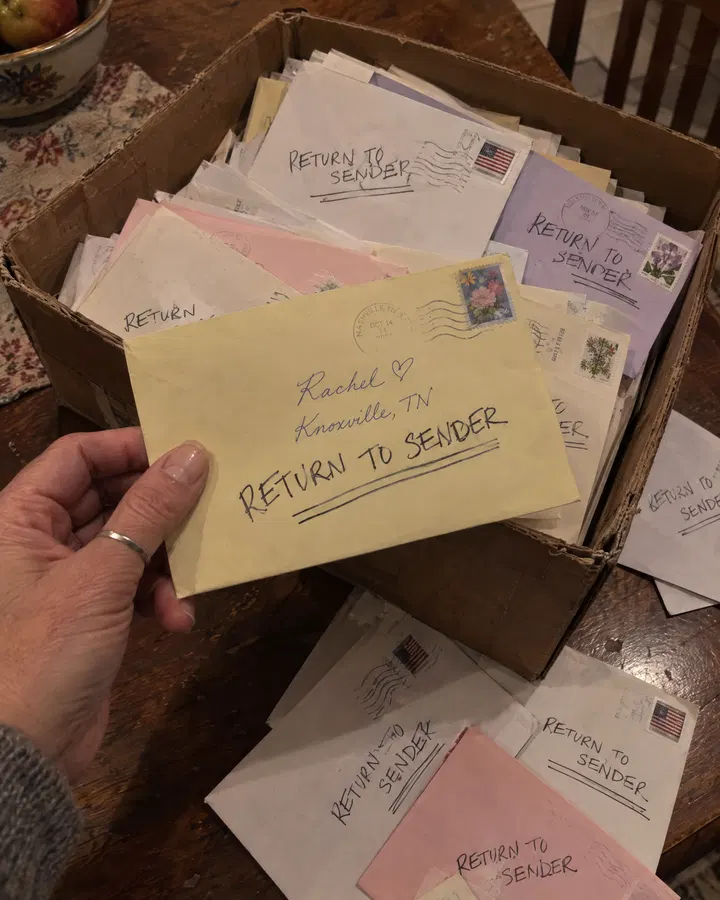
I've read more than 20,000 birth charts. There's one I left in a drawer for eleven years: my daughter's. This April, she almost died two hours from my house. At the hospital, I wasn't on the list of people allowed to see her. I'm an astrologer. I've spent 21 years finding words for people who arrive not knowing what to say about themselves. Every week somebody writes to tell me I've understood something nobody else ever has. I save those messages. I saved the envelopes my daughter sent back, too. My letters inside, unread. "Return to sender" across the front in the handwriting I used to check on spelling homework. They occupied different drawers. That was a useful arrangement. Until a woman I'd never met called from Knoxville and said my daughter was alive, there had been an accident, and I needed to listen. Rachel had blocked my number eleven years earlier. She hadn't deleted it. It was still saved under "Mom." That's how her roommate found me. I knew exactly when Rachel was born. Sunday, September 3, 1995. Asheville, North Carolina. 4:12 a.m. I looked at the clock in the delivery room. Someone was saying something to me, and I looked past her shoulder because I wanted to know. There are things about that morning I don't remember. I don't remember what I ate afterward. I couldn't identify the first outfit I put her in without being shown a photograph. I know the minute. I didn't need it for a chart then. I wasn't an astrologer yet. I was a mother who had just been handed a daughter and wanted to remember everything. Rachel's fingers kept opening against my collarbone. I put one finger in her palm and left it there. My name is Amanda. I still live in Asheville. I began studying astrology in 2005 and have read charts for 21 years. Rachel was nine when I drew my first one. Hers. I did it by hand, in pencil. I pressed too hard with the compass and made a hole in the paper. Then I spent longer getting the lines straight than I spent understanding what they meant. Rachel stood beside the desk. "Is that me?" "It's your chart." "Why is it round?" I explained. She went away before I finished. I liked having an explanation for her. Before the chart, I had books. Chapters on the ages children pass through. Descriptions of what they need. I could usually find a paragraph that covered whatever had happened at school. Afterward I had something much more particular. Her date. Her place. Her minute. When she was little, I worried about missing something she needed. Once I had the chart, I began to think I could know before she told me. If she came home quiet, I knew why. If she was angry, I knew what was underneath it. If she said that wasn't the reason, I had an explanation for that, too. I would have described this as paying attention. When Rachel was twelve, a friend came over while I was making dinner. Rachel had a story about something that had happened on the bus. She'd saved it. I could tell by how quickly she started when my friend asked about school. It was a long story. There were several people in it. She kept stopping to explain who somebody was. My friend checked the clock over the stove. Rachel stopped talking. "Anyway. It wasn't that funny." My friend said she wanted to hear the end. She was checking because she had to pick somebody up. She had time. Rachel said it didn't matter. She began tearing the paper off the end of a drinking straw, making a little pile beside her plate. I said, "She does this. Takes everything to heart." My friend looked at Rachel. I kept talking. "She's a Virgo. She's very sensitive to whether she's getting something right." Rachel gathered the paper pieces into her hand and got up. Later, when I found her in her room, I explained why she shouldn't take someone checking a clock personally. She said, "I wasn't going to." I told her it was all right to admit it. She looked at me for a while. Then she asked if I would close the door. There were other times. She could tell by how I put my purse down whether work had been difficult. She'd turn down whatever she was watching before I'd said a word. If a friend's voice changed in the middle of a joke, Rachel would stop laughing. She noticed a person getting quiet while the rest of us went on talking. Sometimes she had a lot to say herself. Fast, with her hands moving. She wanted to tell the whole thing, including the part she wasn't sure belonged in the story. Then she'd catch someone looking elsewhere. Never mind. I told her she was too sensitive. I said it softly. Usually with a hand on her shoulder. I thought softness made it different. By sixteen she had learned to give me very little. School was okay. Her friends were okay. She wasn't hungry yet. I mentioned this to people as evidence she was becoming more private, which was something I expected from her chart. At work, people told me I was good. They still do. More than 20,000 charts. People who come back. People who send their sisters, their husbands, their grown children. A woman writes that she's kept my notes for years. A man says I put something into words he'd never managed to tell his wife. I have made my living doing something people thank me for. My daughter once stood in our kitchen and told me what it had been like to grow up with me. I corrected her. That was Saturday, March 14, 2015. She was nineteen. She had a bag by the back door. I remember thinking she should put it somewhere else because the door wouldn't open all the way. She said she was leaving. I began with practical things. Where. With whom. Money. Her plans. She answered some of those. Then she said she didn't want me calling. I told her I understood why she felt she needed distance. She said, "You don't." And I explained that I did. I talked about independence. About the stage she was in. I even said I'd seen this coming. She stood beside the bag and waited for me to finish. "You've read my chart a thousand times," she said. "You've never once asked me anything." I pointed out that I had just asked where she was going. She closed her eyes. I can see that as clearly as anything in my life. Her standing there, eyes closed, while I proved I had asked a question. When she opened them, she picked up the bag. I said, "Rachel, you're going to regret making a decision when you're this upset." She moved the bag so the door could open. Then she left. That weekend I put her chart in a folder in the bottom drawer of my desk. I had been leaving it within reach. All those years, if something happened with Rachel, I could pull it out. I put a stack of old appointment books on top of it. I didn't open the folder again for eleven years. I opened plenty of other people's. On Monday morning a client told me I had understood her better than her own family. I thanked her and gave her the notes from our meeting. After she left, I checked my phone. Rachel had settled in Knoxville, Tennessee. Two hours away. At first I treated that as encouraging. Two hours was a distance I could understand. We could have lunch. I could go there and be home before dark. If her car needed something, if she got sick, if she needed help moving a couch, I could get there. I rehearsed reasons she might need to call. I didn't know yet that she'd blocked my number. I knew that the calls didn't reach her. I left messages for a while. I made each one shorter and tried to sound occupied. "Just checking." "I'll be around this weekend." "You don't have to call right now." Right now left considerable room. For a while I still called, just to hear the greeting. "It's Rachel. Leave it." Four seconds. Then one day it was a machine reading out her number, and I had lost that, too. The letters started that spring. The first was four pages. I explained what I'd meant. I explained what I hadn't meant. I reminded her of things we had done together that I thought proved she knew I loved her. I put my phone number at the bottom. As if she'd misplaced it. It came back unread, the envelope still sealed. "Return to sender." Her handwriting. I held it up to the light to see whether the flap had been opened and pressed shut again. It hadn't. The next letter was two pages. I was becoming concise, which I mistook for learning something. I wrote that I respected her need for space. Then I asked her to tell me how long. That one came back, too. Every September 3, I bought a birthday card. At twenty-one I put in a picture of us from when she was little. She was laughing in it. I spent an embarrassing amount of time choosing one where I looked happy, too. At twenty-five I bought a card with hardly any words inside because I thought the printed message might have been part of the problem. I filled the space myself. I kept the returned envelopes in the top drawer of a bedroom dresser. Sometimes I took one out just to see her writing. The way she joined the letters had changed a little since school. That was something I could learn about my grown daughter. I could not tell you what she ate for breakfast. Friends were kind. "She'll come around." "You did everything you could." I generally accepted those sentences without adding what she'd said in the kitchen. Once, over dinner, I told a friend Rachel needed to find out who she was away from me. It sounded reasonable. My friend nodded. I had managed to explain my daughter to someone again. In 2019, I drove to Knoxville. I parked across the street from where she lived and turned off the engine. Her building had a row of mailboxes near the entrance. Somebody had left a flattened box beside them. I had rehearsed what to say if she opened the door. I'd made arrangements for lunch without asking her. Found a place. Checked the hours. Made sure there was parking. I sat there until a man carrying grocery bags looked at my car for the second time. Then I drove home. I told myself I hadn't knocked because I was respecting her wishes. I also hadn't wanted to hear her say no with my hand still raised. After that I kept sending the birthday cards. I stopped leaving messages. In September 2025, when she turned thirty, the card said I was proud of the woman she had become. I had no idea who that woman was. I signed it anyway. On Friday, April 17, 2026, my phone rang while I was working. A number I didn't recognize. The woman asked if I was Rachel's mother. I said yes and reached for a pen. It is something I do when someone starts giving me information. I reached for a pen before I understood that I needed to sit down. "My name is Tess. I live with her. She's alive." That was how she began. She's alive. I asked where Rachel was. Tess told me the hospital in Knoxville. There had been an accidental overdose. Rachel had taken a pill that wasn't what she'd thought it was. Tess found her, gave her naloxone, and called 911. She told me that in pieces. I made her repeat the hospital. Then I asked how she'd got my number. "It was in her contacts. Under Mom." "But she blocked me." "Your number was still saved." Tess was calling from her own phone. Rachel had stopped my calls eleven years earlier. She had kept the number through every phone she'd had since. I didn't know what to do with that. I wrote the hospital's name on the paper in front of me. Underlined the wrong part. Asked Tess again if Rachel was alive. She said yes. The drive took two hours. I remember being annoyed with the voice giving directions when it told me I was arriving. I could see the hospital. I wanted it to tell me something else. At the desk I gave Rachel's name and said I was her mother. The woman checked. I wasn't on the list. I gave her my name in case that helped. It didn't change the answer. She was gentle. She showed me where I could sit while I called Tess. I had told myself for eleven years that if something serious happened, I would be her mother again in a way that settled things. I sat where the woman pointed. Tess came downstairs. I'd never seen her before. She recognized me because I stood up when the elevator opened and stayed standing while everyone else walked past. "She's awake," she said. I asked if I could go up. Tess pressed her lips together. "She doesn't want you to." I began to say I would only need a minute. Tess waited. Then she said, "She asked me to tell you something." "Tell her I didn't mean to." Those were Rachel's words. It was an accident. She wanted me to know that. It was the first thing she had said to me in eleven years, and she sent it down in an elevator. I said, "Please tell her I know." Tess nodded. For a while we sat next to each other. She had a paper visitor sticker on her shirt. One edge had rolled up, and she kept pressing it back down. My daughter had come within minutes of dying. She was thirty years old. She lived two hours away. If Tess hadn't found her when she did, I might have learned that my daughter was gone from the same stranger who was now sitting beside me. I couldn't get past how easily that call might have been the first I heard of it. I asked Tess whether there was anything Rachel needed. She thought about it. "Socks," she said. "The hospital ones are awful." The gift shop had them on a rack by the register, the fuzzy kind with rubber dots on the bottom. I bought six pairs. The clerk asked whether I wanted a card. I said no. Tess took the bag up. In thirty years, it was the first thing I ever gave my daughter without an explanation attached. I went home without seeing Rachel. Tess became the only person who could tell me anything. A few days later she told me Rachel was going into treatment. I asked where. She said Rachel didn't want to give me the details yet. I wrote back that I understood. Then I typed a second message saying I could help make arrangements. I hadn't been asked to make any. I deleted that one. For the next few weeks I answered work emails and waited for messages from Tess. Sometimes I caught myself checking the phone while a client was still speaking. I apologized. Put it away. Picked it up again when they left. I started another letter. I began with the accident. Then how frightened I'd been. Then all the things I wished Rachel knew about being her mother. By the third page I was explaining how much I had suffered. I read it back the following morning. I'd written that she didn't need to respond. I'd also written, "I need you to understand." I left it on the desk. A friend offered to contact Rachel for me. "Sometimes it helps to hear it from somebody else." I almost agreed. I had the address ready to send. Then I thought about Rachel having to tell another person no. I thanked my friend for offering. The address stayed on my phone. I was still working. I needed to work, and I liked the work. People have sat across from me and said things they'd been trying to say for a long time. I have been useful. This spring I'd also begun reading charts for a company that turns them into songs. It was a different kind of work for me. I wasn't sitting opposite the person. I didn't have an hour of conversation or the opportunity to ask what had brought her in. I had her birth details and a chart. My part was to read it, then write down what I saw in plain words. There was an optional box where the customer could say what she was living through. Most left the default words in place. "Let my stars speak." More than nine out of ten. The actual figure is 93.7 percent. At first I thought those were the easy orders. People who didn't have much they wanted to tell us. I was comfortable with people telling me things. Silence gave me less to work with. Then I began seeing what came back after they listened. Letters. People trying to describe the moment they heard their own name. Some crying. Some surprised. Some saying they'd played it several times before telling anybody they had it. Other people weren't moved. I read those messages, too. One letter in early May stayed with me. A woman wrote about laughing. She said her family could always tell when she was in a store because they'd hear her from the next aisle. She'd been asked to lower her voice so often that she usually apologized right after she laughed. She hadn't put any of that in her order. Her song described somebody whose pleasure was easy to hear. She said she'd expected the next line to tell her to calm down. It didn't. Then she explained why she'd left the box alone. She had tried to write about herself and kept making it sound like a list of things she needed to get under control. She couldn't remember the last time somebody had wanted to hear about her without there being a problem to discuss. I went back to the empty box on her order. For weeks I had looked at those boxes and thought people had nothing to say. Now I wondered how many of them hadn't been asked in years. How many had learned to leave out the part that usually got corrected. I thought about the paper from the drinking straw, collected in Rachel's hand. The customer wasn't telling us what to praise. She hadn't offered an account we could put into nicer words. What I could do with her chart was write down a quality I saw. I couldn't tell her which argument it explained or why she had reacted a certain way last Tuesday. I didn't know. There was some relief in having to admit that before I began. This is about as much of my trade as you need for the rest. A newspaper horoscope writes twelve messages for the whole planet. A birth chart starts with a particular date, one minute, one place. Two babies born at different times the same morning in the same hospital don't have the same chart. Rachel's sun sign is Virgo. It is one part of what I read. That minute gives me the rising sign. Roughly two hours later, a different sign is rising. The chart doesn't tell me what happened on a school bus, or why a girl stopped talking over dinner. I supplied those answers myself. I had spent years taking something I saw on paper and using it to finish Rachel's sentences. Even when she was right there to finish them herself. I didn't know whether she would accept anything from me. But I began to understand what I could send without doing that again. It couldn't require a conversation. Or a visit. Or a thank-you carried back through Tess. Rachel couldn't be expected to sit and listen to her mother's voice. And getting another voice to repeat my account of her wouldn't change much. I wanted something about Rachel herself. Something that didn't begin at the hospital. That didn't turn her into a daughter who ought to understand what her mother had been through. No family history. No advice tucked into the ending. She should be able to hear it without me in the room, without my watching her face or asking whether a particular line was right. She could keep it. She could delete it. I would have to allow both before I sent it. One night I had the company's page open and found myself planning what to say if she called after hearing it. I closed the page. I opened it again on Sunday, May 17. The company I read for is AstroSong. I used the same order page anybody else uses. Two verses were $39, three were $59, and four were $69. I chose three and paid $59. I was buying original lyrics and music from Rachel's full birth chart. Someone else was going to read it. I'd had nineteen years of her childhood in which to confuse knowing about Rachel with knowing Rachel. I didn't want my old notes used, either. The order went to a colleague who didn't know whose daughter she was. I entered Rachel. September 3, 1995. Asheville, North Carolina. Then the time. Most people I've helped find their birth minute have started by calling their mother. I was the mother. I entered 4:12 a.m. I could still see the clock above the woman's shoulder in the delivery room. I had known this answer for thirty years. There hadn't been a day when I couldn't have given it. When I reached the optional box, the words were already there. "Let my stars speak." I clicked in it. I could have written that Rachel was in treatment. That she hadn't spoken to me since she was nineteen. That I was afraid of getting a call like Tess's again. I had a first sentence ready before I knew I was writing one. "She has always been." I backspaced until the four words were alone again. I'd been telling people about Rachel all her life. The box stayed as it was. The email came on Wednesday, May 20, three days later. It opened a private page with a player, the lyrics, and a download button. Nothing was coming in the mail. There was no app to install. I was alone at my desk. I moved the letter I'd never sent out of the way and pressed play without reading the lyrics. Rachel's name was sung. I hadn't expected to react to that. I'd typed her name into the order. I knew it would be there. But I hadn't heard anyone say it without worry for weeks. Here it was in music. I sat back. The song described a person who caught small changes in other people. Someone who could be full of delight and then doubt whether anybody wanted to hear the rest. I thought of Rachel starting the bus story. How she had leaned forward because she wanted us to get to the funny part with her. The song didn't mention a bus or a straw or our kitchen. I was the one remembering those. What I'd called moody was described as feeling things deeply, even when she couldn't make a neat account of them for somebody else. There was no instruction to toughen up. Then it sang: "Rachel, you were never too much. You were paying attention." I put a finger on the space bar. Nearly stopped it. I could have said that to her. I never had. I let the song finish. There were no astrology terms in it. Nothing about the hospital. Nothing asking Rachel to look after me. I cried with my teeth together, trying to be quiet in a house where nobody would have heard. Then I opened the bottom drawer. The appointment books were still on the folder. I moved them to the floor and took it out. My first chart. The compass hole. One line rubbed out so many times the paper was rough. Beside it were the notes I'd made while learning. "Receptive." "Strong feelings." "Needs time to put things into words." I had underlined that last one. I remembered using it to explain why Rachel didn't know her own reasons yet. It was all there, in my own pencil. I'd read every line as a warning. Something to watch for. Something to catch before it made her life difficult. I had given her the explanation while she was still trying to tell me. The paper hadn't changed. I left the folder open beside the keyboard and called Tess. I told her what I'd bought. Asked whether she thought Rachel would accept the link. "I can ask her," she said. I told Tess she didn't need to listen with her. She didn't need to tell me what happened afterward. That second part was harder to say. Tess passed it on that day, May 20. I sent no letter with it. For nine days I heard nothing about the song. I thought about asking whether it had opened correctly. Whether the link worked on Rachel's phone. I knew it worked. I'd played it myself. On the fourth day I started a message to Tess about something else, intending to mention it at the end. I could see what I was doing. I erased the message. On the ninth day, Friday, May 29, my phone lit up at 9:47 p.m. Rachel. It was her first message to me in eleven years. "Did you really see me like this?" I read the seven words. Then again, because I was already adding things she hadn't asked. I typed that of course I did. That I always had. That everything I'd done had come from loving her. I read that back. Deleted it. I wrote that sometimes a mother is afraid, and that fear makes her do things. Deleted that, too. There was a long answer available to every version of the question. At 10:06 I sent eight words. "Not then. I wish I had. I'm sorry." I kept the phone in my hand for a while. No reply came that night. I didn't hear from Rachel the following day, either. On Tuesday, June 9, Tess sent a message. "She plays it in the car." I asked if Rachel knew she'd told me. "She said I could." I wanted to know which part. How often. Whether she sang along. Whether she'd mentioned me. I wrote, "Thank you for letting me know." Later that month, Tess called with an update Rachel had said she could share. I listened and thanked her. There was a pause before we hung up. "You didn't give me anything to pass on," Tess said. That time, I hadn't had to stop myself. She had spent enough weeks carrying my sentences upstairs, across rooms, between phones, to notice when I stopped handing her more. It was July before Rachel called. Sunday, July 12. I'd been putting clean pillowcases away. I answered with one still over my shoulder. "Hi." "Hi, Mom." I said hello again. I couldn't think of another word. She said she had a few minutes. For eleven years I had been preparing for a conversation that would last hours. I had things to explain in an order I had gone over many times. I took the pillowcase off my shoulder and sat down. "What did you do this morning?" She'd gone for a walk. Two people were trying to move a couch into a house on the route she took. They'd removed its feet and still couldn't get it through the doorway. Somebody kept coming out with a tape measure. She'd stopped to watch. I listened to her tell it. She began explaining how the doorway sat at an angle. Stopped. Said it was hard to describe. "You there?" "Yes. I'm listening." She tried again. There was a point where she laughed. I hadn't been prepared for how much older her laugh would sound. She got to the end. They'd taken the couch around the back. I said I was glad they got it inside. Then she said she needed to go. "Okay, sweetheart." I let her hang up first. Four minutes. I looked at the length in my call history afterward. Four minutes was what she had offered. I had managed to leave it at that. In August she sent a question. "What time was I born?" I held the phone with both hands. There was an explanation ready. What that minute meant in her chart. What it could tell her. I could have sent pages. "4:12 a.m." I added nothing. She sent, "Thanks." I didn't ask why she wanted it. We had a few more short exchanges. Sometimes days went by. Once I sent a question and got no answer. I didn't send it again in different words. It's early October as I write this. I can tell you the dates of these small things. I can't tell you where we're going. A song did not get my daughter well. Rachel did that, with people who know how to help. She went into treatment. She kept doing the things asked of her there. That work belongs to her. We haven't been given back eleven years. She hasn't come home. She may never. There are things she hasn't told me, and things about those years that I may not get to know. We are not fixed. The music lasts a few minutes. What it gave Rachel was a description she could listen to privately and decide about herself. She didn't have to sit through my reasons for it. What it gave me was a chance to hear something I had spent years correcting. Rachel chose to ask whether I meant it. I had to answer without explaining away what I had done. And after that, when she gave me four minutes, I had to use them differently. The song couldn't do that part for me. On Thursday, September 3, Rachel turned thirty-one. My phone rang at 4:12 a.m. I had been asleep. I knocked the charging cable against the nightstand trying to pick it up. Rachel's name. "Mom?" "I'm here." "I wanted to get the minute right." She had set an alarm. For a moment I sat in the dark with the phone against my ear. Thirty-one years earlier I had looked past a woman's shoulder at a clock. Now my daughter had chosen that minute herself. I had read more than 20,000 charts. "How are you, Rachel?" I waited for the answer. If you have read this far, perhaps there is a name you keep checking for on your own phone. A grown child who doesn't call. You may know which birthday card you sent last year, every word you put inside, and how little those words let you know about the person receiving them. Or perhaps the person is your sister. Your father. A friend you used to be able to talk to without rehearsing. You love them. You have tried saying it several ways. There may be room for something they can receive without having to handle another conversation. And perhaps you are the woman who has been explained all her life. Too sensitive. Too quiet. Too much to say. Somebody always ready to tell you what your feelings mean while you're still having them. You may be reading this without wanting to send anybody anything. An AstroSong can be for you. You can hear your own name without a request attached. You don't have to turn it into a gift for someone else to make it worth having. For another person, it is something offered with nothing due afterward. I can't promise you an answer. Rachel's song would still be hers if she had never sent those seven words. It is one original song, words and music, written from a full birth chart, with the first name sung in it. It arrives by email in about three days, on a private page with a player, the lyrics, and a download. It is kept for life. Songs start at $39. One payment, no subscription. You have 60 days to decide whether you want to keep yours, with a full refund if you don't. Start with the first name of the person you want the song to be for. https://astro-song.com/pages/reveal-your-astrosong Amanda Asheville, North Carolina P.S. You don't believe in astrology. You don't have to. I've worked with charts for 21 years, and I'm asking you to judge what you hear. Does anything in it feel like you? That is yours to answer, including with a no. P.P.S. If you're worried it could be anybody's song, leave the optional box empty of your own description, on "Let my stars speak." Listen once before reading the words. Then notice what you recognize, and what you don't. A gift's recipient gets to make that judgment, too. P.P.P.S. Their promise is 60 days, and "we'll refund every cent without asking why." You can dislike it without defending your taste or describing your family. Ask for the refund. You get the whole payment back. P.P.P.P.S. Knowing the minute was part of my story. It isn't a requirement for yours. Birth time is optional. If you don't have it, AstroSong uses the rest of the chart. The required details are the person's first name, birth date, and birthplace. P.P.P.P.P.S. She may never answer. She may listen and tell nobody. She may delete it. Buying a song doesn't buy a different answer to a boundary she's already set. If she keeps it, it is hers, whether you ever hear about it or not. P.P.P.P.P.P.S. On her birthday, I turned the little clock beside the bed toward the wall. She'd started telling me something.
Performance Signals
- Status
- Still running
- Time Running
- 30 days
- Active Period
- Oct 4, 2026 → Today
- Advertiser live ads
- 158
- First Seen
- Nov 1, 2026
Creative & Links
- Meta page ID
- 1070225776181485
- Format
- Dynamic creative · Image
- Placements
- FACEBOOK, INSTAGRAM, AUDIENCE NETWORK, WHATSAPP, THREADS
- Country
- 🇺🇸 United States
- Landing Page
- astro-song.com/pages/reveal-your-astrosong
- Original Ad
- Open in Meta Ad Library
More from Your Original Cosmic Anthem
See every ad this brand runs, with run dates, countries and the AI hook and angle of each.
Start 7-day free trialYour Original Cosmic Anthem
astro-song.comYour one-of-one AstroSong™ revealed from your birth chart. Studio-quality, human-made by astrologers & artists. 3-day delivery & 60-day love-it guarantee.
Shop Infos
- Created
- Sep 5, 2025 · 1y 2m
- Category
- Gifts & Special Events › Arts & Entertainment › Music & Audio › People & Society › Religion & Belief
- Live ads
- 158
- Peak ads (7d)
- 158
- Copies of this ad
- 1
Search every indexed Meta ad by niche, format, country and run time, save creatives to boards and track the brands behind them. 7-day free trial.