Your Original Cosmic Anthem ad: Find Yourself Again

Your Original Cosmic Anthem
158 active ads🇺🇸
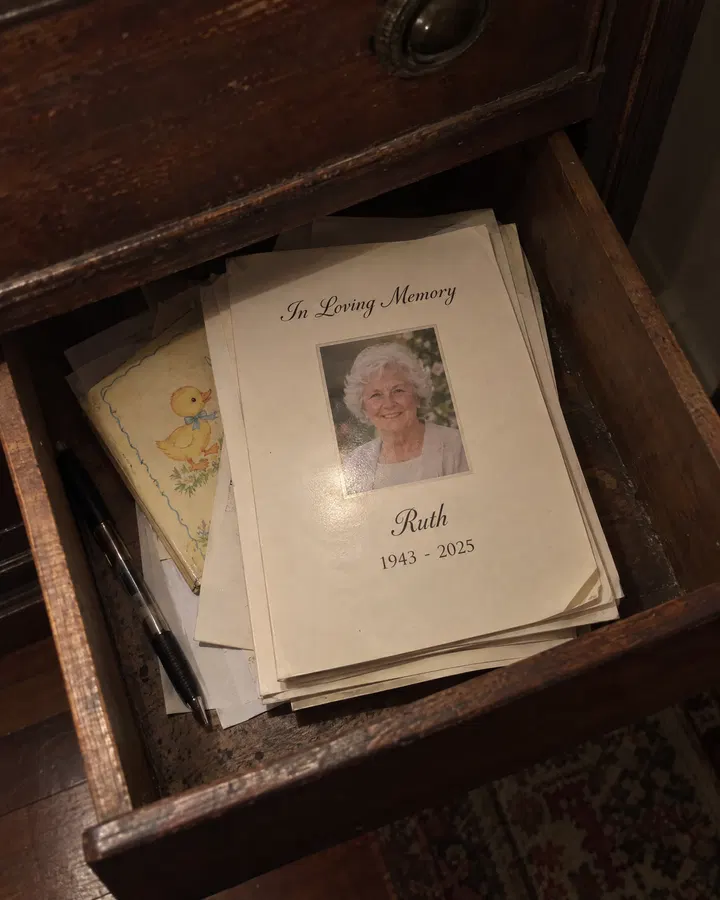
The pastor asked us who my mother was. We told him what she did. He asked again. That's when I began to be afraid. We were in the little room beside the sanctuary before her funeral. My sister had taken her coat off but still wore her gloves. My daughter sat close enough that our knees touched. Mom had spent more than 40 years taking care of people. We could have talked about that until the church had to turn the lights out. Her pies. The grandchildren. Everything she'd done for Dad through his long illness. Pastor Allen listened. Then he asked what she was like when nobody needed anything. The room went quiet. My sister looked at me. I was the oldest. The one who lived closest. The nurse who could usually find something to say when everybody else had run out. I looked down at my daughter's hand resting on her knee. She was waiting, too. The terrible thing was that I loved my mother. I had loved her my whole life. And I couldn't answer a kind man's question about who she was. To explain what happened next, I need to tell you what my life looked like from the outside. I'm Amanda. I'm 58, and I live in Cedar Rapids, Iowa, in a house with a back door that sticks when it rains. I've been an ICU nurse for 31 years. Mostly seven in the morning to seven at night, with a block of nights here and there. I own six pairs of the same scrub pants because once you find pockets in the right places, you stop experimenting. I read charts for a living. I read the numbers, the times, the notes from the previous shift. Then I go into the room and look at the person. A man can tell you he's comfortable while he keeps one hand clenched around the sheet. A woman can say she understands and still watch the door after you've explained everything. You pull up a chair. Sometimes the question comes out only after you've stopped looking as though you're leaving. I learned that before we did everything on screens. I teach it to the new nurses now. Read the chart. Go meet the person the chart belongs to. At home, I wasn't nearly as thorough. I'd been divorced eight years. My daughter, Megan, was 31 and living in Portland, Oregon. We talked on Sundays, usually while she folded laundry and I did something in the kitchen. She'd ask how I was. I'd tell her the weather, whether the back door was sticking, something funny from the grocery store. Then I'd ask about her week. We could spend 40 minutes on the phone without my answering her question. She loved me. She sent pictures of things she thought I'd like. Once she mailed me a pair of wool socks because I'd mentioned cold floors. They were purple. I wore them until the heels went thin. I want you to know that about my daughter before I tell you the rest. There was love in my life. There was quite a lot of it. My mother, Ruth, lived across town until she died last November. She was 82. The funeral was November 15, 2025. For more than 40 years, if something needed doing in our family, Mom's name arrived before anybody had finished describing the problem. Dad needed help through nine years of illness. Mom kept a little basket beside his chair with his glasses, tissues, the remote, and the pencil he liked for the crossword. When the grandchildren stayed over, she knew which one would eat the heel of the bread and which one needed the hall light left on. At church she kept track of who needed a ride. She knew which neighbor had a spare key and which neighbor said they were fine because they couldn't afford to have anything wrong. I inherited some of her casserole dishes. More of her habits. She and I sang alto in the church choir together for 26 years. Our folders were black, our robes never fit either of us, and Mom kept a peppermint wrapped in a tissue in her pocket so the cellophane wouldn't make noise during the sermon. That is the sort of thing I could have told the pastor. A peppermint arrangement. An inventory of how she made life easier for everybody else. Before the funeral service, Pastor Allen sat with the family in a little room off the sanctuary. Megan had flown in. My sister, Linda, had a tissue coming apart in her hands. He already had the dates. He had the names of the grandchildren, the years Mom had helped with the church suppers, the story about her driving a neighbor to appointments through an entire winter. Then he rested his pen on his notebook. "Tell me something about who Ruth was." Linda mentioned her pies. Megan said Grandma never forgot a birthday. I started explaining how she'd taken care of Dad. He listened to every word. Then, very gently, he said, "What was she like when nobody needed anything?" That's where we stopped. He wasn't testing us. He was trying to give us our mother in a form that would fit into a few minutes at a pulpit. We gave him jobs. I watched the tip of his pen. There was a little spot of ink on the paper where he'd held it still. I thought I ought to answer. I was the older daughter. I lived closest. I'd stood next to her on Wednesday nights for more than a quarter of a century. Nothing came. Eventually he closed the notebook halfway and said we could take our time. But there wasn't more time with her. That was the part I couldn't get around. During the service he spoke tenderly. People cried. Nobody listening would have thought anything was missing. Afterward, in the church basement, I found the extra forks without asking where they were. I wrapped a plate for an older man who wanted to take something home. I made sure Megan ate. I told Linda I'd handle the remaining flowers. A woman from the choir squeezed my arm. "You're so strong, Amanda." I thanked her. Then I went into the kitchen and stood beside the big silver coffee urn until somebody needed me to move. Because I knew what my daughter would have said if the question had been about me. My shifts. Her school lunches. The time I drove through snow to bring something she'd forgotten at college. Good things. True things. And after those, what? I had spent the service missing my mother. Now I was frightened by how closely my life resembled the part of hers we had been able to describe. I pictured Megan in that little room someday, getting that far and stopping where we had stopped. A church basement after. People hugging her one at a time and saying strong, because nobody would have anything else to say. She could still ask me. Every Sunday, I changed the subject. The following Saturday, Linda and I started sorting Mom's bedroom. Linda took the blue quilt. I took the photographs and a small cream-colored baby book with a duck on the cover. My name was on its spine in Mom's handwriting. I'd seen it on her closet shelf for years. As a child I'd been interested in the photographs, especially the one where I appeared to be wearing a lampshade. Apparently that had been a bonnet. I couldn't remember opening the book as an adult. Linda asked if I wanted it. I put it in my bag. There were objects I could handle that week and objects I couldn't. I could wash Mom's coffee cups. I could sort her towels into keep and donate. Her handwriting was harder. It still looked as if she might walk back into the room and finish the word. At my house I put the baby book in the bottom drawer of the dining room cabinet, underneath the funeral programs. I closed the drawer with my hip. That is where it stayed through winter. The programs on top said she was a devoted wife, mother, grandmother, and friend. Every word belonged there. I knew because I had approved them. When the funeral home sent the wording, I'd checked the spelling of everyone's name, counted the grandchildren, corrected a date, and sent it back. I checked everything I knew how to check. The question in the little room at church had no box on the form. I couldn't tell you the date I stopped singing in the car. That's one of the things that bothers me now. I can tell you the date I bought the tires. The receipt is in the glove compartment. I can't tell you when the singing went. Before Mom died, I'd sing on the way to work. Choir pieces, radio songs, the alto part under a melody that hadn't asked for one. If I had five minutes on the way home, I'd take a different street. I liked not knowing what I'd see. Sometimes I'd get so interested in a harmony I'd sit through the first second of a green light. People behind you in Iowa will usually allow one second. That winter the radio still came on. I just stopped joining in. I left my choir folder on the passenger seat for weeks. Then I put it in the trunk because I needed the seat for groceries. Nobody asked about it. I'd told the choir director I needed some time, and she was giving me what I'd asked for. At home I began eating at the counter. There was no decision. I'd heat something, take a bite while I waited for the microwave clock to settle back to the time, then another bite while I checked the mail. By the time I thought about a plate, I didn't need one. The table was five feet away. I kept wiping it. I stopped sitting at it. Then the television started keeping me company after I'd gone to sleep. I'd wake up on the couch with my glasses pushed crooked, the remote trapped somewhere underneath me, and a woman cheerfully demonstrating a mop. I'd turn everything off and go to bed. In the morning, if Megan asked whether I'd slept, I said yes. Technically, I had. There are a lot of ways to tell the truth that keep anybody from finding out anything. At work I remained reliable. I came in on time. I answered the questions. I noticed when somebody needed to eat and hadn't. A new nurse once thanked me for staying calm while she sorted something out. "I don't know how you do it," she said. I told her where we kept the extra pens. For forty years people had been telling me I was strong. I liked being someone they could count on. I still do. But strong had become the only thing anybody checked. It was my good number. When people decide you're strong, they stop checking on you. If I could work the shift, return the form, remember the appointment, then I must be doing all right. I helped that conclusion along. I had a very convincing voice for all right. I used it on people I loved. I used it on myself. A real medical chart gets updated. Somebody goes back and asks what changed. The version of me everybody carried around still said strong. The woman underneath it had stopped making herself a place at her own table. I didn't know how to correct the record without sounding ungrateful. In April I had a week off. I'd requested it months earlier, thinking I would finish sorting Mom's things. On Monday, April 13, I stayed in bed. I got up for the bathroom, water, something to eat. Then I went back. Tuesday, the same. Wednesday, the same. I didn't pull the curtains open. The strip of daylight at the edge moved across the dresser and disappeared. On Wednesday I recognized where it would reach before it got there. Linda sent a picture of a sweater she'd found in one of Mom's boxes. "Yours or mine?" I wrote, "Yours, I think." Megan sent a photograph of her lunch. She'd managed to make something that looked like its recipe picture, an achievement we both considered worth documenting. I sent a little heart. There. I was accounted for. Nobody noticed the three days because I gave nobody anything to notice. By Thursday I was up, loading the dishwasher, answering a question about next week's schedule. The week had a perfectly ordinary appearance from outside. The pharmacy called that afternoon. An automated voice said my first name, paused in the wrong place, and told me a refill was ready. "Amanda." I stood in the kitchen with the phone against my ear after the message had ended. That was the only voice that said my name that week. My daughter called me Mom. My sister's message was a picture. I wasn't at work. A machine had managed the entire assignment. I don't tell that part for pity. I tell it because I had been thinking that, sooner or later, somebody would notice without my having to explain. Meanwhile I was making sure they didn't. I had become very good at being absent without inconveniencing anyone. That night I opened the cabinet drawer to put away another funeral program I'd found in a coat pocket. The duck on the baby book looked up from underneath the stack. I left it there. I took a program out instead and unfolded it on the counter. Devoted. Loving. Tireless. They were true of Mom. I could hear them being said about me. I tried to think of a sentence that would be true if I never did another useful thing. I stood there long enough for the refrigerator motor to stop. No sentence. Mom had run out of time to be known. I was spending mine exactly the same way. At 10:43 that night I sat down with my phone and typed, "How do you know who you are when nobody needs you?" I changed the last part before I searched. People did need me. There were messages on my phone proving it. I typed, "How do you know who you are besides what you do?" That search didn't hand me an answer. It gave me things to try. One of them was a horoscope app. I've always known I was a Leo. August birthday. Lion. That was the extent of my training. I downloaded the app because it was quiet and available and didn't require me to look somebody in the eye. The next morning it said, "Leo, today expect the unexpected." I was standing in front of a dishwasher with a broken tine. I expected to need another dishwasher eventually. Beyond that, I wasn't sure what to do with the information. Another day it said I had a generous spirit and people depended on me. I already had 31 years of annual evaluations telling me that. I kept opening it anyway. There's a particular kind of hope in wondering whether today's sentence will finally be the one. But the message was addressed to one twelfth of the planet. Somewhere there was another Leo reading the same thing between meetings, or waiting for a bus, or celebrating something. All of us getting the same little paragraph under different kitchen lights. The app knew my sign. I was still the one expected to work out which part of the paragraph belonged to me. And tomorrow there would be a new paragraph. I didn't want a forecast for Friday. I wanted something I could still recognize on a Tuesday ten years from now, after the job changed, after the house changed, when nobody needed the particular things I was good at now. Linda found a grief group that met on Tuesday evenings. She offered to drive. I told her I could manage, which is one of my more efficient ways of keeping company at a distance. The room had eight chairs and a clock somebody had taken the battery out of because it ticked too loudly. A woman named Beth led the group. She wore ordinary clothes and let people finish. When somebody lost their place, she didn't fill the gap for them. I liked her. The first evening, a man talked about setting out two cups every morning. A woman said she kept buying the cereal her husband ate even though she didn't like it. I knew those small mistakes. My phone still offered to call Mom when I typed the first letter of her name. When my turn came, I said my mother had died in November. Beth asked how the days had been for me. I told her about Mom's last Thanksgiving. About the grandchildren. About the nine years she'd looked after Dad. Beth listened. Then she asked, "And how are you finding the evenings, Amanda?" I said I was working. She gave me time. I could have told her about the couch. I could have described the untouched dining room chair. I could have told her about three days in April. Instead I explained the shift schedule. By the time we finished, I'd learned which woman needed a ride the following week and where the cups belonged. I returned once. I sat in the same chair. I passed when my turn came. On the way out, Beth said I was welcome whenever I felt ready. There was nothing wrong with the room. I just couldn't find the door into my own part of the conversation. At work, if someone asks me about a patient, I can tell them what matters and what happened and what needs watching. I can put a whole difficult night into a clear account. Asked about myself, I started delivering somebody else's report. Then I paid $250 for a psychic reading. I know. I have opinions about paying extra for shredded cheese, and I spent $250 to sit across from a woman in a room above a nail salon. Her name was Denise. She had a desk fan, reading glasses, and a dachshund asleep in a basket. Nothing about her was especially theatrical. That made it easier to stay. She asked what had brought me in. I told her I'd lost my mother. She asked when, and what our relationship had been like. I told her about choir. Then about the funeral. Then about Pastor Allen's question. She asked about work. I told her I was a nurse. I said I was always the person people called because I could handle things. I hadn't meant to say that much. But once I started, I kept supplying background, making sure she understood, straightening the story as I went. It felt like preparing a room for somebody who had been hired to come clean it. Near the end, she said I had spent my life being strong for other people and needed to allow space for myself. She said it kindly. I recognized every part of it. I'd said most of it 20 minutes earlier. In the car I opened the receipt email and looked at the amount again. I wasn't angry at Denise. Maybe somebody else would have found that hour useful. I had wanted something very particular and hadn't known how to ask for it. I had handed over my life in pieces and paid to hear the pieces arranged in a nicer order. I still couldn't answer the pastor. A few evenings after the reading, I took a sheet of paper from the kitchen drawer. I didn't make a plan to improve myself. I had enough plans pinned to enough surfaces. I wrote down what I had been trying to find. Something about me that I didn't have to supply first. Something that could tell the difference between me and another woman with the same birthday month. Something I could receive without making an appointment, arriving prepared, or learning a new vocabulary. And something that would still belong to me after the day I bought it. Something true enough to keep. That last part mattered more than I expected. The app started over every morning. The reading was finished when I left. The group offered me a place, but I still needed words I couldn't locate. I wanted something I could return to without beginning the explanation again. I read my sheet. It sounded unreasonable. I folded it anyway and put it beside the calendar where I kept track of shifts. Under May, I'd already written a dentist appointment and the date the water bill was due. I could account for the teeth and the water. The woman was proving more difficult. On May 5, I was leaving the hospital after a day shift. I found Teresa, one of our unit clerks, standing in the short hallway by the vending machines. She had one earbud in. She was crying. Teresa could find a missing form faster than anybody I knew. She wore a little silver pear on her necklace because her grandson had picked it out and thought it was a heart. I put my bag down. "Do you need me to get somebody?" She shook her head, took the earbud out, and laughed a little through her nose. "No. Listen to me. I'm all right." I waited. I knew how convincing that sentence could sound. She held up her phone. "It's about me. I didn't tell them anything." I looked at the screen. A song. "Who made it?" "A company that writes it from your birth chart." I thought about the lion on my phone. Teresa must have seen something on my face. "That's what I thought, too." She wiped under one eye with the heel of her hand. "I gave them my name and where and when I was born. I left the part about my life alone." "Nothing about your grandson?" "No." "Nothing about work?" "Nothing." She wasn't trying to explain herself to me. For once, neither was I. I asked her to send me the page. The next morning, May 6, I opened it at my kitchen table and started reading. I took my folded sheet from beside the calendar. I put the paper on the table beside my phone. The name at the top was AstroSong. An original song, lyrics and music, written from the full birth chart. My first name would be sung in it. I had thought a birth chart was another way of saying Leo. It wasn't. The explanation used the date and place you were born, and the time if you knew it, to map the sky at your arrival. The whole chart, not just the sun sign. I didn't suddenly acquire a new set of beliefs. But I understood the difference between reading one entry and considering the rest of the chart. At work, two people can share an age and a perfectly ordinary set of numbers. I still have to learn who is in each bed. Those charts tell me what to measure and watch. This one was being used to write something about a person. A birth chart is the only chart about me that was written before anybody needed anything from me. Before I was anybody's nurse, or mother, or the strong one. No promise about next Thursday. No daily message. The starting point was the sky when I was born, which wouldn't change because I had a difficult week. And I wouldn't have to learn how to read the chart myself. There would be no astrology jargon in the lyrics. I looked back at my sheet and went down it the way I check a dose. Something about me I didn't have to supply first. The part about my life was optional. Something that could tell me from another woman born the same month. The whole chart, down to the minute. No appointment, no new vocabulary. A song, by email. Something true enough to keep. A sky that would never change. That was what kept me on the page. They needed my first name, birth date, and birthplace. The time was optional. Without it, they would use the rest of the chart. With it, they could include the rising sign, which changes about every two hours. I wanted to include mine. I knew the date: August 8, 1968. The place: Cedar Rapids. The minute was in the baby book. It was the only record I had of it. For nearly six months I'd been walking past that cabinet. Now I pulled out the bottom drawer and lifted away the funeral programs. The cover felt slightly sticky at the edges. I carried it to the table with both hands, although it weighed almost nothing. On the first page Mom had written my name in blue ink. Below it, August 8. And 4:16 a.m. I'd been expecting the time. I was looking for it. I had my phone ready to enter the numbers. Then I saw the note underneath. "She is asleep. I could put her down. I don't want to." I had never read that. I put the phone down. Mom's letters leaned slightly to the right. She'd gone back and darkened the dot after the last sentence. Such a small, fussy thing. Exactly like her. I read it again. Then I sat with my hand flat on the page. I could get as far as picturing her holding me. Anything beyond that was too much that morning. Eventually I entered 4:16. The next part asked what I was living through. The default words were "Let my stars speak." I could have written about Mom. About the room at church. About eating with the refrigerator door open because I'd never quite started a meal. I didn't know how to write about myself without turning it into a report on somebody else. I left the box exactly as it was. They offered two verses for $39, three for $59, or four for $69. One payment. No subscription. I chose the three-verse song. I could afford $59. That wasn't what made my finger hesitate. For other people, I bought things because I loved them. For myself, I generally required evidence that something had broken. Nothing needed replacing here. I bought it anyway. The delivery was about three days, by email. There was a 60-day money-back guarantee. I closed the order page and left the baby book open on the table. Before that morning, it had been one more thing I couldn't bear to touch. Now four small numbers in my mother's handwriting had let me finish something for myself. The email arrived three days later, on May 9. I'd just finished the last of three night shifts. At 7:26 a.m. I was in my car in the hospital parking lot, still wearing my badge. I opened the private page. There was a player, the lyrics, and a download button. I didn't read the words. I wanted to hear it before I started examining it. I put my phone in the cup holder. Then I pressed play. For the first few seconds I watched a woman two rows over trying to close an umbrella without getting the seat wet. Ordinary Saturday morning. Wet asphalt. My lunch bag on the floor. Then a voice sang my name. Amanda. My hand actually moved toward the phone. The way it moves toward a call light. A name generally means somebody wants something next. Nothing was being asked of me. The song kept going. It sang about someone who could make room for everybody else's uncertainty and leave almost none for her own. Someone with an orderly outside and a private wish to be surprised. That second part got me. I had forgotten I liked surprises. Little ones. A road I hadn't taken, a joke I didn't see coming, an unfamiliar harmony that turned out to fit. I sat straighter. Then came the line. "Amanda, you were wanted before you were needed." I looked at the empty passenger seat. The baby book was at home on the table. I could put her down. I don't want to. I hadn't sent those words. I hadn't sent any words. The song didn't describe a funeral or name my mother. It hadn't recited the facts of my life. It had said something I recognized and had never found a way to say. I put both hands in my lap. I cried so hard I had to take off my glasses. There was relief in it. There was a ridiculous little burst of happiness, too, which surprised me enough that I laughed. I had spent so long hearing that I could carry things. Here was my name in a sentence that let me set them down. I listened again. Then I looked at the lyrics to make sure I'd heard the line correctly. I had. For 31 years I'd read a chart and gone looking for the person. This time, through a few minutes of music, it felt as though someone had read mine. I knew it was a song. I knew how little information I'd supplied. That was why I stayed in the car for another listen. I didn't have to make the feeling smaller just because I couldn't account for all of it. I still use a paper calendar in the kitchen. After that Saturday, I started putting a few other things in the squares beside my shifts. I wasn't setting myself targets. I wanted to remember things I usually would have let pass. May 10 was Mother's Day. I called Linda back. We'd been exchanging short messages about who had which box, and I realized I wanted to hear her without having anything to sort. We talked about Mom's note. Linda asked me to read it twice. Then she told me she'd eaten the last of the peppermints from Mom's coat pocket and felt foolishly sorry afterward. I told her Mom would have been more annoyed if they'd gone to waste. We laughed. Then neither of us had much to say. I stayed on the phone anyway. On the calendar I wrote, "Called Linda. Stayed." May 11, I put my breakfast on a plate. Two pieces of toast. One egg. I pulled out the dining room chair, moved the baby book a few inches, and sat down. I still had to wash the plate afterward. I wrote, "Breakfast at table." On May 12 I was back on day shifts. I played my song before leaving the house. I've played it every morning before a day shift since. When I'm on nights, I listen before I leave in the evening. Sometimes again coming home. There isn't a rule about it. I like hearing it. On May 16, Dana, another nurse, looked up while we were putting our bags away. "There's that tune again." "What tune?" "The one you've been humming." I hadn't noticed I was doing it. She had. The next afternoon I was on the phone with Megan, cutting an apple, when she stopped in the middle of telling me something. "Mom, you're humming." I held the knife still. For a second I couldn't answer. Two people had heard something coming back before I'd properly heard it myself. I told her about the song. She asked if she could hear it. I sent her the link after we hung up. Later she called back. "The part about wanting to be surprised," she said. "Is that true?" "Yes." "I don't think I knew that." I nearly said it didn't matter. Instead I told her about taking the longer route home from choir with Grandma because there was a house where somebody changed the front window display every month. Sometimes we guessed what would be there before we turned the corner. Megan asked what we'd seen. So I told her. May 21, driving home, I sang an entire verse with the radio. Loud enough to hear my voice over the fan. On June 4, I went back to choir rehearsal. Thursday that season. Same black folders. Same robes hanging in the cupboard, waiting to disappoint everybody's shoulders. I stood where I used to stand. I couldn't sing the first entrance. I came in on the next one. The woman beside me moved her folder a little closer so we could share the page. At home I wrote, "Choir. Sang." Those are the entries. A call. A plate. A tune somebody else noticed. A room I went back into. It didn't bring my mother back. It is a few minutes of music. It did not fix grief. I still reach for the phone to tell her things. I still have evenings when I hear the television asking whether I'm watching and realize I haven't been. What the song did was give me words for myself beyond the useful things I knew how to do. I could hear those words again whenever I wanted. That made it easier to say one true thing on the phone. To admit a preference. To sit down with food I'd made for myself. I made those choices. Some days I still don't. The song remains mine on either kind of day. One evening in August I opened the baby book again. I looked at Mom's note, and this time I noticed the part I'd been too overwhelmed to notice in May. I don't want to. A want. Her own. She hadn't written that I was fed or clean or a good baby who didn't cause trouble. She had recorded her pleasure. I remembered her at choir, making a face at me over the folder when the director made us repeat something we'd finally gotten right. I remembered her taking the long way to see a window. Those things had been there. I had kept reaching past them for the bigger, more useful facts. Who was she? A woman who liked a surprise. A woman who could be funny without making a sound. A woman who wanted a little longer holding her sleeping child. I had an answer for Pastor Allen now. And I was letting Megan hear some answers about me while she could still ask another question. I downloaded the song. It's mine for life. Megan has a copy, too. I intend to be around for a great many more Sunday calls, including the ones where we disagree about perfectly unimportant things. But someday there will be another room, another notebook, that same question. When they stand up at my funeral and ask who I was, my daughter will press play. If you have read this far, you may know exactly why I stood in the kitchen listening to a pharmacy recording. Maybe you're the woman people call strong. The one who gets thanked for handling everything, then goes home with something she doesn't know how to put into words. Maybe you've just buried somebody, and the house is full of objects you can neither put away nor leave where they are. Or maybe nothing happened that would explain it to anyone else. You simply can't remember the last time somebody asked who you were and stayed for the answer. You don't have to write a good explanation before you do one thing for yourself. That was the part I needed. With AstroSong, you give your first name, birth date, and birthplace. Add your birth time if you know it. You can leave the part about your life on "Let my stars speak," the way I did. Your song arrives by email in about three days, on a private page with the player, lyrics, and download. No app. No subscription. You can keep it and listen whenever you want. Songs start at $39. One payment, no subscription. You have 60 days to decide whether yours feels like yours. You don't have to make this into an occasion. Or explain how buying it will make you more useful to anybody. Wanting something that belongs to you is a reason. Do one thing for yourself that you don't have to explain to anyone. https://astro-song.com/pages/reveal-your-astrosong Amanda Cedar Rapids, Iowa P.S. I didn't believe in astrology, either. What convinced me to listen was the box I hadn't filled in. What convinced me the song meant something to me was hearing it. You can keep your doubts and still find out what you hear. P.P.S. Worried it will sound like anybody's song? Give it the same test I did. Leave the optional box alone, without telling them your story. Listen once, alone, before reading the words. Then decide whether you recognize yourself. My reaction doesn't have to be yours. P.P.P.S. You have 60 days. If you don't love your song, ask for your money back. Their promise is "we'll refund every cent without asking why." In my language: you don't owe anybody a convincing account of your disappointment to get your dollars back. P.P.P.P.S. If you have never bought something simply because you wanted it, you may hover over the order button longer than it takes to fill out the details. I did. You don't need a birthday, a milestone, or somebody else's permission. And you don't need to earn the price by doing one more thing first. P.P.P.P.P.S. Megan asked me to send a photograph of the page in the baby book. In the picture, my thumb covers one corner of the paper. She asked me not to crop it out.
Performance Signals
- Status
- Still running
- Time Running
- 32 days
- Active Period
- Oct 4, 2026 → Today
- Advertiser live ads
- 158
- First Seen
- Nov 1, 2026
Creative & Links
- Meta page ID
- 1070225776181485
- Format
- Dynamic creative · Image
- Placements
- FACEBOOK, INSTAGRAM, AUDIENCE NETWORK, WHATSAPP, THREADS
- Country
- 🇺🇸 United States
- Landing Page
- astro-song.com/pages/reveal-your-astrosong
- Original Ad
- Open in Meta Ad Library
More from Your Original Cosmic Anthem
See every ad this brand runs, with run dates, countries and the AI hook and angle of each.
Start 7-day free trialYour Original Cosmic Anthem
astro-song.comYour one-of-one AstroSong™ revealed from your birth chart. Studio-quality, human-made by astrologers & artists. 3-day delivery & 60-day love-it guarantee.
Shop Infos
- Created
- Sep 5, 2025 · 1y 2m
- Category
- Gifts & Special Events › Arts & Entertainment › Music & Audio › People & Society › Religion & Belief
- Live ads
- 158
- Peak ads (7d)
- 158
- Copies of this ad
- 1
Search every indexed Meta ad by niche, format, country and run time, save creatives to boards and track the brands behind them. 7-day free trial.