OnAce ad: I Just Wanted My Tuesday Nights Back

OnAce
166 active ads🇩🇪
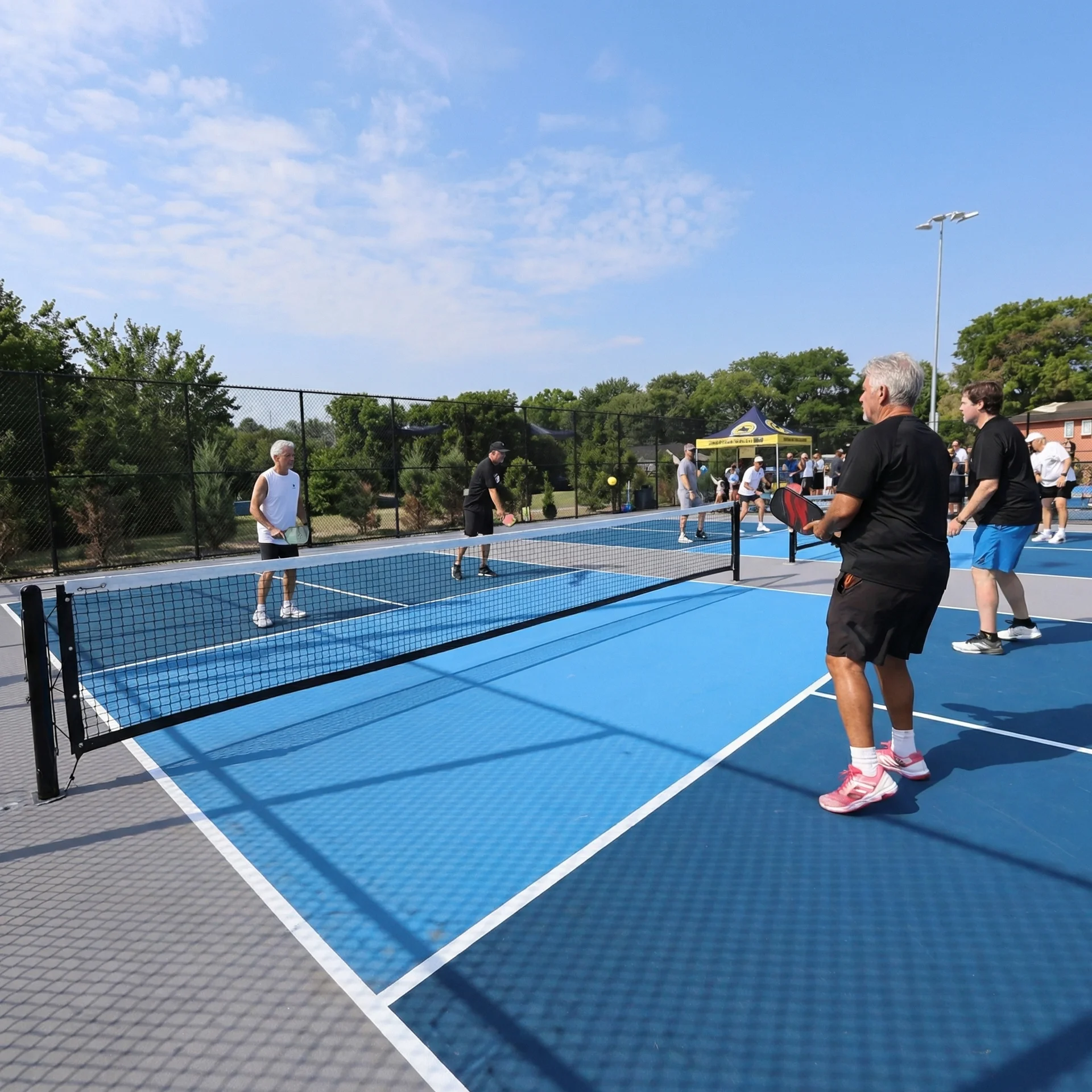
I haven't played pickleball in 4 months and the worst part is nobody asked me to come back. I figured it out on a Tuesday morning in February. I was scrolling Facebook with my second cup of coffee and there was a photo of Bev and Maryann and Kathy at the Bobby Jones courts, the three of them with their paddles, sunburned, laughing, with a fourth woman I didn't recognize between them. The caption was "Tuesday morning regulars, never miss a week." I had been the fourth woman for 6 years. I sat on my couch in my robe and I looked at that photo for a long time. Long enough that the coffee in my mug went lukewarm. Long enough that the dog, my late husband's beagle, came over and put his chin on my knee like he could tell something was happening. The thing nobody tells you about being a 54 year old widow is that people will be very kind to you for about 18 months and then they will quietly stop including you, and they will tell themselves they're being respectful, and you will not be able to argue with them because they're not wrong, exactly. You did pull away. You did say no a few too many times. You did show up to one game and spend half the morning moving like you didn't quite trust your own feet anymore. But you didn't think it meant they'd stop calling. My name is Lorraine. I'm 54. I live in Sarasota, Florida in a small ranch house on a cul de sac off Bee Ridge Road. I moved here with my husband Frank in 2017, when he retired from running an HVAC business in Cleveland. He was 5 years older than me, big Polish guy, big laugh, hands like catcher's mitts. We had 2 grown sons in Ohio. We had a plan. We were going to do all the Florida things people make fun of. Pickleball, early dinners, condo association arguments, the works. Frank died on a Sunday afternoon in October 2022. He sat down in his recliner after we got home from church and he never got back up. After that, pickleball became one of the only things in my week that still felt normal. Tuesday morning meant I had somewhere to be and three women waiting for me, and for a few hours I wasn't the widow people spoke to in that careful voice. I'm not writing this to talk about Frank. I'm writing this to talk about what happened to me after Frank, because pickleball was the thing that made me feel capable again, and then I almost let the way I was moving on the court take that feeling away from me. I want to tell you about the pickleball ladies first. Bev is 61, retired from a credit union in Indianapolis, married to a man named Hal who builds birdhouses in his garage. Maryann is 58, a snowbird from Toronto with a hip replacement and a mouth on her like a longshoreman. Kathy is 55, my age, the one I was closest to. Her son was Frank's godson, and she sat next to me at the funeral and held my hand through the whole eulogy and didn't say a single word, which was exactly what I needed. The 4 of us played every Tuesday morning at 9:30 at the Bobby Jones courts. We were not good. We were tragic. Maryann couldn't run for the ball, Bev had a backhand like a screen door, Kathy had a habit of yelling "MINE" and then completely whiffing it, and I had a serve that went into the net more often than it went over. But we played. For 6 years. Every Tuesday at 9:30, even in August when the heat was a hammer, even in February when the snowbirds tripled and the courts were a circus. The last time I played was October 8th of last year. It was 92 degrees. We were finishing the second game and Maryann hit a ball wide to my right, the kind of ball I had gone after a thousand times before, and instead of pushing off and going for it I hesitated. I didn't fall. I want to be clear about that. I didn't twist anything. Nothing snapped. I just took half a step, thought about the plant, thought about the stop, and by the time I decided to move the ball was already past me. Kathy was on me in a second. She said, "You could've had that." I told her I knew, just reacted late, just got caught flat-footed, just probably tired, just one of those things. I made a joke about being old. We all laughed too loud. I didn't go back the next Tuesday. I told Kathy I was giving my foot a few days. The Tuesday after that I told her I had errands. The Tuesday after that I told her my son was visiting. The Tuesday after that, she stopped asking. By December I'd convinced myself playing cautiously was probably smarter anyway. By January I'd convinced myself maybe I'd simply lost a step. By February I was looking at a photo of them on a court with another woman and wondering when exactly I had gone from chasing balls without thinking to deciding whether I trusted myself before I moved. I want to tell you about the podiatrist visit too, because that's where the second piece of this story starts. I went in because I was tired of thinking about my feet every time I moved. I told him my shoes felt better when they were new. I told him new insoles usually felt better too. I told him lately I was hesitating on quick lateral balls. I told him sometimes I felt like my brain knew exactly where I wanted to go and my feet were a half-second behind. He looked at my shoes. Then he looked at the insoles I'd brought with me. Then he asked me how many pairs I'd already tried. Six. He said, "Lorraine, as we get older, sometimes being a little more cautious isn't necessarily a bad thing." A little more cautious. Because I was already cautious. I was already letting balls go. I was already shortening my first step. I was already thinking twice about quick push-offs. And now I was sitting there wondering whether cautious was simply the new word for the way I was supposed to play from now on. I sat in that exam room and I felt something I hadn't felt in a long time. I felt angry. I felt angry because I had done the things. I had bought the good court shoes. I had replaced the factory liners. I had tried soft insoles, firm insoles, high arch, medium arch. I had tried heavier shoes because people said they felt more stable. I had tried lighter shoes because I hated feeling slow. I had stretched. I had rested. I had even started letting balls go that I normally would've chased because I kept telling myself the smart thing was to stay healthy enough to play another day. And still, little by little, I was playing like somebody who didn't quite trust what was underneath her. The hesitation just got bigger. I sat in my car in the parking lot and I didn't drive home for 25 minutes. I called my sister in law Patricia, Frank's younger sister, in Akron. I told her about the podiatrist. I told her about the pickleball ladies. I told her about the dog sleeping on Frank's slippers in the closet. Patricia is 51. She plays pickleball too, although she will insist she's much better than I am and I will insist she plays people who are worse. She is the only person in my life who will listen to me complain for 11 minutes and then tell me the truth at full volume without softening it. She listened to me for about 11 minutes. Then she said, "Lorraine, I want you to drive home. I want you to make a sandwich. I want you to eat the sandwich. And then I want you to call me back at 7 o'clock tonight and we are going to have a different kind of conversation." I called her back at 7:02. She said, "I'm going to tell you something I've been wanting to tell you because I went through almost the exact same thing, and I haven't because I didn't want to become one of those people who recommends whatever they're using to everybody." Then she said, "Before you decide you've actually lost a step, hear me out." What Patricia explained to me on that phone call, sitting in her living room in Akron while I sat at my kitchen counter in Sarasota with the dog at my feet, was something nobody had ever taken the time to explain to me. And I'm going to do my best to tell you the way she told me, because it's the part of this that changed everything. She said you already know the right shoes or insoles can make your feet feel better. You've probably felt the difference yourself when you put on a fresh pair. And whether you changed the shoe or the insole, you were really doing the same thing: putting fresh cushioning and support underneath your foot. That's why it often feels so good at first. The material underneath you is still at its full shape and thickness. But pickleball keeps compressing that same material again and again. Every stop. Every shuffle. Every push-off. Every time you plant, change direction or move laterally for a ball. And if that material doesn't fully recover, it starts staying more compressed. When that happens, you slowly lose some of the cushioning and support that made the fresh setup feel better in the first place. And your foot starts taking more of that repeated court load again. She said, "Lorraine, maybe the support wasn't wrong when you bought it. Maybe it just stopped being the same support." She said good shoes matter. She was very clear about this. Arch support matters. Cushioning matters. Stability matters. But the question almost nobody asks is what happens to those things after the material underneath your foot has been compressed hundreds and hundreds of times. She said, "Everybody asks how much support an insole has. Nobody asks how much of that support is still there after you've played on it for weeks." I sat at my kitchen counter with the phone on speaker and I felt like somebody had finally pulled a curtain back. Then she said, "Go get one of the insoles you've been playing in." I went to the closet. There were six pairs in there. I brought back the ones I'd been playing in before I stopped. She said, "Press your thumb hard into the cushioning." I did. "Hold it." I held it. "Now let go." I did. "Watch how much of the material comes back." I stared at it. She told me the thing I was looking at has a name. Compression set. It's basically about what happens to material after it gets compressed, and how well it recovers instead of simply staying packed down. That was the part nobody had shown me when I bought an insole. I compared the arch. I compared the heel cup. I squeezed the cushioning. I looked for words like "athletic" and "performance" and "pickleball." But nobody had ever told me to look at what happens to the material after it gets compressed over and over again. In other words, she said, the question isn't only how supportive something feels when it's new. The question is whether the material underneath that support can keep recovering well enough to keep doing the job that made the fresh setup feel so good in the first place. She said, "I'm not telling you support doesn't matter. I'm telling you the opposite. It matters enough that you should care what happens to it after weeks of pickleball." She paused. "And Lorraine. There is an insole I want you to look at. It's called OnAce. They use PORON because PORON is designed to recover after repeated compression instead of simply staying packed down. They're around $50, and they have a 60 day money back guarantee. If you play in them and decide they're not for you, you send them back." I ordered them that night. I sat at my kitchen counter in the same robe I'd been wearing all day. I used the laptop. It took me about 4 minutes. I want to tell you the rest of this honestly, because if I oversell it you won't believe me, and if I undersell it I won't be telling you the truth. The first 10 days I felt nothing dramatic. Around day 14 I noticed I wasn't resetting my feet two or three times before every return anymore. I'd picked up this little habit of looking down, moving one foot, moving it again, trying to make sure I felt planted before the serve came. I just hadn't been doing it as much. I didn't make much of it yet. Around day 21 Maryann hit a ball wide to my forehand and I went after it. I didn't think first. I moved. Around day 30, I returned a serve, moved toward the kitchen line and stopped into my split step without thinking about the stop. I stood there for half a second afterward because I realized the whole thing had happened automatically. Around day 42, Kathy hit a sharp angle that pulled me off the court. A month earlier I would have taken the first step and probably let it go. This time I pushed off, got there and put the ball back over the net. Around day 51, I realized halfway through a game that I hadn't thought about my feet once. I was thinking about the ball again. I went back to the podiatrist on day 64. The appointment had already been on the calendar from my first visit. I hadn't told him anything about what I'd changed. I just walked in. He asked how I was playing. I said differently. He looked at me. He said, "What do you mean." I told him about Patricia. I told him about OnAce. I told him about compression set and the Support Wear-Out Problem and why I'd stopped judging support only by how it felt when it was brand new. He listened all the way through. He didn't interrupt me. When I finished, he nodded slowly. He said, "Then keep paying attention to how you're moving." I sat in my car in the parking lot again. I didn't drive home for 35 minutes. But this time I wasn't angry. This time I was something else. I think the word for it is myself. I called Kathy that night. I told her I owed her an apology and I owed her an explanation. I told her I hadn't stopped playing because I stopped loving pickleball. I told her about how I'd started holding back on balls I knew I could reach because I didn't completely trust the movement anymore. I told her about Patricia and the PORON and the Support Wear-Out Problem and how I had stopped thinking about my feet quite so much. I cried. She cried. We were on the phone for an hour and 18 minutes. I went back to the Bobby Jones courts on a Tuesday morning in late March. 9:30 AM. The temperature was 71. The 4th woman, the new one, whose name turned out to be Diane, was very nice about it. She said she'd been a stand in and she was happy to step back. She said she'd been hoping to meet me. Bev hugged me for a long time. Maryann pretended she wasn't crying but she was. Kathy didn't say anything at all. She just handed me my old paddle, which she'd been keeping in her trunk for me for 4 months. I lost every game we played that morning. My serve still goes into the net. Maryann still can't run for the ball. Bev still has a backhand like a screen door. Kathy still yells "MINE" and whiffs it. We've played every Tuesday since. I'm telling you this because I know somebody is reading it on her phone right now and she has started letting balls go that she knows she used to chase, or she has noticed herself hesitating before a quick push-off, or she feels like her feet are making her play more cautiously than her actual skill requires, or she knows exactly what another older player meant when he said, "I've lost a step, not because I actually lost a step, but because I'm holding back a step." How much support an insole has when it's new is not the whole question. The other question is what happens underneath the surface after the material has been compressed over and over again, after hundreds of stops, shuffles, plants and push-offs, after the freshness that made your feet feel more solid underneath you has had to survive actual pickleball. OnAce uses PORON because it is designed to recover after repeated compression instead of simply staying packed down. The idea is simple: help the cushioning and support underneath your foot keep doing the job that made a fresh shoe or fresh insole feel better in the first place. A pair is about $50, and there's a 60 day money back guarantee, which means you have time to actually play in them instead of deciding how you feel after walking around your kitchen for 5 minutes. I am not telling you to chase every ball or ignore what your body is telling you. I am telling you to add one question to all the questions you already ask: how much of that cushioning and support is still there after you've played on it for weeks? You can find it here: 👉 onace.store P.S. Kathy did the thumb test the next Tuesday. She pulled the liner out of the shoes she'd been playing in, pressed her thumb into it and watched it for about 5 seconds. Then she looked at me and said, "Nobody has ever told me to look at that." She ordered OnAce that night. P.P.S. Diane plays with us sometimes when one of us can't make it. She brought her sister Pat last week. Pat is 56 and told us she had started avoiding really quick push-offs because she didn't completely trust herself on the stop afterward. I didn't tell her how she should play. I gave her one of my old insoles in the parking lot and told her to press her thumb into it. P.P.P.S. If you are over 40, or you play several times a week, or you have started holding back a step even though you know the ball is still within reach, I am asking you to pay attention to this. You have 60 days to send OnAce back if it's not for you. You have a lot longer than that to keep playing cautiously while wondering whether you've actually lost a step or simply stopped trusting the support underneath it. I sat on a bench under an umbrella for 4 months because I thought I'd lost a step. I hadn't. I'd started holding one back. 👉 onace.store
Performance Signals
- Status
- Running at last crawl (Oct 29, 2026)
- Time Running
- 9 days
- Active Period
- Oct 10, 2026 → Oct 29, 2026
- Advertiser live ads
- 166
- First Seen
- Oct 28, 2026
Creative & Links
- Meta page ID
- 970145292858936
- Format
- Image
- Placements
- FACEBOOK, INSTAGRAM
- Country
- 🇩🇪 Germany
- Landing Page
- onace.store/products/pickleball
- Original Ad
- Open in Meta Ad Library
More from OnAce
See every ad this brand runs, with run dates, countries and the AI hook and angle of each.
Start 7-day free trialOnAce
onace.storeOnAce
Shop Infos
- Created
- Oct 17, 2025 · 1y 1m
- Category
- Health › Apparel › Footwear
- Live ads
- 166
- Peak ads (7d)
- 166
- Copies of this ad
- 1
Search every indexed Meta ad by niche, format, country and run time, save creatives to boards and track the brands behind them. 7-day free trial.