Mendable ad: Read This If Pain Is Stealing Your Life — Check Your Neck

Mendable
706 active ads🇭🇰
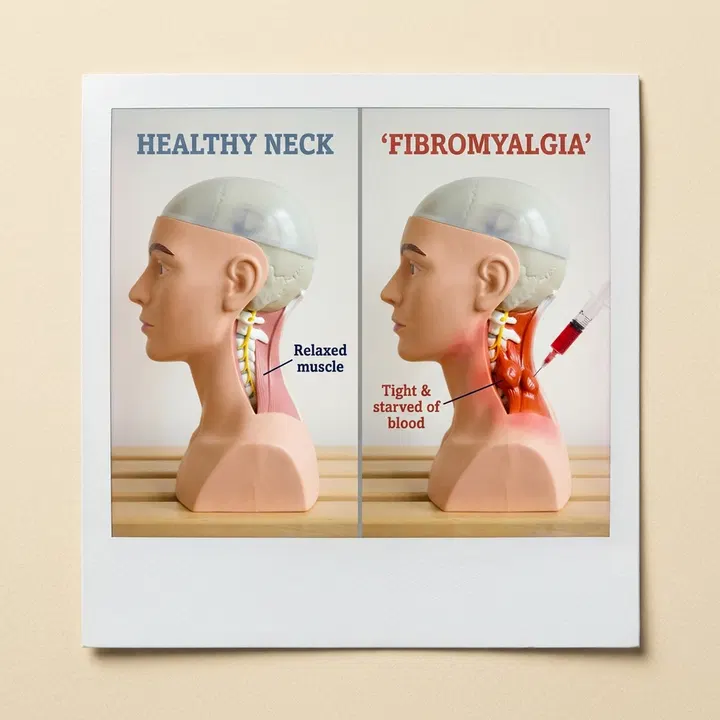
I spent 31 years as an anaesthetist. I put thousands of women whose charts said "chronic neck pain" to sleep, with their heads in my own two hands. And I'm about to tell you something I should have said 20 years ago. My wife told me to leave it alone. I'm retired now. Nobody's career is on the line anymore. But I'm 62 years old, and I held too many necks in my hands knowing the truth and saying nothing. So here it is. Before you put someone under, you hold her head in your hands. You tip it back to open the airway. And you feel the difference between a healthy neck and one that's been clamped down and starving for years while its owner was still telling her husband her neck pain was managed. And in 31 years, in woman after woman with chronic neck pain who came onto my table, I felt the same thing. At the base of the skull, the small muscles that hold the head on the neck, turned hard as wood, knotted down like rope left wet and dried in a fist. A neck that fought my hands, in a woman lying perfectly calm. Under that knot, the deep muscles gone thin and quiet. The nerves running through them pinched. In women who should have had twenty more good years. Damage that had been building for years. Sometimes decades. I felt it in women on a pain medication, on two at once, on a decade of the same tablets, and in the ones whose doctors were still trying to "manage" it with exercise and sleep hygiene. Schoolteachers, nurses, grandmothers whose grandkids were still in car seats. And I saw too many come back years later, with families who found me in the corridor and told me, "But her doctor said she was doing so well. Her bloodwork was always normal. She was doing everything right." Everything right. Every pre-op chart I signed said the same thing. Chronic neck pain. Well controlled. And every letter I saw later said the same thing too. Refer to spinal surgeon. Failed conservative management. Medically retired. Never what I actually felt. Never the truth. I want to tell you about the two times I almost said something. And why I didn't. It was 1999. Four years into the job. Her name was Glenys Hartnett. 53 years old. Rural mail run out of Wyong. On my table for a routine gallbladder. Diagnosed with chronic neck pain six months earlier, and told what every new neck pain patient was told in 1999. Gentle exercise. Better sleep habits. Reduce your stress. We'll see you in six months and talk about medication if we need to. Glenys did it. She walked three kilometres every evening. In bed at nine, no TV. No coffee after midday. A stretching class at the church hall. Her doctor told her she was doing everything right. But the pain still woke her every night at 3 AM, and every morning she got up like she'd been hit by a truck. Five years later, her name came up on my list again. Not a gallbladder this time. A fusion in her neck. Her spine surgeon had called it the only option left and quoted her a six-month recovery. She'd given up the mail run the year before. She couldn't turn her head far enough to check for trucks. The referral letter on her chart said failed conservative management. And I remembered her neck. When I'd cradled her head the first time, the muscles at the base of her skull were clamped so hard I could feel them through the gloves. Hard. Shrunken. Knotted like a fist that had never once opened. Something had held that neck in a vice for years, every night, while she lay in bed thinking she was resting. Now, when I tipped her head back, it was worse. Five years of doing everything right, on a problem that had been quietly building for a decade before anyone gave it a name. Her husband found me in the pre-op bay that morning, because I'd put her to sleep the first time, and asked me quietly how a woman who'd done everything she was told had ended up here. And I almost told him what I'd felt. The clamp. The starved muscle. The nerves pinched flat. A neck that had never once let go in all those hours in bed. But I had no explanation that fit on a form, and it wasn't my place to offer one. I was 40. Two kids, a mortgage, and a job in a regional public hospital on the Central Coast, where the surgeons and the specialists sent me my work. I'd been told, never in writing, just understood, that an anaesthetist's job is to get the patient safely through the surgery, not to second-guess her other doctors. So I told Glenys Hartnett's husband she was in good hands. And I went into theatre, put her under, and carried a question I couldn't shake. I went home that night and started a notebook. Not for anyone. Not for court. Just for me. Every woman with neck pain on my table. The date. The age. What her chart said. What the base of her skull said. What she'd been told to do. Nine years later, I held a neck that made me want to walk out of the room. Her name was Robyn. It was 2013. 49 years old. On my table for a knee scope. PE teacher and netball coach at the local high school. Married 23 years. Three kids. Tall, loud, the kind of woman who made a netball court feel safe just by walking onto it. Robyn was not Glenys. Robyn had been diagnosed twelve years earlier. On a pain medication every morning the whole time. Her specialist had added a second one eighteen months before, when her pain scores climbed. The scores came down. He'd told her she was "one of the best-controlled neck pain patients in this practice." She was going to be fine. But the pain still moved. The headaches still came. And somebody had added tramadol for the bad nights on top of everything else. She went home from the scope with a script for Endone as well. Eight months later, she resigned. Twenty-two years at that school, and she didn't finish the netball season. She couldn't stand on a sideline for an hour or look up at the ring without her neck locking. Her youngest daughter was 16. She was the one who found her on the couch at 10 on a school morning, again, still in her dressing gown. The form from the Department of Education said medically retired. Chronic neck pain. Tablets morning, noon and night, and not one of them anywhere near her neck. I heard about it the way you hear everything in a regional town. A woman who goes down at night and comes up worse. That's my field. The one thing I spent 31 years watching on a monitor: whoever goes under comes back up whole. And I remembered her neck. Eight months earlier, the base of her skull had been worse than Glenys's. Not a little worse. Harder. Tighter. The knot went deeper. A neck that had been clamped for years, not months. I stood in that corridor for a long time. Because the treatment had changed. The medication had changed. The pain score on Robyn's chart looked better than Glenys's ever had. And the clamp was the same. It was worse. Fourteen years of the profession's best answer, and she was in worse shape than a woman who'd never got the answer at all. That was when I understood the tablets had never been aimed at what was actually hurting her. The pain score came down. The clamp kept tightening. And nobody was watching the clamp. They were all watching the score. I added a new column to the notebook that night. Whether she'd been on medication. And which one, or which combination. By the time I retired six weeks ago, that notebook had 2,700 entries. 2,700 women who thanked me in recovery and never once heard what I was really thinking. That's what I carried for 31 years. Here's where it became something I could not live with. My wife, Lorraine. We've been married 34 years. She's 60. Retired kindy teacher. Walks five kilometres around the lake when her body lets her. The warmest person in any room. Diagnosed at 48. A pain medication every morning for twelve years. Pain scores between 4 and 5 out of 10 the whole time. Her specialist called it managed at every visit. Eighteen months ago, her pain score ticked up to a 7 at her regular check-in. He said it wasn't dangerous, but he wanted to add a low dose of a second pain medication before it climbed further. Lorraine came home and asked me what I thought. I looked at the number. I thought about the 2,700 entries in my notebook. I thought about Robyn's scores coming down on the second medication. I thought about her daughter finding her on the couch. I told her to take it. Sit with that. It is the one decision in 31 years I would give anything to have back. I had 2,700 entries in a drawer telling me the pain score wasn't the disease. And when my own wife stood in the kitchen asking if she should add another tablet, I told her to trust her doctor. She took it faithfully. Every morning with her coffee, and every night before bed. A few months in, it started. The tiredness. Just enough that she'd be asleep in the chair after dinner by eight. She joked about it. "Getting old." I didn't joke back. Then the nights. She started waking at three, sitting on the edge of the bed rubbing the back of her neck. She said it felt like someone had a fist closed around the base of her skull. Tight and burning at the same time. Then the pain started moving. Her shoulder one week. Between her shoulder blades the next. Down her arm the night after that. Then her head. A headache climbing from the base of her skull to sit behind her eyes most afternoons, and a fog that rode in with it. She started losing words mid-sentence. Squinting at the crossword she used to do in pen. Then the dizziness. She caught herself on the kitchen bench twice in one week. Her doctor said it was "very common at your age, we'll keep an eye on it." Then her jaw. Clenched so hard at night her dentist asked if she was stressed. Her doctor said it was "part of the neck pain." Then her bloodwork. All normal. Of course it was. Her specialist said that was good news, her neck pain was "stable." Managed. I knew what I was looking at. God help me, I knew. Everything Lorraine was showing me was the front end of what I'd been feeling at the base of the skull for 31 years. The 3 AM wake-ups. The pain that wouldn't stay in one place. The headaches. The nine hours in bed that never rested her. The dizziness at the bench. Lorraine was starting the story. I'd only ever heard how it ended. That night I watched her try to read the paper on the table and give up, because looking down set her neck off. And I felt the full weight of 31 years of silence. I was not going to read "refer to spinal surgeon" about my own wife. Not after I was the one who told her to add the second medication. I did what any husband would do when his wife was disappearing in front of him. I tried the two things I'd heard of. Magnesium, because I'd heard it mentioned for muscle pain my whole career. If the tablets only lowered the score, something aimed at the muscle itself seemed worth a go. Four hundred milligrams every night. And a wheat bag, because every woman with neck pain I'd ever known had one in the microwave. Lorraine used both faithfully every night, alongside her two pain medications. She trusted me. I told her I was figuring it out. Six weeks. She still woke at 3 AM with that fist at the base of her skull. The pain was still moving. The headaches were still there. Her pain score came down half a point. One morning at the kitchen table, the magnesium on the windowsill and the wheat bag on the bench, I understood I was guessing. I'd spent 31 years around the exact damage those two things were meant to help, and had no idea if either could reach it. I was the right man to catch this. I was not the right man to fix it. That's when I rang Yvonne. Yvonne Brady. 38 years an anaesthetist at the big hospital up in Newcastle before she retired. Old school. Said exactly what she thought, whatever it cost her. The only anaesthetist I knew who talked openly about what we feel at the base of the skull. Between us, over coffee. "Another one today," she'd say. "44 years old. Chronic neck pain. On two pain medications. Bloodwork normal. Neck like a clenched fist. Chart said well controlled." She'd shake her head. Take a sip. Move on. I rang her and told her about Lorraine. What I'd tried. That none of it worked. She was quiet for a long moment. Then she said, "Graham, you've been thinking about this wrong your whole career." "Come on, Yvonne." "I'm serious. You keep looking at the pain score. You of all people know it isn't the disease. You've been holding the disease in women's necks for 31 years." "So what am I missing?" "Everything the tablets were never built to reach. Grab a pen." I grabbed a pen. "This is not really a pain problem. The pain is just the surface measurement. It tells you nothing about what's happening underneath." "Then what's happening." "Stress, a fall, forty years bent over a desk, whatever started it. The small muscles at the base of the skull tighten up to hold the head. They clamp down. And then they never let go. Not at night. Not ever." "And once that clamp sets, it chokes off its own blood supply. Like standing on a garden hose. Oxygen can't get in. The muscle can't heal. So it weakens. Underneath it, the deep muscles that hold the neck in line go quiet, like a car battery that's been flat too long. The neck can't hold itself, the discs get squeezed out of place and press on the nerves next to them. A massage buys her 48 hours. Then it all slides back." "The therapists I know call it the Pain Profit Loop. Tight muscles block the blood. Starved muscles go dormant. Dormant muscles can't hold the neck. And she stays in treatment forever." "That clamp is what drives every symptom she has. Not the pain score. The clamp. And it's been working on Lorraine for years." "Her sleep. That's the 3 AM. The pain wakes her, and she gets up wrecked." "Her pain. That's why it moves around. Neck, shoulders, upper back, down the arm. All of it starting in one place." "Her head. That's the headaches climbing from the base of her skull, and the fog that rides in with them." "Her energy. That's the chair at eight o'clock. Nobody stays awake after years of 3 AMs." "And her nerves. That's the burning and the pins and needles in her arms." "Five different things. All driven from one place. For decades. While her doctor watches the score and says she's right where we want her." "That's what you and I have been holding in our hands our whole careers." I didn't say anything for a long time. Then I asked her what the morning tablet had been doing for Lorraine if all of this was happening underneath it. "It turns down how loud the pain feels. The number drops. Her doctor is satisfied. But it doesn't open the clamp or put one drop of blood back into that muscle. It manages the number while the problem keeps going." "You can turn the radio down. The station's still playing." I sat with that. "And the second one her doctor added." "Same thing. It masks it. The score drops. But the muscle is still starving. The deep layer is still asleep. And the dizziness, the headaches, the jaw clenching right along with the neck? Whatever the tablet does or doesn't do, Graham, the clamp is still choking off the blood and oxygen getting up into her neck and her head. That's what nobody's checking." "Her doctor said there's another one to try if this one doesn't hold." She let that land. "There's always another one. Tramadol. Whatever's next on the list. And every one of them works on how loud it feels. Not one of them goes anywhere near the base of the skull. Not one of them opens the clamp." "It's like putting earplugs on a woman whose house is on fire." I asked her what actually works if the tablets don't. "You have to open the clamp the way the body opens it. Not turn down the volume. Get the blood back into that muscle so it can finally let go, and wake the deep layer up so it can hold the neck again. Every day." "There's one thing that wakes up a muscle that's gone dormant. Current." "Current." "I know how it sounds, Graham. Hear me out, because it took me two years to accept it. Grab your pen again. There are four things it has to be, and almost nothing sold for necks hits all of them." I grabbed the pen. "One. It has to be the right current. Gentle EMS. Not a buzz on the skin. The deep muscle has to actually contract and let go, over and over, like exercise. That's what turns it into a pump." "Two. It has to be under the neck. Right at the base of the skull, with the neck lying back in its curve. Twenty-six degrees. Not a flat pillow. Not something that blows up and pushes. That angle is designed to give the vertebrae two or three millimetres of room, enough for trapped nerves to settle. And the clamp sits right there, where your hands go when you tip a head back." "Three. It has to have heat. Real heat. Hot, not just warm. A muscle clamped that tight won't let anything in. The heat opens the vessels first, so the blood gets through." "Four. It has to have hands. Massage nodes built in, working the knots at the same time. The heat opens it, the hands break the grip, the current wakes the deep layer while it's open. All at once. Miss one and you're back to guessing." I asked how current opens the clamp if the tablets can't. "The pulses make the deep muscles contract and relax. Exercise she doesn't have to do. Every contraction pushes blood through the neck, like a pump. Like jump-starting a flat car battery. And it gets the body to release its own painkillers. Endorphins. Physios have had electrotherapy in their clinics for decades. Nobody in our world ever thought to put it under a patient's neck." "And the heat, and the hands?" "The heat brings the blood back into tissue that's been starved for years. Oxygen and nutrients in. That's what helps the body start its own repair. The nodes work the trigger points and calm the inflammation around them. Her sleep. Her head. Her nerves." "Two jobs. One wakes the deep muscle so it can hold the neck. The other brings the blood back so what's been damaged can start to recover." "Yvonne. How long have you been doing this." "Twelve years. By hand. A wheat bag, a rolled towel under the curve of my neck, a remedial massage therapist every fortnight, and an old muscle stimulator borrowed off the physios. My sister too. She's 74, neck pain since 55, and she hasn't had a bad stretch in years. Her specialist stopped asking about her neck three years ago." "And you never told me." "You never asked. And honestly? A retired anaesthetist telling women to lie on a towel and zap their own necks every night. Nobody wants to hear that from the woman who puts people to sleep for a living." I got off the phone and did the obvious thing. I went shopping. Same website as the magnesium. This time I knew what I wanted. Under the neck. Heat. Current. There were dozens of neck gadgets. I picked the two that looked the most serious. A blow-up traction pillow with thousands of reviews, and a curved neck massager with heat and EMS printed on the box. Lorraine was sceptical this time. She'd been trying things for months. I told her this was different. Six weeks. Nothing changed. She still woke at 3 AM. The pain still moved. The headaches were still there. I rang Yvonne back. "You bought the cheap stuff off the internet, didn't you." "The two most serious-looking ones I could find. One had heat and EMS right on the box." "Doesn't matter what the box says. The pillow blows up and pushes, with no heat, no current and no hands. The massager is a collar with two pads that buzz the skin and a patch that goes lukewarm. No curve under the base of the skull. Some of them look almost the same as the real thing in the photos. The thing inside is a toy." "So how do I find one that hits all four?" "There's an Australian company that makes it the way it has to be made. Only one I've found. They're new, so I've only had mine a few weeks, and my sister the same. It was put together with input from Australian remedial massage therapists, osteopaths and movement therapists." She told me the name. Mendable. I ordered it that afternoon. The cheap massager was still on the bench. I put it on my own neck and switched it on. A buzz on the skin. A little warm. Nothing underneath. Nothing at all. When the Mendable Cradle arrived a week and a half later, tracked the whole way, I lay on it before Lorraine ever touched it, the way I'd checked every instrument I ever used. This was something else. The heat came up properly, actually hot. The nodes started working into the base of my skull. The pulses felt like someone tapping deep under the muscle. And about six minutes in, something there let go. Something I hadn't known was holding on. A completely different thing, in every way that mattered. I read the manual. A 26° cervical curve. Adjustable heat. Massage nodes. Gentle EMS. Turn it on, lie back, pick your levels. Fifteen minutes a day. Lorraine used it for the first time that night on the lounge. About six minutes in, she put her hand on my arm and said, "Graham. Something just let go." Week 2: The 3 AM wake-ups stopped. She slept straight through. I noticed because I'd woken at three out of habit, and she was still asleep. Week 4: She woke up without the stiffness. Got out of bed without negotiating with her body first. And the crash that put her in the chair by eight didn't come. She sat up reading a novel. Week 6: The pain stopped moving. And late one night she turned her head all the way to the left, then all the way to the right, slowly, like she didn't quite believe it, and told me she couldn't remember the last time she could do that without a sound coming out of her. Week 8: The afternoon headaches stopped coming, and the fog that rode in with them went too. She did the crossword in pen again. I'd catch her in the kitchen humming. Week 12: Her sister came over for dinner. Halfway through the meal she stopped and stared. "Lorraine. What have you done? You're standing up straight. You look like you've just had a month at the beach." Lorraine smiled and looked at me. I couldn't say anything. I was thinking about every family I'd faced in a corridor and lied to. Every husband. Every daughter who found her mum on the couch at 10 in the morning. All the women with these same symptoms and the same "your bloodwork is normal, your neck pain is stable." The only difference was that I knew what to look for. And this time I'd looked in time. The dizzy spells at the bench had eased off. She could read the paper at the table again. The wheat bag went back in the cupboard. She hasn't needed it since. The woman asleep in her chair by eight a few months earlier was sorting out the shed at noon and asking if I wanted to ride along the waterfront after lunch. She said she felt like herself for the first time in two years. Because she was herself again. The clamp had let go. Her neck was doing what a neck does when the blood finally gets back in. That same week, her specialist saw her. He pressed the same spots on her neck he'd pressed for twelve years. The two at the base of her skull, the ones that had made her jump at every visit, didn't make her jump anymore. Her pain score, which had sat at a 5 or 6 even on the second medication, was a 2. Her sleep questionnaire, failed every visit for twelve years, came back the best it had ever been. Her energy score climbed for the first time since he'd known her. Every number moved the right way. He asked what she'd changed. She told him: fifteen minutes every evening on a neck cradle, on Yvonne's advice. He started bringing her off the second medication, slowly, his way. Halved the morning one. Told her to keep doing whatever she was doing. But I'll be honest with you. I've never cared less about a number in my life. Because I finally understood it was never the number that was taking her life apart. It was the clamp, every night, at the base of her skull. And the clamp let go. And then there was the thing that, after 31 years, I did not believe I would ever see. Lorraine got her life back. Not a little. All the way back. She sleeps through the night. She wakes up rested. She plans things for next week without adding "if I'm having a good day." I have put thousands of women with chronic neck pain to sleep. And every doctor in every one of their charts said the same thing, in the same tired voice: Chronic neck pain is for life. You manage it. It only goes one direction. Lorraine's neck went the other direction. And everything it had been dragging down came with it. I started using it myself the following week. The first evening, about six minutes in, I felt a loosening at the base of my skull, and the dull pressure behind my eyes, the one I'd stopped noticing decades ago, eased off. The rest came the way it came for Lorraine. The low-grade exhaustion I'd blamed on night calls lifted. I'm 62 and I'm sleeping like I did before the night calls started. We take turns every evening now. Fifteen minutes each on the lounge while the news is on. It's the last thing either of us will ever skip. I've been retired for six weeks. I don't put anyone under anymore. I don't sign pre-op charts that say "well controlled." I don't tell husbands in corridors "she's in good hands" and keep what I felt to myself. But I think about Glenys Hartnett. And Robyn. Their families finding me in the corridor with the same question and me giving them the same silence. The notebook in my desk drawer with 2,700 names in it. And I think about Lorraine. How close she came to being the next name in the notebook. How her symptoms lined up, line for line, with what I'd felt on my table for 31 years. How her tests came back "normal" and "stable" and "part of the neck pain" while a life I loved was quietly being taken apart, one night at a time. The only difference was that I finally spoke up. To Yvonne. Then to Lorraine. Then to her specialist through her. That's why I'm telling you now. Because I finally can. The nine hours in bed that leave you feeling hit by a truck. The 3 AM wake-ups with a fist at the base of your skull. The pain that moves from your neck to your shoulder to your arm. The chair that takes you at eight o'clock. The headache that climbs the back of your head every afternoon. The stairs you take one at a time now because the room tilts when you look down. Those aren't separate problems. Those are warnings. Something is happening inside you right now. A clamp at the base of your skull, choking off its own blood supply, starving the deep muscles until they go quiet, pinching the nerves that run into your shoulders and arms, waking you at 3 AM. Silently. Under bloodwork your doctor calls normal. Your tests will come back fine. Your doctor will say stress. Or age. Or "your neck pain is well managed, this is exactly where we want you." I've read those exact words in the charts of hundreds of women I put to sleep. Necks clamped for years, because everyone was watching the wrong thing. The pain score measures how loud it felt. It does not measure the clamp. It never has. And the tablets your doctor hands you do the very same thing the score does. They turn down how loud it feels and touch none of what's causing it. Not the first tablet. Not the second. Not whatever comes next. None of them opens the clamp. When one stops holding the score they add a second, then tramadol or Endone for the bad nights, and not one goes within a kilometre of the thing taking your sleep and your life. I'm not telling you to stop what your doctor prescribed. That conversation belongs to you and your doctor. What I'm telling you is that the tablets only ever did half the job. And the half they skip is the half I kept seeing come back onto my table. That reassurance is the same lie I signed 2,700 times. "Well controlled" on the chart and "failed conservative management" on the referral letter are the same lie, told at two ends of the same neck. What works gets the blood back into the clamped muscle at the base of the skull, so it can finally let go. And wakes up the deep layer underneath, so the neck can hold itself again. The current wakes the deep muscle. The heat brings the blood back. The nodes break the grip. The 26° curve gives the neck room. All four, at once, under the neck. That's what Mendable makes. The Mendable Cradle. A 26° cervical curve. Adjustable heat. Massage nodes. Gentle EMS. You lie back on it, and it sits right at the base of the skull. Fifteen minutes a day. That's the whole routine. 60-day money-back promise. Use it for 60 full days from the day it arrives. If your nights don't change, if your pain doesn't stop moving, if it's not for your body, one email and they refund every cent. Most neck gadgets online won't do this, and now you know why. A pillow that blows up and pushes. A collar that buzzes your skin. No curve under the base of the skull. No real heat. No hands. I spent 31 years watching what happens when women with chronic neck pain wait. I documented it 2,700 times in a log nobody was ever supposed to see. I'm not carrying it anymore. I'm 62. I'm retired. And for the first time in 31 years, I'm telling the truth. The clamp won't let go on its own. The sleep won't come back on its own. Six months ago I'd have told you the first part and had no answer for the second. None of it turns around until you stop watching the score and start opening the clamp. Stop turning down the volume. Break the loop. The link is below. Graham Coombes, 62, retired anaesthetist, Central Coast NSW P.S. I need to say this as plainly as I can, because Lorraine came off her second medication in this story and I do not want you doing the same thing on your own. She came off it because her specialist pressed the same spots at Week 12, found the two at the base of her skull didn't make her jump anymore, and made that call himself, slowly. That is the only version of coming off a pain medication I would ever defend. Medication like this is not something you stop on your own. If you are on one pain medication or several, do not stop them yourself. Use the Cradle for the full 60 days, then take your sleep, your pain score and the base of your skull to your GP and let your GP decide. The point is not to fight your doctor. The point is to put the thing on the table that the prescription pad never reached. P.P.S. Do not quit early on this. Some women feel the grip let go in the very first session, about six minutes in. Most notice the nights first, around week two. The pain stops moving next, around week six. The headaches are usually the last to ease. The ones who've been clamped for twenty years take the longest, because there's more to undo. Give it the full 60 days. That is exactly what the money-back promise covers. P.P.P.S. The money-back promise is the part I keep coming back to. A small Australian company making a 4-in-1 cradle for the base of the skull will bet its own money that this helps you. If your nights don't change and your symptoms don't lift in 60 days, one email and they refund every cent. The tablets Lorraine took every morning for twelve years never came with a promise like that. Nobody ever offered her a refund on the medication her doctor added on top. You can decide for yourself what that tells you. I've decided what it tells me. P.P.P.P.S. The Cradle is not on Amazon. It's not in stores. They sell it only through their official Australian website, no middlemen, no markups. Some sellers make devices that look almost the same in the photos. Those aren't Mendable, and now you know what's inside them. Right now it's $139 AUD instead of $249 AUD. That's their Black Friday Early Access pricing, up to 46% off + FREE gifts, and once Black Friday Early Access ends, the price goes back to $249 AUD. I don't work for Mendable. I don't get a cent from this. I'm writing this at 1:40 AM, not because anything hurts, but because my log of 2,700 entries is in a drawer in my desk and every one of them is a Lorraine who didn't get the warning in time. Share this with any woman you love who has chronic neck pain. Even the ones on a pain medication and doing fine. Especially those. Because "doing fine" was what every single one of them was told, right up until the referral letter.
Performance Signals
- Status
- Still running
- Time Running
- 1 day
- Active Period
- Nov 4, 2026 → Today
- Advertiser live ads
- 706
- First Seen
- Nov 5, 2026
Creative & Links
- Meta page ID
- 1484877301366745
- Format
- Image
- Placements
- FACEBOOK, INSTAGRAM, AUDIENCE NETWORK, WHATSAPP, THREADS
- Country
- 🇭🇰 Hong Kong SAR China
- Landing Page
- getmendable.com/pages/the-aussie-body-report
- Original Ad
- Open in Meta Ad Library
More from Mendable
See every ad this brand runs, with run dates, countries and the AI hook and angle of each.
Start 7-day free trialMendable
getmendable.comMendable
Shop Infos
- Created
- Aug 2, 2019 · 7y 3m
- Category
- Health › Beauty & Fitness › Spas & Beauty Services › Massage Therapy
- Live ads
- 706
- Peak ads (7d)
- 706
- Copies of this ad
- 1
Search every indexed Meta ad by niche, format, country and run time, save creatives to boards and track the brands behind them. 7-day free trial.