Vylaras ad: Sale Ends Tonight (70% Off)

Vylaras
144 active ads🇺🇸
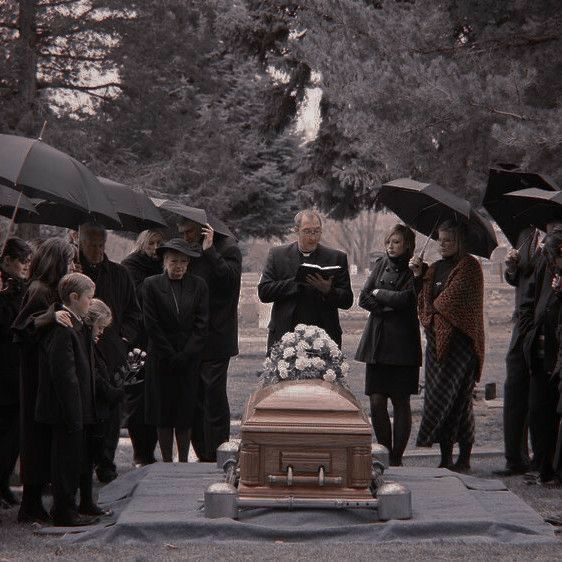
My son's fiancée held his funeral in Mexico and didn't tell me 💔 I buried my boy in a country I've never been to, in a language I don't speak, and I almost didn't get to say goodbye. "She never learned a word of Spanish the entire time Michael was with me. If she couldn't be part of his life here, she doesn't get to be part of his goodbye." I smiled. I understand. My son Michael died on a Thursday in October. He was thirty-four. An aneurysm. No warning. No symptoms. He went to bed and he didn't wake up. Elena called me at 6am. She was screaming. I couldn't understand half of what she said because she kept switching between English and Spanish the way she always did when she was upset. But I understood enough. My son was gone. Michael met Elena in 2019. She was from Guadalajara. Moved to Houston for graduate school. He walked into a coffee shop, heard her arguing with the barista about a wrong order — half in English, half in Spanish — and told her, "I don't know what you just said, but I think you won." She laughed. He was done for. He proposed in 2022. They had a daughter in 2023. Lucia. Born in Houston. Three years old now. Dark curls. Michael's eyes. Elena's stubbornness. Michael was the bridge between our families. He didn't speak fluent Spanish when he met Elena. He learned. Took classes. Practiced with her mother on video calls. By the time Lucia was born, he was dreaming in it. Every time Elena's family came to visit, or we went to their gatherings, Michael was right next to me. Translating. Explaining the jokes. Telling me who was who and what they were laughing about. He never made me feel stupid for not understanding. He'd just lean over and whisper, "Tía Lupe is roasting Uncle Jorge for burning the carne asada again. He does this every time." I'd laugh. Because Michael made me feel like I was part of it even when I couldn't follow a word. He was my bridge. And I never built my own. I have a voice message from him. Sent four months before he died. He was at Elena's parents' house in Guadalajara. A Sunday dinner. I could hear the noise in the background — plates, music, someone yelling about football, Lucia squealing. And then, clear as anything, Lucia's little voice: "Te quiero, Abuelita!" Michael laughing. Then his voice, close to the phone: "Mom, did you hear that? She's asking for you. She said she loves you. In Spanish." A pause. "Next visit, you're coming. No excuses. I mean it." I've listened to that message four hundred times. I never went. I was going to go in December. Michael was planning it. He'd already told Elena's mother I was coming. He'd already picked the room I'd sleep in. He died in October. The first three days after Michael died are a blur. I don't remember eating. I don't remember sleeping. I remember sitting on his childhood bed in the room I'd kept exactly as he left it, holding the shirt he wore home last Thanksgiving, and breathing into it because it still smelled like him. Elena handled everything. I let her. I couldn't function. She was his fiancée. Lucia's mother. She had the right. She said the funeral would be in Guadalajara. His body would be flown to Mexico. Elena's family had a plot. Her father had arranged it. The church was already booked. I said okay. I said okay because I was drowning, and because Michael would've wanted Elena to make the call, and because I assumed — of course I assumed — that I would be there. She never sent me the details. I waited three days. Then four. Then a week. I called Elena. It went to voicemail. I texted: "Elena, can you send me the funeral information? I need to book flights." She didn't respond for two days. Then: "Katelyn, I'll send everything soon. We're still figuring things out." Two more days. Nothing. I called my niece Maria. "Something's wrong. Elena isn't sending me the funeral details." Maria said she'd look into it. She called me back an hour later. "Tía, I need to tell you something because nobody else is going to." "Tell me." "Valentina called me. Elena's little sister." Valentina is twenty-three. She'd always been kind to me. At every family gathering, she was the one who'd sit next to me when Michael stepped away. She'd try to translate things in broken English. She'd hold Lucia on her lap and point at me and say, "Abuelita Katelyn." She tried. "Valentina said the funeral is this Saturday. The church. The reception at Elena's parents' house. The burial. Everything." "She didn't send me anything." "I know. Because she's not planning to." Silence. "Maria." "Valentina said Elena told the family you weren't coming. She said you 'decided not to make the trip.' She told her parents, her aunts, her uncles, the priest. She told everyone you chose not to be there." "I didn't choose anything. She never sent me the information." "I know." "Why?" Maria was quiet for a long time. "Valentina told me what Elena said when her mother asked why you weren't coming." "What did she say?" "She said, 'Katelyn never learned a word of Spanish the entire time Michael was with me. Every family dinner, every holiday, every visit — she just sat there while Michael translated everything for her. She never tried. Not once. If she couldn't be part of his life here, she doesn't get to be part of his goodbye.'" I couldn't breathe. "And her mother?" "Her mother said, 'Elena, she's his mother.' And Elena said, 'And she'll be the only person in the church who doesn't understand a word anyone says about him. She'll sit there like she always does — smiling, nodding, understanding nothing. I won't have that at his funeral. Not for him.'" I sat on the floor of my kitchen with the phone pressed against my ear. My son's fiancée decided I didn't deserve to be at his funeral because I don't speak Spanish. She decided that the woman who carried him for nine months, who raised him alone after his father left, who worked two jobs so he could go to college, who held him when he cried and drove him to every practice and sat in the front row at every graduation — that woman didn't earn the right to say goodbye. Because I never learned her language. I'm 62 years old. I raised Michael by myself from the time he was four. His father walked out on a Sunday and never came back. No child support. No phone calls. No birthdays. Just gone. I worked nights at the hospital and days at a dental office. I did that for eleven years. Every meal Michael ate, I cooked. Every permission slip, I signed. Every nightmare, I was the one in the doorway. Nobody ever called me someone who didn't try. They called me the woman who held it all together. But Elena was right about one thing. I never learned Spanish. Michael would come home from Elena's family dinners and say, "Mom, you'd really love her grandmother. She tells the best stories." And I'd smile and say, "Maybe next time I'll understand more." Next time never came. And now Michael was gone. And the bridge was gone. And the funeral was in four days in a country where I couldn't understand anyone. I called Valentina. "Valentina, it's Katelyn." She started crying immediately. "Katelyn, I'm so sorry. I told Elena this was wrong. I told her you have to be there. She won't listen." "I'm coming." "She didn't send you the information." "Then you send it to me." Silence. "Valentina." "If she finds out I told you—" "Valentina. He was my son." She sent me everything within the hour. Church name. Address. Time. The reception at her parents' house. The burial plot. All of it. I booked the flight that night. Departing in three days. Arriving the morning of the funeral. I told no one except Maria. That night, I met my friend Ruth. Ruth and I go back twenty-five years. We worked together at the hospital. She retired two years before me after thirty-one years as an international flight attendant. She'd been to Mexico more times than she could count. She spoke enough Spanish to survive but not enough to follow a fast conversation. She'd told me about something that changed that. I didn't go to Ruth for comfort. I went for a solution. I told her everything. Elena. The funeral. What she said about me. The voice message from Michael. Lucia saying "te quiero, Abuelita" and me not understanding it until Michael translated. When I got to that part, Ruth put her hand on mine. She was quiet for a long time. Then she said, "Do you know what's really at stake here?" "Saying goodbye to my son." "That's part of it. But it's bigger." She leaned forward. "In three days, a roomful of people who loved Michael are going to stand up and tell stories about him. In Spanish. His life with Elena. His life in Guadalajara. The parts of him you never got to see because you couldn't understand the language they happened in. And if you sit there and don't understand a word, you lose him twice." I couldn't speak. "And Elena is counting on that. She's counting on you sitting in the back of that church, silent and lost, proving every word she said. That you never tried. That you don't belong. That you weren't part of his life there." "So what do I do?" "You understand every word." She pulled out her phone and showed me a photo. "They're called Vylaras. Half my old crew uses them. They're translation earbuds. You wear them like hearing aids and they translate everything you hear in real time. 128 languages. Military-grade AI. The same technology NATO forces used in combat zones to understand locals in life-or-death situations." "Ruth, I can't think about technology right now. My son is dead." "Katelyn. Listen to me. In three days, people are going to stand at a podium and tell stories about Michael. Stories you've never heard. In Spanish. His friends from Guadalajara. Elena's grandmother. Maybe Elena herself. And you will either understand every word, or you will sit there and lose the last new memories of your son that you will ever get." That one broke me. "One button. That's it. No apps. No internet. No settings. They process 128 languages. They handle accents, dialects, fast speech, overlapping conversations. They sit in your ear and nobody sees them." "What if Elena notices?" "They look like hearing aids. You're 62. You're at a funeral. Nobody is looking at your ears." She texted me the link. "One more thing. Don't wait. Big tech companies have been trying to buy out Vylaras and lock the technology behind their apps. Once the deal goes through, the standalone version is gone. Order them tonight. Pay for overnight shipping." "Ruth, I don't care about big tech right now." "I know. But you're going to care when you're sitting in that church and they're the only thing standing between you and your son's stories." I ordered them at midnight sitting on Michael's childhood bed. They arrived two days later. I took them out of the charging case and set them on the nightstand. Right next to my phone. The voice message still on the screen. I pressed the one button. I played Michael's voice message. The background noise. The dinner. The music. The football argument. And Lucia's voice: "Te quiero, Abuelita!" I understood it. For the first time, I understood it without Michael telling me what she said. I love you, Grandma. I sat on the edge of the bed and sobbed for twenty minutes. Then I played it again. And again. Then I packed my bag. I put the photo of Michael and me at his college graduation in my travel wallet. The one where he's lifting me off the ground and I'm laughing so hard my eyes are closed. Before my passport. Before my boarding pass. Before anything. Flight day. I landed in Guadalajara at 8am. The funeral was at noon. The airport was loud. Spanish everywhere. Announcements, conversations, taxi drivers calling out destinations. I understood all of it. A driver spoke to me through the window. He was asking where I was going and whether I wanted the highway or the back roads. The back roads were prettier. The highway was faster. "Highway," I said. "I can't be late." He talked the whole drive. About his family. About the weather. About a saint's day festival happening that weekend. I understood every word. But I wasn't listening. I was looking out the window at the city my son had fallen in love with. The city where he learned to dream in another language. The city where his daughter was born. The city where he was about to be buried. The church was small. White stone. Blue door. Flowers everywhere — marigolds, white roses, cempasúchil. The kind of flowers you smell before you see. I stood across the street. Through the open door, I could see them. Rows of people. Dark clothes. Elena's family. Friends I recognized from Michael's photos. Strangers I didn't. And in the front row, Elena. Black dress. Lucia on her lap. I crossed the street. I walked through the blue door. Valentina saw me first. She was standing near the back, holding a candle. Her eyes went wide. Then wet. She came to me without a word. Took my hand. Squeezed it. "You came," she whispered. "He was my son." She walked me to a seat. Third row. Not the back. Not the front. The third row. Elena didn't see me yet. The priest began. In Spanish. Every word. He talked about Michael. About his kindness. About the way he walked into a room and made it warmer. About how he learned Spanish so he could talk to Elena's grandmother in her own language. About how he carried Lucia on his shoulders through the market every Sunday morning. I understood every word. I was crying before the second sentence. Not because I was sad. I was destroyed. But I was crying because I was hearing my son. Not the Michael I knew — the one who ate cereal on my couch and called me every Sunday. The Michael I never met. The one who lived here. The one who became someone in this language, in this place, with these people. And I was hearing him for the first time. Elena's grandmother stood up next. Doña Rosario. Eighty-six years old. Small. Bent. A voice like dry leaves. She held the podium with both hands and spoke. She said Michael reminded her of her late husband. Not in looks. In patience. She said Michael would sit with her for hours on the porch and let her talk. He didn't rush her. He didn't check his phone. He just listened. She said one afternoon, he asked her to teach him how to make her mole. She said no man had ever asked her that. Not her husband. Not her sons. Not her grandsons. Michael asked. She said they spent three hours in the kitchen. She said he burned the chiles and set off the smoke alarm and they laughed until she couldn't breathe. She said, "He was the grandson I chose." I understood every word. Every word. I put my hand over my mouth so the sound that came out of me wouldn't fill the church. Valentina reached over and held my other hand. Elena's father spoke next. Don Miguel. A quiet man. I'd met him twice. Both times he'd nodded at me politely and spoken to Michael in Spanish. He stood at the podium and adjusted his glasses. He said when Michael first came to their home, he didn't trust him. Another gringo who'd leave when things got hard. He said he watched Michael for two years before he believed him. He said what convinced him was the night Lucia was born. The hospital in Guadalajara. Elena was in labor for fourteen hours. Don Miguel was in the waiting room with Michael. He said Michael was terrified. And at 3am, when the nurse came out and said something in Spanish that Michael didn't fully catch, Don Miguel watched Michael's face crumble in confusion. Michael grabbed Don Miguel's arm and said, "Please, I need to understand. Is she okay? Is the baby okay?" Don Miguel said he translated everything. Word for word. Holding Michael's arm. He said that was the moment Michael became his son. "He needed to understand," Don Miguel said. "And I made sure he did. That's what family does." I understood every word. And the weight of what he said — "that's what family does" — sat on my chest like a stone. Because that's what Michael did for me. Every dinner. Every gathering. Every holiday. He made sure I understood. And now Michael was gone. And Don Miguel was describing the exact thing I'd lost. Except I hadn't lost it. It was in my ear. Tiny. Invisible. Doing what my son used to do. Elena stood up last. She walked to the podium. Lucia stayed in Doña Rosario's lap. Elena looked out at the room. Her eyes were swollen. Her hands were shaking. She spoke in Spanish. Slowly at first. Then faster. The way she always did when she was upset. She talked about Michael. About the coffee shop. About the wrong order that started everything. About the night he proposed — in Spanish, on one knee, in her mother's kitchen, with the whole family watching through the window pretending they didn't know. I understood every word. She talked about Lucia. About how Michael sang to her every night. A song he made up. Half English, half Spanish. Lucia wouldn't sleep without it. She said she tried singing it after he died. Lucia looked at her and said, "No, Mami. Papi's voice." The whole church broke. I was gripping the pew in front of me so hard my knuckles were white. Then Elena said something I wasn't prepared for. "Michael talked about his mother every day." I stopped breathing. "He said she was the strongest woman he'd ever known. He said she raised him alone. He said she worked two jobs so he could go to college. He said she never complained. He said she never asked for anything." She paused. "He said the only thing he ever wanted was for his mother to hear our family the way he heard them. In their own words. In their own voices. He said she deserved to be part of this world, not just watching it through him." She wiped her face. "He was planning to bring her here in December. He told me every week. 'Mom is coming. No excuses.'" She looked down at the podium. "I should have made sure she was here today." The church was silent. Valentina squeezed my hand so hard it hurt. Elena hadn't seen me. She stepped down from the podium. She turned toward her seat. And then Doña Rosario, holding Lucia, pointed at me. Lucia saw me. "ABUELITA!" The word rang through the church like a bell. Elena turned. She saw me. Third row. Tears on my face. Right there. She froze. Her mouth opened. Nothing came out. I didn't move. Lucia was squirming in Doña Rosario's arms, reaching for me. "Abuelita! Abuelita Katelyn!" Elena looked at Lucia. Then at me. Then at her mother. Then at Valentina. Valentina looked straight back at her sister and didn't flinch. Elena walked toward me. Slowly. One step at a time. She stopped at my row. "Katelyn." "Elena." "How did you—" "He was my son." Her face crumbled. She fell into me. Right there in the third row. In front of everyone. She grabbed my shoulders and buried her face in my neck and cried the way I'd heard her cry on the phone at 6am the morning everything ended. "I'm sorry," she said. In English. Then in Spanish. Then in both at once. The way she always talked when she couldn't hold it together. I understood all of it. I held her. Because whatever she'd done, she was carrying the same hole in her chest that I was. And we were the only two people on earth who knew exactly what Michael's laugh sounded like at 2am. "I know," I said. Lucia climbed into my lap. "Te quiero, Abuelita," she said. I understood her. "Te quiero, mi amor," I said. Valentina was crying. Doña Rosario was crying. Don Miguel took off his glasses and looked out the window. The priest waited. After the funeral, the family went to Elena's parents' house. The reception. Elena walked me in herself. Hand on my arm. She didn't let go. Forty people in the house. Food everywhere. Photos of Michael on every wall. People came up to me. One after another. In Spanish. Elena's uncle told me Michael helped him fix his car last Christmas and refused to take any money. I understood every word. Elena's cousin told me Michael taught her son to ride a bike in the park behind the house. The boy fell eleven times. Michael caught him every time. I understood every word. A neighbor — an old man I'd never met — told me Michael carried his groceries up three flights of stairs every Saturday. Never asked. Just showed up. I understood every word. These were stories I would have never heard. Not because nobody wanted to tell me. Because they were in a language I didn't speak. They were locked in a world I'd never entered. Michael was the key and the key was gone. Except it wasn't. It was in my ear. Doing what my son used to do. Letting me hear the people he loved the way he heard them. A woman I didn't recognize approached me. Late fifties. Well-dressed. A small notebook in her hand. "Perdón. You're Michael's mother?" "I am." "I'm a writer for a cultural magazine here in Guadalajara. I knew Elena's family through Doña Rosario. I was at the church. I watched you listen to every eulogy. You were reacting before the translations could have reached you — if anyone was translating. But nobody was." She leaned in. "How did you understand everything?" "Translation earbuds," I said. "Military-grade AI. 128 languages. They translate everything I hear in real time." She put her hand on her chest. "The ones that use the NATO technology? We've been hearing about these. My editor wants to write about them for the travel section." "A friend of mine told me about them. She was a flight attendant for thirty-one years." "Do they work with accents? Even the way Doña Rosario speaks?" "I understood every word she said about my son. Including the mole story." The woman's eyes filled up. "May I write about this?" "Of course." A man beside her — silver hair, a doctor's pin on his lapel — leaned in. "Is that the device my daughter keeps asking about? She runs interpreter services for a hospital network. She says every medical interpreter she knows is watching these." "They're selling the last batch," I said. "Big tech companies are trying to buy the technology and lock it behind their apps. Once the deal goes through, the standalone version is done." He shook his head. "That's what my daughter keeps saying." Elena watched the whole exchange from across the room. She didn't say anything. She just watched. That night. The courtyard. Elena's parents' house had a courtyard in the back. Tiled floor. A lime tree in the corner. String lights that Michael had hung last Christmas. I took my glass out there after everyone left. Elena found me. She sat down next to me. For a long time, neither of us said anything. The courtyard was quiet except for the wind through the lime tree. "My phone has been useless today," she said. "And I speak Spanish. But even I couldn't follow everything Abuelita said. She speaks old Jalisco Spanish. Half the time I'm guessing." She looked at me. "You weren't guessing." I didn't say anything. "At the church. Abuelita's whole eulogy. Papá's story about the hospital. The thing about the mole. You were crying at the right moments. Not after. During." "I heard him, Elena. I heard all of them." She was quiet. "Michael used to tell me you were smarter than everyone gave you credit for. He said people underestimated you his whole life and you never corrected them. You just showed up and handled it." "He said that?" "Every time we talked about you." Silence. "Katelyn, I need to say something." "You don't have to." "I do." She looked down at her hands. "I didn't send you the details because I decided you didn't belong here. I told myself it was about the language. That you'd sit there and not understand and it would be worse for you. But that wasn't it." She paused. "I was angry at you. For years. Because Michael spent every family dinner translating for you instead of being present with us. Every holiday, half of him was with you and half was with us. And I wanted all of him. And I blamed you for not learning. For not trying." "I should have learned." "Maybe. But I should have invited you to your own son's funeral." She broke. "He'd be so angry at me, Katelyn. He'd be so angry." I put my arm around her. "He wouldn't be angry. He'd be in this courtyard right now making sure we both understood each other." She cried into my shoulder. Lucia appeared in the doorway. Barefoot. Pajamas. Holding a stuffed dog Michael won at a fair. She walked across the courtyard and climbed into my lap. "Abuelita, canta conmigo." I understood her. Sing with me. "I don't know the song, baby." "Papi's song." She started humming. The song Michael made up. Half English, half Spanish. I'd never heard it before. But I heard it now. I understood every word. Elena took my hand. I took Lucia's hand. And we sat in the courtyard under the string lights Michael hung, listening to his daughter sing his song. That was the goodbye I almost didn't get. I stayed three more days. On the second day, Doña Rosario took my hand in the kitchen and said, in Spanish, "You raised a man who made my granddaughter happy. That is enough. You are family forever." I understood every word. On the third day, Don Miguel found me in the courtyard alone. He sat down. He told me, in Spanish, the story of the night Lucia was born again. But this time he told me the part he left out at the church. He said after the nurse told them Elena and the baby were fine, Michael sat down in the waiting room chair and called me. At 3am Mexico time. He said Michael held the phone up and whispered, "Mom, you're a grandma." I said, "I remember that call." "He was crying," Don Miguel said. "He said you were the first person he wanted to tell. Before anyone. Before Elena's family. Before me. You." I understood every word. I flew home the next day. Maria picked me up at the airport. "How was it?" I couldn't talk for a while. "I heard him, Maria. I heard who he was there. I heard stories I would've never known. I heard his daughter sing his song." Maria pulled over because she couldn't see the road. That Sunday, Valentina called me. She'd never called before. "Katelyn, I need to tell you something." "Tell me." "After you left, Elena sat the family down. She told everyone what she did. How she didn't invite you. How she told people you chose not to come. How she was wrong." "She told them?" "In front of everyone. Doña Rosario said, 'Of course she came. She's his mother. A mother always comes.' Everyone went quiet. Then Abuelita said, 'Now make the mole and shut up.' Everyone laughed. Even Elena." Pause. "And Katelyn?" "Yes?" "Elena wants to bring Lucia to Houston for Christmas. She wants Lucia to know your house. Michael's room. She wants Lucia to see where her father grew up." My chest tightened. "And she asked me to tell you one more thing." "What?" "She said, 'Tell Katelyn I'm learning English. For real this time. Because if she can show up at a funeral in a language she doesn't speak and understand every word, the least I can do is meet her halfway.'" The following week, a package arrived at my door. From Elena. Inside: a framed photo. Michael in Elena's parents' kitchen. Flour on his face. Standing next to Doña Rosario. Both of them laughing. The smoke alarm going off behind them. On the back, in Elena's handwriting: "He burned the chiles. She loved him anyway. So do I. So does Lucia. So will you, always, in any language." It's on my nightstand now. Right next to the voice message I've played four hundred times. Except now, when Lucia says "Te quiero, Abuelita," I don't need Michael to translate. I understand her. Now, about the earbuds. When Ruth first showed them to me, I almost didn't order them. My son had just died. Technology was the last thing on my mind. But Ruth said something I'll never forget: "You will either understand every word they say about him, or you will sit there and lose the last new memories of your son that you will ever get." She was right. Those earbuds didn't bring Michael back. Nothing will. But they let me hear his life. The parts I never knew. Doña Rosario's mole story. Don Miguel's hospital story. The uncle's car. The cousin's bicycle. The neighbor's groceries. The song Lucia sings at bedtime. Those stories were locked behind a language I didn't speak. The earbuds were the only key I had left. They pay for themselves the first time you don't miss a story about someone you love. The first time you don't sit in silence while the people around you share memories you'll never get back. The first time you understand "te quiero, Abuelita" without needing your son to translate. Everything after that is free. But here's the part I'd take seriously. Ruth's old crew group chat has been scrambling to order before the acquisition goes through. Vylaras is selling the last batch of the full 128-language military-grade version. Once big tech takes over, they'll gut it. Cut it down to 15 languages. Require an internet connection. Slap on monthly subscription fees. And remove the dialect recognition that lets you understand old Jalisco Spanish and Oaxacan accents and a grandmother telling a story about your son and burned chiles. Elena asked me about them in the courtyard. By the time she asked, the batch was almost gone. She's learning English instead. Meeting me halfway. I was already home. Already understanding. Already hearing Lucia's voice every time she calls. If someone has decided you don't belong because you don't speak the language. If the people you love are sharing memories of someone you lost and you can't understand a word. If you've been shut out of your own family because nobody thought to build you a bridge. You need these earbuds. Not because the technology is impressive. Though it is. But because sitting in a church in Guadalajara understanding every word a grandmother says about your son — the mole, the smoke alarm, the laughter — while the woman who said you didn't deserve to be there watches you cry at exactly the right moment? That's not petty. That's just a mother showing up. One button. 128 languages. Zero apps. Zero internet. Zero help from anyone. Your move.
Performance Signals
- Status
- Still running
- Time Running
- 26 days
- Active Period
- Oct 7, 2026 → Today
- Advertiser live ads
- 144
- First Seen
- Oct 29, 2026
Creative & Links
- Meta page ID
- 1169118006279931
- Format
- Image
- Placements
- FACEBOOK, INSTAGRAM, AUDIENCE NETWORK, WHATSAPP, THREADS
- Country
- 🇺🇸 United States
- Landing Page
- vylaras.com/products/earbuds
- Original Ad
- Open in Meta Ad Library
More from Vylaras
See every ad this brand runs, with run dates, countries and the AI hook and angle of each.
Start 7-day free trialVylaras
vylaras.comVylaras
Shop Infos
- Created
- Aug 2, 2024 · 2y 3m
- Category
- Consumer Electronics › Audio Equipment
- Live ads
- 144
- Peak ads (7d)
- 144
Search every indexed Meta ad by niche, format, country and run time, save creatives to boards and track the brands behind them. 7-day free trial.