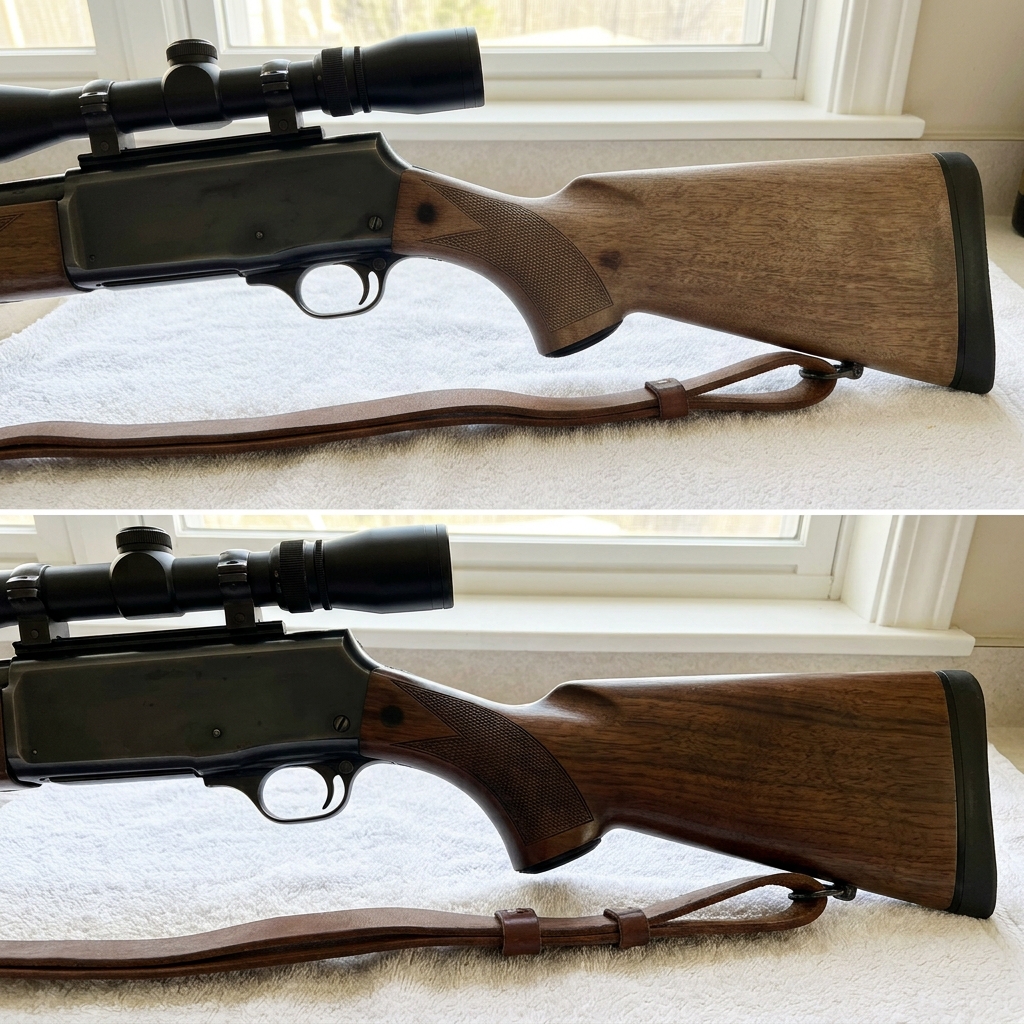
Tanner's Oath – Tanner's Oath ad: Rifle wood isn't dead. It's dried out.

Tanner's Oath – Tanner's Oath
🇱🇹
I found a lost rifle last November, out in the state forest outside Crystal Falls, in Michigan's Upper Peninsula. It was lying in the mud at what was left of an old man's hunting spot. His ground blind had been knocked flat and torn wide open, and something had dragged his pack twenty feet into the brush and ripped it apart. There was food scattered all over the place: half a sandwich, a bag of beef jerky chewed open, and the stale donuts he'd been using for his bear bait. The mud around it was full of tracks. There were bear tracks as wide as my hand, and a few wolf tracks walked right over the top of them. That's bear and wolf country up there. Most of Michigan's bears live in the U.P., and every fall somebody at our camp gets one on a trail camera. Everything else the man had carried in was still there. His seat cushion, his shooting sticks, a thermos and a pair of reading glasses were lying in the leaves. I went through what was left of his pack looking for a name. All I found was a receipt from the Krist station on US-2 in Crystal Falls for one coffee and one ham sandwich. It was dated October 12th at 2:47 in the afternoon. From the look of that camp, nobody had been back since. That was 27 days. The rifle was lying on its side like he'd set it down for a minute and meant to come right back for it. It wasn't some cheap gun, either. It was a Winchester Model 88, and they quit making those back in 1973. The lever was open, and there wasn't a single shell in it. Four empty brass casings were lying in the mud by the door of the blind. Whoever owned that rifle had emptied it at something. Then he left the woods and never came back for any of it. I didn't know it yet, but that rifle was about to end the most embarrassing streak of my life. Three Novembers in a row, my buddies at deer camp voted the rifle my grandfather left me the ugliest gun in camp. The prize is a Folgers can nailed to a chunk of driftwood, and my name is on it three times. Let me back up. My name's Mark. I'm 51, I climb poles for Consumers Energy, and I live in Bay City. Every November I drive almost seven hours north, over the Mackinac Bridge, to the same deer camp outside Crystal Falls. My grandfather, Pap, first brought me up there in 1987, when I was 13. The guys at camp call me the Warden. It's not because I work for the DNR. It's because I'm the guy who packs out everybody else's trash, whether it's beer cans, hand warmer wrappers or the busted lawn chair somebody left at the end of the two-track. I carry a contractor bag in my pack every time I go in. Rudy says I'm the last man in Michigan who still picks up after strangers. Somebody has to. That trash bag is the only reason I found the old man's rifle. It was Saturday, November 8th, one week before the opener. I'd been up since 4:30 hanging my stand on state land a couple miles from camp, and on the walk out I saw a heap of camo fabric in the brush about 60 yards off the trail. I figured somebody had dumped an old blind, so I walked over with the bag open. I was halfway through pulling the fabric out of the brush before I saw the gun lying underneath it. I checked it anyway, the way you always do, and it was empty. I kept thinking about those four casings the whole way to his house. I'll tell you what he was shooting at in a minute. Then I took a good look at it. The leather sling had dried into a hard curl, like a pretzel. The wood was the worst of it. The walnut had gone dull and dried out, with a chalky gray cast over it that didn't wipe off. The grain stood up rough under my thumb, like the side of an old barn. There was an aluminum tag on one of the blind poles. In Michigan, if you leave a blind overnight on public land, it has to have your name and address or your license number on it. This one said V. STAHL, with an address on a county road. I pulled it up on my phone, and it was 38 minutes away. I stood there holding that rifle and had a conversation with myself that I'm not proud of. The sheriff's office in Crystal Falls was closer, and I could drop it off there. They'd probably call him. Probably. But nobody leaves a rifle in the woods for 27 days on purpose. Something had happened to this guy. And if he was still alive, he'd spent 27 days believing some stranger had walked off with his gun. I know that feeling. I dropped Pap's old Buck knife somewhere in the cedars in 2009, and I didn't find it until the snow melted in April. Those were five long months. I had an empty soft case behind the seat of my truck. I zipped his rifle into it and drove. The GPS took me off the highway onto a county road that kept getting narrower. I passed a party store, a Lutheran church with a gravel lot, and a pasty shop with a "Closed for the Season" sign taped in the window. The house was small, with white siding and a woodpile out front that was only half split. The maul was still stuck in a round, like somebody had set it down to answer the phone and never came back. There was an old Silverado in the driveway with pine needles piled up on the windshield, so it hadn't moved in weeks. And there was a new handrail up the porch steps, built out of lumber so fresh it was still yellow. If I'd known what I was about to hear at that kitchen table, I'd have sat in the truck a minute longer. But I didn't. I carried the rifle up the steps and knocked. It took a while before I heard slow steps inside. The door opened, and there stood an old man. He was thin, like he'd lost weight he didn't have to lose, and he had his flannel shirt buttoned all the way to the top. He looked at me, and then he looked at what I was holding. He put one hand on the doorframe. "Oh, Lord." "Sir, I found this off the Camp 5 road, where your blind blew down. Your name was on the tag." He took it from me with both hands, and they were shaking. He didn't look at the mud or the sling. He turned the rifle over and ran his thumb slowly along the bottom of the wood in front of the trigger, like he was feeling for something. When he found it, he closed his eyes. "Arlene," he said, not loud. "Arlene, come here." A woman came to the kitchen doorway with a dish towel in her hand. When she saw the rifle, she put the towel over her mouth. He went to a drawer and came back with five twenties. "For your gas." "No sir." "You drove all the way out here. Take it." "If you've got coffee, I'll take a cup. It's a long drive back to camp." Arlene laughed, and it sounded like the first time in a while. His name was Vernon Stahl, and he was 84. Arlene made egg coffee in a pot on the stove, the old Scandinavian way they still do it up there. The kitchen was small and clean. There were six pill bottles lined up on the windowsill, a calendar from the feed store on the wall, and a wooden gun rack by the side door with one empty spot. Vernon set the rifle across the kitchen table and sat down in front of it. He didn't start with what happened in the woods. He started with the good part. "Arlene bought me this rifle for our wedding in June of 1963," he said. "A hundred and fifty dollars at the hardware store in Iron River. That was most of what she'd saved working at the dime store." Arlene said, "Every penny of it." "Sixty-two openers," Vernon said. "Sixty-two. Our Carrie sat her first blind next to this rifle, and so did my grandson." He turned the rifle over and put his thumb on a small nick in the wood, right where he'd been feeling for it at the door. "Carrie knocked it off the porch rail when she was four. That was 1970. She cried for an hour. I never fixed it, and I never let anybody else fix it either." That's what he'd been checking for at the door. He wanted to know if it was still his. Arlene told me that for sixty years, nothing in those woods ever scared Vernon. He'd walk out of that swamp in the pitch dark with fresh wolf tracks on top of his boot prints and never think twice about it. He'd had 400-pound bears walk up to his bait at thirty yards and never once felt his heart speed up. She said it like it was a complaint. Then he told me about October 12th. "Right around six, a big bear came in," he said. "Not to the bait. Straight at the blind, and fast." He'd been hunting out of that spot for eleven years, and he'd waited four years to draw that bear tag. He'd had bears at thirty yards more times than he could count. This one didn't stop. Vernon had the rifle up before it got to fifteen yards, and he emptied it. "Four shots," he said. "He went back into that swamp a whole lot faster than he came out of it." Before Vernon could even get his breath back, a second bear came out of the brush behind the blind, grabbed his pack and dragged it off. The rest of his shells were in that pack. That's when his chest locked up. "Felt like somebody parked a truck on it," he said. Arlene said it quietly from the stove. "Sixty years, and the one time a bear finally got his heart going." He had an empty rifle, dark coming on, one bear somewhere in the swamp he'd just put four shots at, and another one tearing his pack apart twenty feet away. "I wasn't about to be anybody's supper if I went down out there," he said. So he left all of it, the rifle, his glasses and whatever that bear wasn't already chewing on, and walked 400 yards to his truck without looking back. He drove himself home. Arlene took one look at him and drove him straight to the hospital in Iron River, and they sent him on to Marquette. The doctors said it wasn't a heart attack. It was the warning shot before one. They put in a stent and told him he was a lucky man. Then he spent three weeks at his daughter's place with a doctor telling him no woods until spring. Sometime in those weeks, the wind knocked his blind flat. From the tracks I saw, the bears kept coming back for whatever was left of his bait and his pack. His son-in-law went in twice looking for it. With the blind lying flat under the leaves, he walked right past it both times. "Lying in that hospital bed, I told Arlene I was done," Vernon said. "Eighty-four years old. I figured the woods were telling me something. They could keep the rifle." He laughed when he said it, but his eyes didn't. Then he looked over at me. "What do you hunt with?" "My grandfather's old Browning," I said. "Three years running, the guys at deer camp have voted it the ugliest gun up there." Then I had to explain the coffee can. Rudy started it in 1991, and it's called the Driftwood Award. The prize is that old Folgers can nailed to a chunk of driftwood. On the Friday night before the opener, every man at camp sets his gun case on the long table. The cases stay zipped until Rudy counts to three. Then everybody opens up, and the whole camp votes for the sorriest-looking gun in the room. The winner poses on the porch holding the can, the picture goes up on the wall, and he keeps the can on his mantel for a year. Every winner's name goes on it in Sharpie. My name is on that can for 2022, 2023 and 2024. Pap's rifle is a 1979 Browning BAR in .30-06. He bought it new and carried it for 29 seasons. There's a small black burn on the grip from 1987, when an ember fell out of his pipe in the stand. Pap passed in March of 2008, and the rifle came to me. Rudy calls it "the fence post." I pulled up last year's porch picture on my phone, me holding the can with Pap's rifle, and slid it across the table. Vernon looked at it for a long time. Then he looked at his own rifle, still streaked with mud from 27 days in the rain, and back at my phone. "Damn," he said. "Mine laid in a swamp for a month, and yours still looks worse." "I might be done hunting," he said. "But I still know how to take care of a rifle." Then he asked, "What do you put on it?" "WD-40, every fall. The whole gun." Vernon and Arlene looked at each other. Then Vernon laughed so hard he started coughing, and Arlene said "Vern" and got him a glass of water. When he got his breath back, he said, "Son, that's why." He looked at Arlene, and she nodded like, go ahead and tell him. "That's my first rifle all over again." His dad gave him his first rifle in 1953, a Remington Model 8, when Vernon was 12. The man behind the hardware counter in town told him, "Keep her oiled, son." So he did. Every Sunday night he put 3-in-One oil on the whole gun, wood and all. His dad passed in 1960, and Vernon kept right on oiling. "That gun had a shine on it," he said. "Nine years, and the men at camp used to say it was the cleanest gun up there." But the wood was going. By year three the wood had gone dull and faded. By year five it was rough where his hand sat. By year eight there was a hairline crack behind the trigger, where the wood is thinnest. He figured that was just what old wood does. "January of '62, I slipped on the ice carrying it out to the truck," he said. "The stock snapped clean through, right at that hairline." He took the pieces to a gunsmith in Iron Mountain. The man turned them over in his hands and said there was nothing left to glue. "That wood's dry as a cracker." "That was the last thing of my dad's I still used every year," Vernon said. "Gone. And I'd oiled it every Sunday for nine years." He put his hand flat on the table. "Everybody looks at the shine. The shine is the cover of the book, but the wood is the book. And nobody reads it till it breaks." I figured he was pulling my leg. Every guy at our camp sprays WD-40 on everything. Spray your gun down every fall and it'll outlive you. That's what we all figured. And here was an 84-year-old man, three weeks out of the hospital, telling me that's the reason Pap's rifle looked like a fence post. He could see it on my face. "You don't believe me," he said. He picked up his rifle and got up out of his chair. "Come on out to the garage," he said. His bench was out there under a shop light, with a rifle rest padded in old carpet and a bucket of T-shirt rags underneath. He laid the Model 88 in the rest and took a small tin down off the shelf above the bench. First he grabbed a rag and wiped all the dirt and mud off it. You can't feed wood through a crust of mud. He started on the sling, working a thin coat in with his thumb, and then he moved to the wood. "Thin," he said. "Thinner than you think. You're feeding it, not painting it." I watched the wood drink it. It didn't happen all at once. It went into the grain in patches, the driest spots first, like a sidewalk after the first drops of rain. He waited a few minutes and buffed it off with the rag. "If your hand slides on it after, you left too much on." Everywhere he'd done it, the walnut was already starting to come back through. "That's one coat," he said. "Wood this dry will want two or three." The water marks were still there, and the grain was still a little rough under your thumb. Carrie's nick was right where it's been since 1970. "Water doesn't kill wood," he said. "It's what the water takes with it on the way out. It'll never be what it was, and it's got a new story on it now. But it's fed." Arlene had bought him the Model 88 the year after he lost the first one, and she made one rule. Twice a year, on the night before the opener and on the night he puts it away after the season, that rifle gets fed on that bench. In sixty-two years he never missed. "Sixty years, I've tried about everything they sell for it," he said. "That tin's the one I kept." Then he reached up to the shelf again, took down a second tin, still sealed, and pressed it into my hand. "You wouldn't take my money, so take this," he said. "And you think about what I told you before you put it on anything." The tin said Tanners Oath. I drove home the next morning, almost seven hours with the radio off. I kept thinking about Vernon's first rifle. He oiled it every Sunday for nine years, and it still snapped in half on the ice. I got home Sunday night, and I didn't even unpack the truck. I went downstairs and opened the safe. Pap's rifle was standing right where it always stands. It had a nice shine on it. Seventeen falls of WD-40 will do that. The wood was another story. The grip had gone pale and dull where your hand goes, and it was rough under my thumb. Pap's pipe burn was sitting there in wood that looked like it had been left out on a porch for twenty years. I had been looking at the shine for seventeen years, and I hadn't read the book once. Vernon's rifle got 27 days of rain. Pap's got 17 years of me. It didn't look anything like that the day it came to me. Camp was in five days. That night I sat at the kitchen table until almost 2 a.m. with my laptop and a cup of coffee I reheated three times. I wasn't putting anything on Pap's gun that I didn't understand. Vernon lost his dad's rifle by doing exactly what a man behind a counter told him, without ever asking why. Here's what I found. WD-40 was never made for wood. The "WD" stands for water displacement. It's built to push water off things, and a lot of what's in that can is meant to dry off and leave a thin film behind. On wood, it doesn't give the wood anything. Gun oil, car wax and furniture polish all just sit on top. The gun looks cared for, but the wood underneath keeps drying out. Worse, a lot of those store-bought polishes and gun wipes are loaded with silicone. I had no idea. Silicone works its way into the grain, and gunsmiths hate it. Once it's in there, no new finish will ever lay down right on that wood, if you ever need one. The tin Vernon gave me doesn't have any silicone in it. That was the first thing I checked. The government has had a lab in Madison, Wisconsin, studying wood since 1910. It's called the Forest Products Laboratory. Here's what I took from the stuff they put out, in plain words. Wood is millions of tiny hollow tubes packed together. When the tree was alive, those tubes carried sap up and down the trunk. Once the tree comes down, nothing ever fills them again. Whatever natural oil is in that walnut when it becomes a stock is all it's ever going to get, because it never makes another drop of its own. Rain takes it out faster. Water soaks into those tubes, and on the way back out it washes some of what's in the wood out with it. That's a big part of why wood left out in the weather goes pale and washed out, and it's what happened to Vernon's rifle in 27 days. That's what he meant out in his garage. Dry air does the same thing, just slower. A heated house will do it, and so will a gun safe with a dehumidifier. The safe keeps dings and scratches off, but it doesn't put anything back. Vernon had already told me the rest. It snowballs. The drier the wood gets, the faster it soaks up the next rain, and the more it loses when it dries out again. It goes a little quicker every season. First it goes dull, then it gets rough, and then a hairline shows up where the wood is thinnest. That's the same order Vernon described: year three, year five and year eight. So there are only three things you can do to an old stock. You can smother it. You spray it, oil it or wax it on top. It looks fine for a week, but nothing gets in. You can erase it. You sand it down or swap in a new stock. Sanding just digs down to fresh wood that's every bit as dry, and it takes the marks with it. Carrie's nick and Pap's pipe burn would both be gone. Or you can feed it and put back what left. Think about a sponge that's been wrung out and left on the sink for a month. You can paint it, and it'll look wet. Or you can put water back in it. Then I read the back of that tin like it was a contract. There are four main things in it, and every one of them has a job. The first is cold-pressed hemp seed oil. It's thin, so it gets down into those tubes, where the old oil used to be. The second is jojoba oil. It goes in behind the hemp, and it doesn't go gummy or rancid sitting in the wood. The third is shea butter. It's thicker, and it fills in the top of the grain. The fourth is beeswax. It seals the top so the oil stays in, and it buffs off dry, so your hands don't slide. The thin stuff goes in, and the thick stuff keeps it from leaving. That's all it is. It's what Arlene's rule has been doing on Vernon's bench since 1963. I looked the company up and saw they have a 30-day money-back guarantee. I ordered two more tins that night, because the brush only comes when you get two, and I wanted to send Vernon his tin back. I didn't tell the guys at camp. If I'd told Rudy, he would have said, "Sure, Warden," and then handed me the can anyway. Before I went to bed that night, I did a test. The front wood on a BAR comes off when you undo the nut on the end, so I did a spot on the inside where nobody would ever see it. On Monday morning there was no blotch. It was dry to the touch and a shade warmer than the wood around it. Monday night I laid Pap's rifle on a towel on the kitchen table and just looked at it for a while. If I screwed this up, there was no undoing it. It was Pap's gun. Then I did it the way Vernon did, with a thin coat on a rag. Pap's BAR came from the factory with a glossy finish, and most of it was still there on the sides of the stock. Where his hands had worn it through, on the grip and along the front, the bare wood was pale and dry. That's where it drank, and it took the first coat in within a few minutes. I worked the checkering with an old toothbrush so nothing would sit in the grooves, and I buffed the whole thing with a clean rag. Pap's pipe burn was right where he left it in 1987. My wife Deb came in, took a sniff and said, "What is that? It smells good. Like honey." That smell was gone in a few days. On Tuesday morning I picked the rifle up out of the safe. The grip was dry, not slick. It had some bite to it, the way wood should. It wasn't tacky, either. I ran my hand down the stock, and not a speck of dust from the safe had stuck to it. Tuesday night I put on the second coat, and it took about half as much as the first. The dull, dried-out wood came up to a deep, rich walnut brown. It didn't go blotchy or muddy on me. It was the same walnut I remember from when Pap carried it. It had a low sheen, but it wasn't shiny. It looked like a gun somebody carried, not a gun somebody polished. On Wednesday I gave the grip a third coat, since that's where it was the driest. Then I did Pap's sling with a thin coat, worked in and buffed off. It bent again without that dry crackle, and it kept its shape. Thursday morning I cased the rifle up for the drive north. Deb was standing in the kitchen with her coffee, and she looked at it for a long time before I zipped the case. "Is that the same gun?" On Friday night, November 14th, we had the kerosene lantern going and chili on the stove, with eight guys and eight gun cases on the long table. Rudy stood at the end holding the can, and this year he changed the rules just for me. "Warden, you go first. Let's see the fence post." He counted to three. I unzipped the case, lifted Pap's rifle out and set it on the table under the lantern. Nobody said anything. Al leaned in. Dewey put his beer down. Rudy opened his mouth, and nothing came out. Then everybody talked at once. "Where's the real one?" "That's not Pap's gun." "You went and bought a new BAR so you wouldn't win the can. Unbelievable." I didn't say a word. I just turned the grip toward the lantern so they could see Pap's pipe burn. Rudy picked the rifle up and put his thumb right on that burn. He'd watched Pap drop that ember, because he was sitting in the next stand over in 1987. "I'll be damned," he said. "That's Pap's gun." The can went to Rudy that night, for his own gun. It had been thirty-four years since he nailed that can together, and it was the first time his own name went on it. He wrote it himself while we all watched. At 5 a.m. on opening morning, Rudy was already out on the porch with his coffee. He didn't say good morning. He said, "What'd you put on it?" I told him the whole thing: the blind, Vernon, his first rifle and the book. On Monday morning I took an 8-point with Pap's rifle. It was the first buck I'd shot with it since 2019. Deer season closed on Sunday, November 30th. I was back up at camp for the last weekend, and that afternoon I drove over to Vernon's with a package of backstrap, one of the tins I'd ordered, and a printed picture of Rudy holding the can. The Model 88 was back in the rack by the side door with the soft sling hanging from it. The wood was deep walnut brown again. You could still see where the water had been, and Carrie's nick was right where it belongs. Vernon's orange coat was hanging on the hook by the door. The man who'd told his wife the woods could keep his rifle had talked his doctor into clearing him for next fall, as long as somebody went in with him. I sat at the kitchen table while Arlene made egg coffee, and I told them everything: the safe, the research, the coats, Deb asking if it was the same gun, and Rudy on the porch. Vernon held the picture of Rudy and the can and laughed until Arlene said "Vern" again. Then he got quiet. "Sixty years I figured everybody knew this," he said. "About the wood." "They don't, sir. I didn't." He looked at me for a long time. "Then tell 'em." I'm telling you. If there's an old rifle with a wood stock in your safe, and the wood has gone dull, pale and dry, that's not age. It's the same thing that happened to Vernon's first rifle and to Pap's BAR. If the grip looks pale where your hand goes, if the grain feels rough under your thumb, or if you've been spraying the whole gun with the same can every fall, that's the wood telling you nothing's been put back in years. If somebody at the gun counter has mentioned sanding it or putting a new stock on it, think about Carrie's nick and Pap's pipe burn before you let anybody take the marks off that gun. Here's what I know now. A stock never makes another drop of its own oil. The safe stops the scratches, but it doesn't put anything back. Anything that sits on top is just paint on a dry sponge. Keep silicone off your gun wood. Sanding digs down to wood that's just as dry, and it takes the marks with it. The only thing that works is putting back what left. Use a thin coat, give it a few minutes, and buff it dry. If it's still drinking the next day, give it another one. The week after the opener, every guy at camp got the same text from me. It's an article that explains the wood thing better than I can, and it shows the tin. Read it before you spray that can on your gun again: https://tannersoath.com/pages/hunter-listicle A new stock for a BAR runs a couple hundred bucks before anybody fits it, and sanding and refinishing costs more than that. Both of them take the marks off the gun. This is $39 a tin, and the brush only comes if you get two, so get two. One is for your rifle, and the other is for the guy at your camp who's about to win the can. It also comes with a 30-day money-back guarantee. I'm a lineman who found a rifle in the mud, and an 84-year-old man told me to tell you. Mark S., Bay City, Michigan P.S. Vernon went back to his bait this September. His grandson finally drew a bear tag, and the man who was ready to let the woods keep his rifle rebuilt the blind with him and wired a new name plate to it. The night before, Vernon fed the Model 88 on his bench in the garage, the same as he has since 1963, and then he handed it to his grandson to carry. Arlene texted me a picture of it on the rack by the door, with deep walnut wood, a soft sling and one little nick from 1970. P.P.S. You'll know on the first night. If the wood is hungry, the first coat disappears into the grain within a few minutes. The next morning the grip is dry, not slick, and the second coat takes less than the first. Real dry wood might want a third. That's how you know the wood was starving and it's finally getting fed. P.P.P.S. That hardware store never gave Vernon a nickel back for nine years of 3-in-One. Nobody refunds you for oiling the wrong thing. Tanners Oath gives you 30 days to try it on your own gun, and if you don't like what you see, you get your money back. P.P.P.P.S. The Michigan opener is November 15th, and yours is probably coming up just as fast. Start a few weeks before the rifle rides to camp, so you've got time for two or three coats, a day apart. Don't be the guy on the porch holding the can this year. https://tannersoath.com/pages/hunter-listicle ______________ This is a fictional story, pieced together from many. Names and places are made up, but the details come from real customers who were kind enough to share them with us.
Performance Signals
- Status
- Still running
- Time Running
- 8 days
- Active Period
- Oct 26, 2026 → Today
- First Seen
- Oct 31, 2026
Creative & Links
- Meta page ID
- 1402427976284698
- Format
- Image
- Placements
- FACEBOOK, INSTAGRAM, AUDIENCE NETWORK, THREADS
- Country
- 🇱🇹 Lithuania
- Landing Page
- tannersoath.com/pages/hunter-listicle
- Original Ad
- Open in Meta Ad Library
More from Tanner's Oath – Tanner's Oath
See every ad this brand runs, with run dates, countries and the AI hook and angle of each.
Start 7-day free trialTanner's Oath – Tanner's Oath
tannersoath.comTanner's Oath
Shop Infos
Search every indexed Meta ad by niche, format, country and run time, save creatives to boards and track the brands behind them. 7-day free trial.