DearPersonCo ad: Wear it for those who need it❤️

DearPersonCo
2 active ads🇺🇸
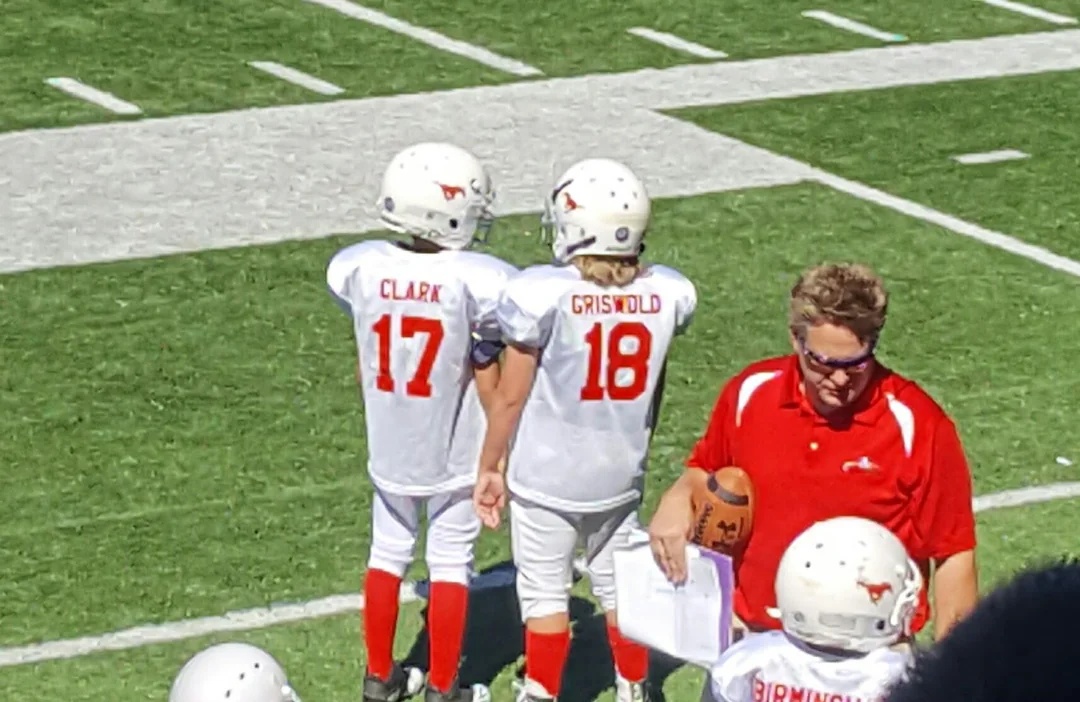
My son's football coach pulled me aside after practice last September and said something I've been hearing in my head every day since. "The other boys don't want him on the team." Not — he's struggling with the playbook. Not — he needs to work on his footwork. The other boys don't want him. If you are raising a boy who feels too much for the rooms he's in, I need to tell you what happened next. Because I spent eighteen months trying to toughen my son up. And the thing that finally changed everything was not a new sport or a new coach or a book about raising boys. It was a t-shirt I put on without thinking on a Saturday morning. My son's name is Eli. He's eleven now. He was nine when I signed him up for football. I want to be honest about why I signed him up, because the reason matters to the rest of this story. I signed him up because my father signed me up. And his father signed him up. And in my family, boys play football. That is what boys do. That is how boys learn to be boys. I believed that. I'm not sure I believe it anymore. But I believed it when Eli was nine. Eli is not built for football. I don't mean physically. He's a normal-sized kid. Average height, average weight, fast enough, coordinated enough. I mean something else. Eli is the kid who apologizes after a tackle. He's the kid who checks on the boy he just knocked down before he gets back in the huddle. He's the kid who cried on the field — in front of the whole team, in front of the other parents — when his team lost the third game of the season. Not a tantrum. Not a meltdown. Quiet crying. Helmet off. Sitting on the bench with tears running down his face because the loss hurt him in a place that the other nine-year-olds didn't seem to have. The other kids looked at him. Some of them looked away. A couple of them laughed. One of them — I saw this from the bleachers — said something to the kid next to him while looking at Eli. I don't know what he said. I can guess. I walked to the car with Eli after that game. He was silent. I said — "Buddy. It's okay to be upset. But you gotta hold it together on the field. The other guys are watching." I said that to my nine-year-old son. I want you to sit with that sentence for a second. Because I have sat with it for two years and I am still not done being ashamed of it. I told my son — who had just experienced a real feeling, a big feeling, a feeling that proved he cared more than any other kid on that field — to hide it. Because the other guys were watching. That is what my father said to me. Word for word. After a game in 1994 when I was ten. And I carried that sentence for thirty years and I handed it to my son in a parking lot like a family heirloom. Eli played for another year. He didn't cry on the field again. He learned. He learned to hold it. He learned to swallow it. He learned to put his helmet back on and jog back to the huddle and not look at anyone. He also stopped talking in the car on the way home from games. He also stopped asking me to throw the ball with him in the yard. He also started going straight to his room after practice and closing the door and not coming out until dinner. I told myself it was normal. Boys get quiet. Boys pull away. That's what boys do. That is the second sentence my father gave me. And I used it the same way I used the first one. To avoid looking at what was actually happening. What was actually happening was that my son was learning, at nine and ten years old, that feeling things was a liability. That caring too much was a weakness. That the boys who won were the boys who didn't cry, and the boys who cried were the boys the other boys didn't want. He learned it perfectly. By the time Coach Davis pulled me aside after practice that September, Eli was ten. He had been on the team for a year and a half. Coach Davis is a decent man. He was not cruel about what he said. He was matter-of-fact. He said — "Eli's a good kid. I like him. But the other boys have kind of... moved past him. They don't pick him in scrimmages. They don't include him in the huddle talk. He's on the outside of it." He paused. "Honestly? I think football might not be his thing. He doesn't have the edge. Some kids do and some kids don't. He just — he doesn't." He said it like it was neutral. Like "doesn't have the edge" was the same as "doesn't have the height" or "doesn't have the arm." But what he was saying was — your son feels too much for this sport. Your son cares too much. Your son is too soft for the room he's in and the room has noticed and the room has decided. I drove home with Eli in the backseat. He didn't say anything. He looked out the window. About ten minutes into the drive he said — "Dad, am I too soft?" I want to tell you what that sentence did to me, because I don't have good language for it. It felt like somebody had reached into my chest and grabbed something and pulled it halfway out and left it there. Because I knew where he got the word. He didn't get it from the other boys. He didn't get it from Coach Davis. He got it from me. Not because I ever called him soft. I didn't. I would never. But I told him to hold it together on the field. I told him the other guys were watching. I told myself he was "just getting quiet" when he stopped talking in the car. I sent him into a room every day that was built for boys who didn't feel things and I watched him try to stop feeling things and I called it growing up. He got the word "soft" from the space I created around him. He figured out what I was not saying. Kids are better at hearing what you don't say than what you do. I said — "No, buddy. You're not too soft." He said — "Then why don't the other kids want me on the team?" I didn't have an answer. I want to tell you what I did next, because I tried everything and most of it was wrong. Soccer. Signed him up in October after we quit football. Different sport, different kids, fresh start. He liked it more. He was decent at it. But the same thing happened. He was the kid who said sorry after a hard challenge. He was the kid who helped the other team's player up. The other boys on his team were fine with him but they didn't seek him out. He was tolerated. Not included. There is a difference. Wrestling. My brother's idea. "It'll toughen him up." Three weeks. Eli hated the contact. Hated the aggression. Came home after the second match and said — "Dad, I don't want to hurt anyone." I pulled him out the next day. Martial arts. The instructor was excellent. Patient, calm, no aggression. Eli lasted two months. Liked the discipline. Did not like sparring. Quit before the belt test. Therapy. Not for a disorder. Just to talk. His therapist — a woman named Dr. Reeves, very good, very calm — told me after four sessions that there was nothing wrong with Eli. She said — "He's not anxious. He's not depressed. He's not struggling with anything clinical. He's just empathetic. Deeply empathetic. In a world that punishes empathetic boys." She looked at me. "The question isn't what's wrong with Eli. The question is why the spaces you're putting him in don't have room for a boy like him." I sat with that for a long time. I sat with it the way you sit with something a professional says to you that you know is true and that you also know is an indictment of the way you were raised and the way you have been raising your son. I went home. I sat on the porch. My wife came out and sat next to me. She said — "How'd it go?" I said — "She said there's nothing wrong with him." My wife looked at me for a long time. Then she said — very gently, in the way she says things when she has been waiting months to say them — "I know there's nothing wrong with him. I've been telling you that since he was nine." She was right. She had been telling me. I had been hearing her and filing it under "she doesn't understand what it's like to be a boy" and moving on. Because my father's voice was louder than my wife's voice in my head. And my father's voice said boys need to toughen up. And my wife's voice said Eli is fine the way he is. My wife was right. My father was wrong. It took me eighteen months and four sports and a therapist to hear what my wife said at the kitchen table when Eli was nine. Now I want to tell you about the shirt. It was a Saturday morning in March. I was at Eli's soccer game. Standing on the sideline with the other dads. Doing the dad thing — arms folded, coffee in hand, sunglasses, yelling supportive things at kids who can't hear you. Eli was on the field. He was playing fine. Not great, not bad. He was doing the thing he always does — running hard, passing well, and checking on any kid who went down. Halftime. He came over to the sideline. Sat on the bench. Drank his water. A kid from the other team walked past the bench on the way to his own sideline. He bumped Eli's shoulder. Not hard. Not on purpose. Just walked past. Eli said — "Sorry." The kid didn't hear him. Kept walking. But I heard him. My son apologized to a stranger for being bumped. And I felt something break in my chest that had been cracking for eighteen months. I was wearing a t-shirt under my jacket that morning. I had bought it a few weeks earlier off an ad on my phone. DearPersonCo. Started by a woman who lost her sister to suicide. A portion of every sale donated to mental health causes. Front said "you are enough." I had bought it because I was up at midnight scrolling and those three words stopped me. Not for Eli. For me. Because I had been sitting with what Dr. Reeves said for months and I was starting to understand that the boy I had been trying to toughen up was already tougher than any kid on that football field. He was tougher because he felt everything and he kept showing up anyway. That is harder than not feeling anything. I know, because I have spent forty years not feeling things and it is the easiest thing I have ever done. Second half started. I was standing on the sideline. Jacket unzipped because it was warming up. Shirt showing. A dad I didn't know — not from our team, from the other team — walked over. He said — "Hey man. Sorry to bother you. Where'd you get the shirt?" I told him. He stood there for a second. Then he said — "My son's the goalkeeper on the other side. Number twelve. He cried after the last game because he let in three goals. In front of the whole team." I looked at the field. Number twelve. Skinny kid. Maybe ten. The dad said — "His coach told me he needs to develop a thicker skin. My wife told me to take him out. My father told me crying is part of learning." He looked at me. "I don't know what to tell him. I tell him it's okay to feel things and then I send him back onto a field where feeling things gets him laughed at. I feel like a liar." I said — "My son apologized to a kid who bumped into him five minutes ago. He apologizes for existing in spaces that don't have room for him. I've spent eighteen months trying to find a space that does." He said — "Have you found one?" I said — "No. But I stopped looking for a space to put him in and started trying to be the space myself. I'm wearing a shirt that says 'you are enough' and I didn't buy it for him, I bought it for me, because I needed to believe it about him before I could say it to him." He was quiet for a second. Then he said — "I need one of those." I told him the brand. Told him to get it from DearPersonCo's site because there are copies everywhere and the money from those goes nowhere. We watched the rest of the game together. His son let in one goal in the second half. He looked at his dad on the sideline after. The dad gave him a thumbs up. After the game, Eli walked over to me. He looked at my shirt. He had seen me wear it around the house but this was the first time he'd seen it at a game. He said — "Dad. Can I have one?" I said — "Yeah, buddy. I'll order you one tonight." He said — "Can I wear it to school?" I said — "You can wear it wherever you want." He wore it to school the following Monday. I want to tell you what has happened in the five months since, because it is not what I expected. Nobody at school made fun of the shirt. I had been worried about that. I had almost talked him out of wearing it because I was projecting my own fear of vulnerability onto an eleven-year-old. His teacher noticed. She pulled me aside at pickup and said — "I love Eli's shirt. Three boys asked him about it today. He told them what it said on the back and one of them asked where to get it." Three boys talked to my son about his shirt. Three boys who had never initiated a conversation with Eli in a full school year walked up to him because of three words on his chest. Two weeks later, Eli came home and said — "A kid at recess told me he liked my shirt. He said his mom has one too." The kid's name was James. They started sitting together at lunch. James is not a quiet kid. James is loud. James plays basketball. James is the kind of kid Eli would never have approached. But James approached Eli, because James saw the shirt, and because James's mother had bought one for herself after a hard year, and James recognized the words. They have been friends for four months. Not best friends. Not inseparable. But friends. They sit together. They talk. James came over to our house last month and they played video games for three hours. Eli laughed so loud I could hear it from the kitchen. I had not heard Eli laugh like that in a year. His soccer coach pulled me aside last week. Not the football coach. The soccer coach. He said — "I don't know what's changed with Eli, but he's been different lately. He's talking more on the field. He organized a passing drill during warmups last Saturday without being asked. The other kids are responding to him." He paused. "He's still the kid who helps the other team up. I hope you don't coach that out of him. That's the best thing about him." I said — "I'm done coaching things out of him." I drove home. Eli was in the backseat. He said — "Dad, practice was good today." I said — "I know, buddy. Coach told me." He said — "He said I was a leader." I looked at him in the rearview mirror. Eleven years old. Sitting in the backseat in his cleats. Same kid who cried on a bench at nine. Same kid who apologized to a stranger for being bumped. Same kid whose football coach told me didn't have the edge. He didn't need the edge. He needed one person — one kid, one James, one loud basketball player who recognized three words on a shirt — to see him. That's all it took. One. I want to say something now, to whoever is reading this. If you are raising a boy who feels too much. A boy who cries after games. Who apologizes after tackles. Who checks on the kid he just knocked down. Who comes home from practice and goes straight to his room and closes the door. If you have been told he needs a thicker skin. Needs more edge. Needs to toughen up. If you have been told those things by a coach, by a father-in-law, by your own father, by the voice in your own head that sounds exactly like your own father. Your son is not too soft. Your son is the only kid on the field who is brave enough to feel what he feels in a room full of boys who have already been taught not to. That is not weakness. That is the hardest thing a boy can do. Stop trying to find a room that has space for him. Be the space. Wear the words on your chest before you try to put them on his. Because he is watching you. He has been watching you his whole life. He will not believe "you are enough" if it comes from a therapist or a shirt or a coach. He will believe it when he sees his father wear it. When he sees his father stand on a sideline with those words across his chest and not be ashamed of them. When he sees his father talk to another dad about what it means to raise a boy who feels everything in a world that tells boys to feel nothing. He will believe it then. The shirt is from DearPersonCo. Get it from their site — the copies don't support the causes the real one does. Get one for yourself first. Wear it to the next game. To the next practice. To the grocery store on a Saturday morning. Then get one for him. Let him decide when to wear it. He'll wear it when he's ready. And when he does, some loud kid named James is going to walk up to him at recess and say — "Hey. I like your shirt. My mom has one too." And your son — the soft one, the crying one, the one who apologizes for being bumped — is going to have a friend. One is enough. It was enough for Eli. It'll be enough for yours.
Performance Signals
- Status
- Still running
- Time Running
- 21 days
- Active Period
- Oct 12, 2026 → Today
- Advertiser live ads
- 2
- First Seen
- Nov 3, 2026
Creative & Links
- Meta page ID
- 1261114347075290
- Format
- Image
- Placements
- FACEBOOK, INSTAGRAM
- Country
- 🇺🇸 United States
- Original Ad
- Open in Meta Ad Library
More from DearPersonCo
See every ad this brand runs, with run dates, countries and the AI hook and angle of each.
Start 7-day free trialDearPersonCo
dearpersonco.storeDearPersonCo creates mental health clothing designed to spread encouragement, kindness and connection. Our inspirational hoodies, sweatshirts, t-shirts, and accessories feature meaningful messages that can reach the person standing behind you at exactly the right moment.
Shop Infos
- Created
- Sep 29, 2023 · 3y 2m
- Category
- Apparel › People & Society › Social Issues & Advocacy › Charity & Philanthropy
- Live ads
- 2
- Peak ads (7d)
- 2
Search every indexed Meta ad by niche, format, country and run time, save creatives to boards and track the brands behind them. 7-day free trial.