Omega Kitchenware ad: ⚠️ Please Don’t Get Scammed!

Omega Kitchenware
🇺🇸
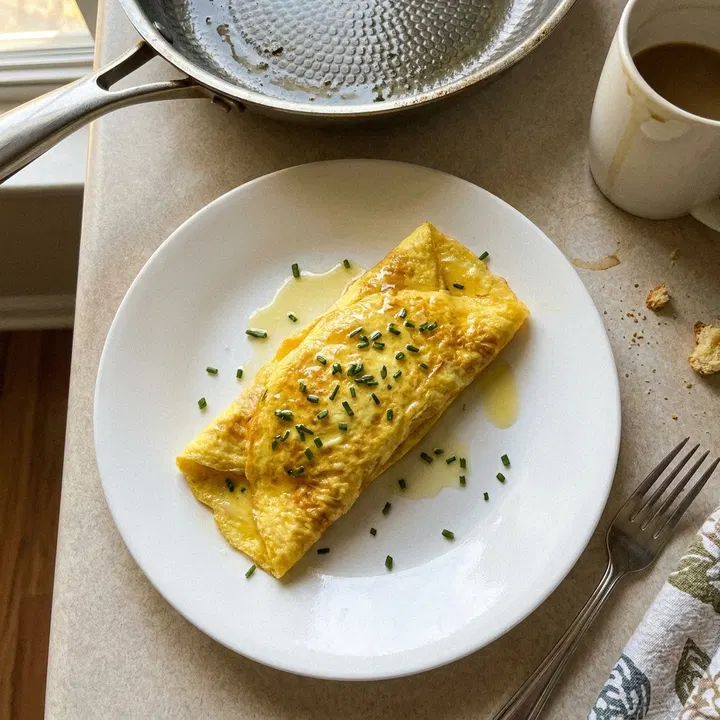
I'm going to lose my f*cking mind if one more home cook brings a "titanium" pan to my cooking class and says "I've had this one for 4 months and the eggs are sticking again — should I switch to a different brand?" Yes. Switch. But not to another coated "titanium" brand. Switch to a REAL titanium pan. Because most "titanium" pans — almost every brand every price point every "titanium-reinforced" "titanium-infused" "professional titanium" — aren't titanium where it matters. They put a COATING on your hob. And your sticking problem is caused by that COATING. Buying another coated "titanium" pan to fix a coating problem is like repainting a car to fix the rust underneath. The paint looks great. It just has nothing to do with the rust. My name is Karen Whitfield. Professional cook. 18 years in restaurant kitchens, now teaching home cooking classes. And I recommended "titanium" non-stick pans to my students for about 12 of those years before I understood what they actually were. Let me tell you about last Tuesday. A woman came to my Tuesday evening class with her pan. Third "titanium" pan in two years. "Titanium-reinforced," right there on the handle sticker. £39. She'd babied it — low heat, silicone utensils, hand wash only — every single day for 7 months. She put the pan on my demo worktop. And said "my friend recommended this brand. She says it's the best titanium pan. But it's been 7 months and my eggs stick every morning. Am I doing something wrong?" I picked up the pan. Tilted it to the light. Dull patch in the centre. Grey showing through. A few dark specks where the surface had started to lift. I turned the box over — she'd brought that too. Small print on the back: "titanium-reinforced non-stick coating." There it is. "Titanium-reinforced." Two words on a box doing £39 worth of heavy lifting, three times in a row. I put the pan down and asked her something nobody had asked her in 2 years of buying pans. "Can I explain why this can't work for what you want?" She looked at me like I'd slapped her. "This pan is non-stick. That's real. When it's new, eggs slide right off. That's also real. But the non-stick isn't coming from titanium. It's coming from a coating sprayed on top of an aluminium pan. A tiny pinch of titanium dust is mixed into that coating — just enough to print the word on the box. That coating is a sacrificial layer. Every time you heat it, it wears a little thinner. Gaps form. Food grabs the bare spots. That's your sticking. Those dark specks are the coating coming off. No amount of low heat or soft utensils can stop a coating from wearing away. You can slow it down. You can't stop it. The pan is doing exactly what it was designed to do — be non-stick for a while. It's just that 'a while' was never going to be very long." She stared at me for about 10 seconds. "So I've been buying a new coating every few months for two years?" £117. Three pans. On a word that was never describing the surface her eggs actually touched. "Your friend's pan that's still working? It's probably newer. Give it a few months. Same coating. Same countdown." "So what actually lasts?" "A cooking surface that IS titanium. Real metal, not sprayed on. So the only thing touching your food is the metal itself. And it has to be hammered — thousands of tiny dimples so food releases off the metal without any coating." "Wait — so a smooth titanium pan would stick too?" "A smooth metal surface grabs food. That's why a lot of brands that do use real titanium still sneak a coating on top. You need both: real titanium where the food touches, and a hammered surface. Wrong surface, it sticks. Coating on top, it wears out. You need the right material AND the right surface." She looked at her pan on my worktop. Then she looked at me. "Why didn't anyone tell me this in two years?" Because nobody asks. The box says titanium. The reviews say "eggs slide right off" — written in week one. The pan works beautifully for a month. Everyone assumes it's titanium because the box says so. But the sticking comes back. The oil creeps up. The scrubbing gets longer. The dark specks show up around month three. Because it was always a coating. And no coating — in any form at any price from any brand — lasts. She ordered a real titanium pan that night. Told me she'd keep the old one for camping. Then she put the old one in my classroom recycling bin on her way out. "I'm not cooking my kids' eggs on a coating that's flaking." Fair. Week 1: she burned her first egg. Real metal needs a preheat. I'd warned her. Week 2: two-minute preheat, a little butter. The egg slid clean across. She sent me a video. Week 4: still sliding. This is where her last three pans started to stick. Week 8: metal spatula every morning. Not a mark on it. Month 3: no sticking. No dull patch. No dark specks. Just a faint golden tint on the surface — which is what real titanium does as it builds its own protective layer. Three coated pans in two years: £117. Sticking every time. One real titanium pan: lifetime guarantee. Eggs still sliding at month three. She texted me a photo of an omelette sliding onto a plate. Caption: "This is what one pan looks like." I saved that photo. I show it to every student who brings a "titanium" pan to class now. Here's what I need every home cook buying "titanium" pans to understand. The coating is the first problem. ANY coating — "titanium-reinforced," ceramic, diamond, granite, whatever — is a sacrificial layer. It wears thinner every time you heat it. The marketing word changes. The countdown doesn't. The titanium is the second problem. In most of these pans the titanium is dust in the coating. Not the surface. Even if the coating were perfect, you'd still be cooking on a coating — not on titanium. It's sending a plumber to fix an electrical problem. Real professional. Wrong system. The label is the third problem. "Titanium-reinforced" is marketing. Not metallurgy. Nothing on the box has to tell you how much titanium is in the coating — or that it's in a coating at all. The bar is on the floor. The replacement model is the fourth problem. A coated pan is a product you buy again. Every few months. The pan works great in week one, so the reviews are great, so you buy the next one. The metric isn't "does it last." The metric is "does it work long enough to review." Whether it's still working at month three is irrelevant to the business model. Your pan will happily be non-stick for four weeks. That doesn't mean it's titanium. It means the coating is new. I've now switched every student who asked me about their "titanium" pan to a real titanium pan. The pattern is the same every time. Months of coated "titanium": sticking returns. More oil. More scrubbing. A new pan. Weeks of real titanium: eggs slide. The surface stays the same. The extra oil goes back in the cupboard. Because one is real titanium. And the other is a coating pretending to be titanium. The pan I put in my students' hands is OMEGA. Real titanium cooking surface, hammered, no coating anywhere. Metal-utensil safe. Lifetime guarantee. 90-day money-back trial. It's also what Michelin-star chef James Whitmore cooks on — and he refuses to touch anything else. He put his name on a deal right now: the OMEGA hand-hammered titanium pan for £76.95 instead of £220. I'll leave it below. 👉 omegakitchenware.com/pages/whitmore-deal-uk If you have a "titanium" pan on your hob right now — it probably worked beautifully at first. Genuinely. The coating was new. Your eggs slid. But your eggs don't know the word on the box. They only touch what's on the surface. And on most of these pans, that's a coating. A new coating every few months. Or one pan made of the metal it says on the box. Stop buying better coatings and hoping one finally lasts. Buy a real titanium pan. Two weeks to learn the preheat. Then the eggs slide in a way that 7 months of babying a coated pan never achieved. Because you're finally cooking on real titanium. P.S. The box says "titanium-reinforced." Ask the brand to show you where the titanium is. In the cooking surface — or in the coating? One question. Most of them won't answer. Because the titanium is in the coating. The label is marketing. Your food touches the coating. Those are two different things and no amount of branding makes them the same. P.P.S. A smooth surface is a problem even for pans that DO use real titanium. Smooth metal grabs food. That's why some brands quietly add a coating on top — and you're right back to a countdown. If you're going to buy titanium, buy a real titanium pan with a hammered surface and nothing on top. A coating with the word "titanium" on the box is how you spend £117 on two years of sticking. A real titanium pan with a hammered surface is how you buy one pan and keep it. See why a Michelin-star chef cooks on nothing else — and get it for £76.95 instead of £220: omegakitchenware.com/pages/whitmore-deal-uk
Performance Signals
- Status
- Still running
- Time Running
- 14 days
- Active Period
- Oct 20, 2026 → Today
- First Seen
- Oct 28, 2026
Creative & Links
- Meta page ID
- 151578941380618
- Format
- Image
- Placements
- FACEBOOK, INSTAGRAM, AUDIENCE NETWORK, WHATSAPP, THREADS
- Country
- 🇺🇸 United States
- Landing Page
- omegakitchenware.com/pages/whitmore-deal-uk
- Original Ad
- Open in Meta Ad Library
More from Omega Kitchenware
See every ad this brand runs, with run dates, countries and the AI hook and angle of each.
Start 7-day free trialOmega Kitchenware
omegakitchenware.comShop Infos
- Created
- Apr 22, 2022 · 4y 7m
- Category
- Home & Garden › Kitchen & Dining › Cookware & Diningware
Search every indexed Meta ad by niche, format, country and run time, save creatives to boards and track the brands behind them. 7-day free trial.