Tavio ad: Support Your Body's Natural Wellness Systems 🌿

Tavio
1.6K active ads🇺🇸
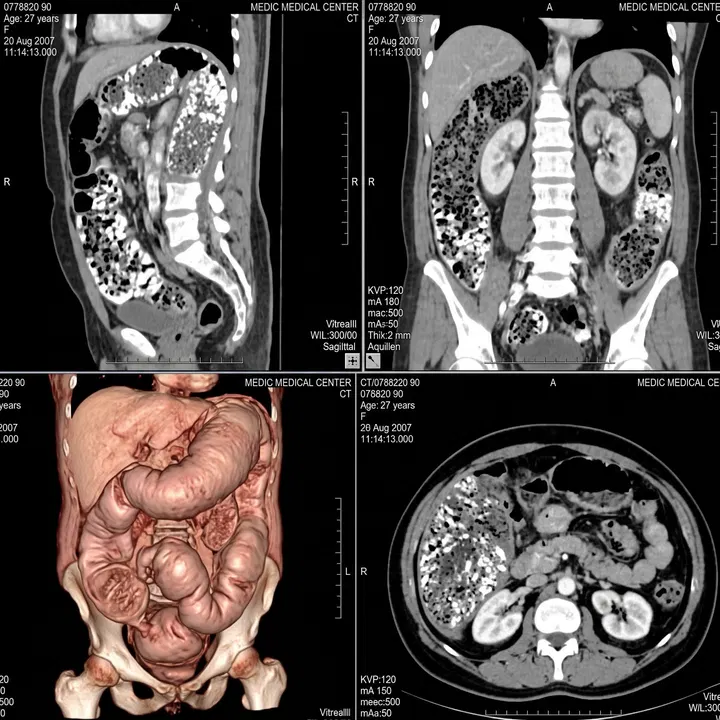
I'm a Swiss gastroenterologist. My colon stopped moving at 52 and I refused to take the Linzess I prescribe every day. Here's what I did instead. My name is Dr. Lukas Meier. I am 56 years old. I have been a practicing gastroenterologist for 22 years. Chronic constipation is one of the most common things I treat. I spent the first 18 years of my career in Zurich. I trained under some of the strictest gastroenterologists in Europe. In Switzerland, we did not hand a patient a prescription laxative in the first 15 minutes of a consultation. We asked why the colon wall had stopped contracting before we ever treated the symptom the colon wall was producing. Then, four years ago, my wife's company transferred her to New York. I moved with her. I joined a good practice. Good doctors. Colleagues I still respect. But I want to tell you what happened to my own body in those first three years in America. Because that is why I am writing this. I did not think of myself as vulnerable. I was 52 when I arrived. Fit for my age. Normal digestion. No family history of GI disease that concerned me. My mother is 81 and still walks two kilometers a day in the Alps and has never taken a laxative in her life. Then I moved into a country where the food is not the food I grew up with. The bread has sugar in it. The chicken at the grocery store has sugar in the marinade. The salad dressings have sugar. The cereal my kids ate on weekends. The condiments in every restaurant. Even the yogurt — which in Switzerland is plain — is sweetened here by default. The portions are larger. The oils are cheaper. The processing is heavier. The fiber content is lower than anything I grew up eating. I found myself eating in restaurants three or four evenings a week because my wife and I were both working long hours in a new city and it was easier than cooking. I stopped going every morning the first year without noticing. My body the second year told the story. Movements had dropped from daily to every three or four days. The bloating after meals that I used to never think about had become a constant. I found myself unbuttoning my pants after dinner and sitting perfectly still on the couch because moving made it worse. My abdomen felt rigid by afternoon — hard, distended, like something was sitting in there that would not move. But I noticed. I told myself I would fix it. Cut back on eating out. Get back to the gym. Eat the way I ate in Zurich. I did both. Not perfectly, but I did. My third year was worse. Movements once every five to seven days. The bloating had spread from dinnertime to all day. My abdomen was hard by noon. The cramping that came at night would wake me at 2 AM and I would lie there pressing my hand against my stomach waiting for it to pass. I started cancelling dinner plans because I did not know if my body would cooperate. I sat in the chair — the patient's chair, not the doctor's — and I heard the exact conversation I had given hundreds of my own patients over 22 years. My colleague wanted to start me on Linzess, 145 micrograms. Recheck in twelve weeks. Add MiraLAX if the movements had not improved enough. She did not ask what my diet had looked like over the last three years. She did not ask when my symptoms had started relative to my wife's transfer. She read the motility study on my chart and reached for the prescription pad. In Switzerland, I would not have done that in the first consultation. I would have looked at the whole picture before I ever reached for a drug that manages the symptom without touching the cause. I told her I would think about it. I was not going to take it. I prescribe Linzess every week in this country. I have to. It is the standard of care. But I know what the drug does. I know the mechanism cold. And I know what it does to people over years on it. The diarrhea episodes that swing the other direction without warning. The cramping that never fully goes away. The $400-a-month prescription that owns you indefinitely. The dependency my patients describe — and I have nothing to offer them for. And I know what Linzess cannot do. It cannot heal the colon wall that has already dried out. It only floods the inside of the tube with fluid. The movement comes — loose, urgent, unreliable. The dried-out wall underneath keeps deteriorating. That is why so many of my long-term Linzess patients still end up with worsening motility, escalating doses, and eventually the conversation about adding a second drug on top of the first. Their Linzess managed their symptom. It never touched the disease. I was not going to do that to my own body. Then, six weeks later, my follow-up came back. Movements once every eight days. Transit time nearly doubled from baseline. My worst results ever. I sat at my kitchen table with the printout in front of me and I felt something I had not expected. Not medical concern. Fear. Because I know exactly what those numbers become if you ignore them. I know what the standard American GI protocol does over the next 20 years to the woman who takes her MiraLAX every night and watches the motility decline anyway. Transit time climbing. Bloating spreading. Abdomen distending further with every follow-up. Then the emergency room visit nobody saw coming. I was not going to be that man. This time I was going to do it properly. Every recommendation I had given a patient over 22 years, I gave to myself. I cut eating out to once a week. Stopped drinking anything sweetened. Went back to the way I ate in Switzerland — simple bread, fish, vegetables, real yogurt, one glass of wine at dinner. I got back into the gym six mornings a week. Zone 2 cardio. Some weights. An hour a session. I added 35 grams of fiber a day. Drank 80 ounces of water. Ate the exact high-fiber protocol I had been recommending to my own patients for 22 years. My movements came a little more often. Once every five days instead of eight. Not enough. Not close. I remembered from my training in Switzerland that there was European research on castor oil. There were GI papers I had read during my residency about it stimulating smooth muscle contractions and reducing intestinal inflammation. I bought some castor oil capsules from Amazon. One of the top-rated ones. Took two a day for eight weeks. Nothing moved. Tried a different brand. Six weeks. Same result. I concluded my body was simply too far along for castor oil to make a meaningful difference. That was my medical conclusion. I was wrong about why. About six months ago, one of my long-term patients came in for a follow-up. She is 61. Chronic constipation for over a decade. Movements had been stuck at once every six to eight days. On MiraLAX every night since her diagnosis. Her previous GI doctor had been recommending adding Linzess. She had come to me for a second opinion four months earlier and I had given her the same conversation I always give. I pulled up her chart and stopped. Daily movements. Every morning. No bloating. No straining. Transit time normalized. I asked if she had adjusted her medications. She had not. I asked what she had changed. She reached into her bag and pulled up a photo on her phone. A castor oil pack. Worn around her abdomen. A cotton compress with a stretchy wrap and adjustable straps. "I didn't want to bother you with it, Doctor. I know you probably think home remedies are a waste of time. But my daughter kept sending me research. My sister found this brand. My movements started coming back. So I stayed on it." Her chart was right in front of me. I knew her well enough to know she was not fabricating anything. Her motility study had been drawn the same week, at the same facility, where every previous study was done. She said: "The regular ones don't work, Doctor. The cheap castor oil at the drugstore, the DIY cotton rag from YouTube. You have to get the one with the real oil and the real compression wrap. My sister tried three different setups before she found this one." I thanked her. I told her to keep doing what she was doing. That night, I sat at my kitchen table with my laptop and went back through the research the way I should have four months earlier. Here is what I found. And here is what I need you to understand, because I did not fully see it until that night. Chronic constipation is not really a motility problem. The slow transit is the symptom. The real problem is this: after years of estrogen decline during perimenopause — or in men, after years of age-related hormonal shifts — the smooth muscle wall wrapped around the outside of the colon loses its lipid saturation. The oil that kept the muscle soft, flexible, and able to contract dries out. The wall that is supposed to squeeze waste through in rhythmic waves becomes stiff. Rigid. Unable to contract. Your colon stops being a pump. And once the wall has dried out, every fiber supplement you swallow adds bulk to the inside of a tube whose walls can no longer push it through. Every dose of MiraLAX pulls water into the inside of the tube. The dried-out wall on the outside still cannot contract. The waste sits there. Presses against the wall. The bloating builds. The cramping spreads. And the motility keeps declining. The dried-out wall causes every constipation complication. Not the transit time number. The dried-out wall. The Linzess my colleague wanted to prescribe would have flooded the inside of my tube with fluid. It would have done nothing to re-oil the wall underneath. Flooding the inside does not heal the damage. It just hides how bad it is. Your compliance is not the problem. The protocol treating your compliance as the solution — that is the problem. I went back to the research on castor oil at 1 AM in my kitchen and I finally understood what I had missed the first time. There is one key compound in castor oil that exists in no other plant oil on earth. Ricinoleic acid. It makes up 90% of the oil. Ricinoleic acid, applied transdermally — through the skin — integrates directly into the dried-out smooth muscle wall and restores the lipid saturation the wall lost when hormones shifted. The wall that had stopped contracting begins re-oiling. Softening. Contracting again. The waste is what is stuck. The dried-out wall is the lock. Ricinoleic acid is the only natural compound documented to re-oil that wall directly. And the delivery is the second job. Heat trapped by a compression wrap dilates the blood vessels and opens pathways 3.5 inches deep into the tissue. Sustained overnight contact during peak tissue absorption drives the ricinoleic acid into the colon wall at the depth where the problem actually lives. Because here is the part almost nobody names: it is not just the wall sitting there dried out. It is the continued hormonal decline, month after month, pulling more lipid out of the wall faster than it can repair itself. Two functions. One compound. One re-oils the wall. The other — the transdermal delivery with heat and compression — drives it deep enough to reach where the damage lives. Then I understood why the Amazon capsules did nothing for me. Ninety percent of what is sold as castor oil for constipation is used the wrong way entirely. It is swallowed. Sent down the inside of the tube. A completely different pathway from the one the research used. Oral castor oil works the same direction as fiber, MiraLAX, and Linzess — from the inside of the tube. It never reaches the dried-out wall on the outside. It causes cramping and diarrhea by irritating the intestinal lining, then stops working the moment you stop taking it. So the cheap castor oil most patients buy to fix their constipation is actually irritating the organ that is supposed to be healing. And even when someone tries a castor oil pack — the right idea — they usually do it wrong. A thin cotton rag soaked in bulk processed oil from the drugstore. Twenty minutes on the couch. No compression. No heat. No overnight contact. The active compound needs sustained compression to hold it against the skin. It needs body heat trapped by the wrap to dilate the vessels and open the pathway. And it needs overnight contact, because tissue absorption peaks during deep sleep. A twenty-minute rub with no wrap has no compression, no trapped heat, and almost no absorption time. The ricinoleic acid reaches the surface of the skin and never gets close to the colon wall underneath. The two brands I had already tried — both oral capsules — failed because they were aimed at the wrong direction entirely. Inside the tube. Not through the skin to the wall. I needed real organic cold-pressed castor oil — ricinoleic acid intact, not degraded by processing — and a real compression wrap that could actually deliver it through the skin overnight. I picked up my phone and texted my patient at 1:30 AM. She replied the next morning with the brand. Tavio. I looked into it before I ordered. That is how I was trained. You do not put your name behind a product the way you would not put your name behind a medication. You verify the source. You check the method. I checked the oil. Organic cold-pressed castor oil. Ricinoleic acid intact — not hexane-extracted, not chemically processed, not degraded the way the bulk oil on shelves is. I checked the wrap. A real compression wrap — soft cotton inner layer that holds the oil against the skin. Stretchy outer fabric with adjustable straps for sustained pressure. Designed for overnight wear so tissue absorption peaks during deep sleep. Washable and reusable. No monthly bottle. No prescription. A simple overnight ritual, three to four nights a week. That was the brand I ordered. I started the following Monday. Oil on the cotton compress. Wrap it snug. Go to bed. That was the whole protocol. Week 1. Nothing dramatic on the surface. But the rigid, distended belly I had been living with for three years started to feel different. Softer. Less pressurized. The bloating that had me unbuttoning my pants after every dinner started to ease. Week 2. The post-meal bloating cleared almost entirely. I sat through a full dinner one evening and did not reach for the waistband once. My wife looked at me across the table and said, "You look comfortable." I had not heard her say that in two years. Week 3. The first morning urge. A real one. I sat down, went in five minutes, and felt done. I checked the clock three times. I had not had a complete, unassisted movement in over a year. Week 4. The cramping that had been waking me at 2 AM stopped completely. I slept through the night for the first time in two years. The rigid belly was gone. My abdomen felt soft and flat in the morning light. Week 6. My cravings for anything heavy after dinner went quiet. The distension I used to feel after a heavy meal stopped showing up. And I had dropped six pounds without changing anything else in what I was already doing. Week 8. My motility study came back. Colonic transit time: normalized. What had been taking seven to ten days was now taking 18 to 24 hours. Back in normal range. Motility study showed normal peristaltic contractions. The rhythmic squeezing had returned. Movements: daily. Every morning. Unassisted. Complete. My colleague measured them again to be sure. "Lukas. What did you do?" I told her everything. The patient with the photo on her phone. The kitchen table at 1 AM. The castor oil pack. The ricinoleic acid. The dried-out wall. She wrote it down. Every word. I did not need the Linzess. In Switzerland, this is where we start. Not with escalating medications. With the wall. I share this because I have spent four years quietly frustrated by what I see in this country. Patients who came to me after years of being told to be patient while their movements got further apart and their bloating got worse. Patients who felt like they were failing. Like their bodies were betraying them despite perfect compliance. They were not failing. The protocol was failing them. American GI training focuses on Linzess escalation and increasingly on combination protocols — adding MiraLAX on top of Linzess on top of fiber. Colon wall restoration — addressing the actual tissue damage — is not part of standard training here. Most American gastroenterologists graduated before this mechanism was understood in the literature. They practice what they were taught. That is not a criticism. It is simply where the knowledge gap sits. But the research exists. And you do not have to wait for your doctor to find it. I have quietly recommended Tavio to fourteen of my own patients since then. The ones who ordered have all come back with improved motility. One woman, 58, had been on MiraLAX and senna for eight years. Came back with daily morning movements. Transit time normalized. Bloating gone. Stuck for years on medication — then unstuck. She said: "Doctor. I feel like I got my body back." I think about the man I was becoming in my first three years in America when she says that. The one who was heading down the same road as the patients I had been treating my whole career. Here is what I wish someone had told me sooner. The castor oil pack research is real. But most of what is on the shelf is the wrong oil, in the wrong delivery, at the wrong method. Bulk processed oil in a thin cotton rag for twenty minutes on the couch is not what the mechanism requires. That is why so many patients tell me they tried castor oil and it did nothing. Tavio is organic cold-pressed castor oil with ricinoleic acid intact. A real compression wrap — soft cotton inner layer against the skin, stretchy outer fabric with adjustable straps for sustained compression. Designed for overnight transdermal delivery with body heat driving the compound 3.5 inches deep into the tissue during peak absorption. Washable and reusable. Three to four nights a week. That is the difference. I wasted three months on two oral brands that were never going to work. If my patient had not pulled up that photo on her phone, I would still be managing a symptom that was slowly grinding toward what my colleagues call "manageable" while my colon wall kept drying out underneath. If your movements come once a week if you are lucky. If you have been on MiraLAX or fiber for years and the bloating keeps getting worse. If you have been told your constipation is "well-managed" but your belly is hard by noon and you are cancelling plans because you do not know if your body will cooperate. The answer is not to escalate the medications. It is to re-oil the colon wall your medications were never designed to reach. I have no financial relationship with Tavio. I recommend it because the mechanism is sound, the research supports it, and I have seen it work — in my own body and in my patients' charts. 30-day money-back guarantee. Oil on the cotton compress. Wrap it on. Go to sleep. No prescription. You have spent years doing what you were told. It is time to address what you were never told. Your body is not failing you. The protocol treating your compliance as the problem is failing you. The dried-out wall is the barrier. Re-oil the wall. buytavio.com/pages/end-constipation (They're running it at 44% off right now.) ~ Dr. Lukas Meier, MD, Gastroenterology, 22 years P.S. My most recent follow-up four weeks ago: daily movements. Transit time normalized. Bloating gone completely. Abdomen soft and flat every morning. I never filled the Linzess. Every measure came back to normal without it. P.P.S. Do not buy cheap castor oil off the shelf or off Amazon and swallow it and believe you have done what I did. Oral castor oil goes down the inside of the tube — the same wrong direction as the fiber and the MiraLAX. And the bulk processed oil at the drugstore has the ricinoleic acid stripped out. Twenty of those capsules do not add up to one night of organic cold-pressed castor oil in a real compression wrap delivering it through the skin to where the wall actually lives. buytavio.com/pages/end-constipation
Performance Signals
- Status
- Still running
- Time Running
- 19 days
- Active Period
- Oct 15, 2026 → Today
- Advertiser live ads
- 1.6K
- First Seen
- Oct 28, 2026
Creative & Links
- Meta page ID
- 109525244774162
- Format
- Image
- Placements
- FACEBOOK, INSTAGRAM, AUDIENCE NETWORK, WHATSAPP, THREADS
- Country
- 🇺🇸 United States
- Landing Page
- buytavio.com/pages/end-constipation
- Original Ad
- Open in Meta Ad Library
More from Tavio
See every ad this brand runs, with run dates, countries and the AI hook and angle of each.
Start 7-day free trialTavio
buytavio.comTavio
Shop Infos
- Created
- Dec 19, 2025 · 11 months
- Category
- Health › Beauty & Fitness › Face & Body Care
- Live ads
- 1.6K
- Peak ads (7d)
- 1.6K
- Copies of this ad
- 1
Search every indexed Meta ad by niche, format, country and run time, save creatives to boards and track the brands behind them. 7-day free trial.