Cerise ad: Kimiko Was 81. She Challenged My 12 Years Of Research😢

Cerise
1.0K active ads🇦🇺
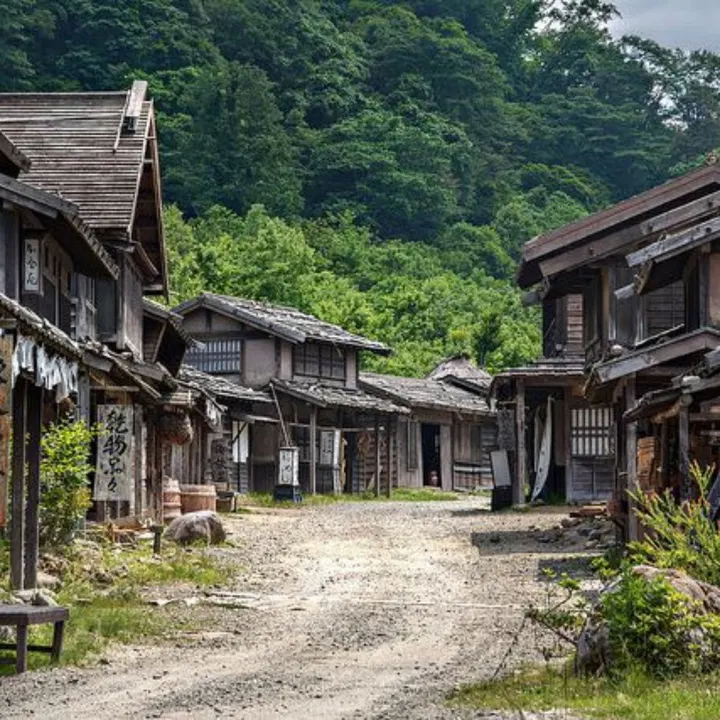
There's a mountain village in rural Japan — three hours west of Tokyo by bullet train — where the women live in 200-year-old wooden houses that absorb the humidity of the Japan Sea coast every winter. A 2020 Kyoto University study measured the indoor mold spore counts in those houses and found levels six times higher than the average Tokyo apartment. Then they ran mycotoxin panels on 52 of the women. The results were so unexpected the paper almost didn't get published. When I flew out to the village last spring to figure out HOW, an 81-year-old woman named Kimiko served me green tea, placed something under her tongue, and said one sentence through my translator that made TWELVE YEARS of my mycotoxin research feel like I'd been running the wrong experiment. I'm a mycotoxicologist. I've spent the last twelve years studying what mold does inside the human body. Running assays. Reading tissue biopsies. Documenting what happens when mycotoxins embed in human cells and refuse to leave. I work in a university research lab. Doctors send me samples when they've run out of answers. By the time a sample hits my bench, I already know what the chart is going to say. Because it always says the same thing. Patient presents with crushing fatigue that sleep doesn't fix. Doctor's notes: chronic fatigue. Blood panel normal. Recommend exercise. Patient returns. Waking up at 3am with a racing heart, drenched in sweat. Doctor's notes: likely stress. Prescribe sleep aid. Patient returns. Brain fog. Forgetting words mid-sentence. Doctor's notes: consider cognitive evaluation. Patient returns. Reacting to wine, cheese, sunlight, perfume. Doctor's notes: histamine intolerance. Patient returns. Puffy face she doesn't recognize in the mirror. Panic attacks at 2am. Doctor's notes: perimenopause. Or anxiety. Or fibromyalgia. Or IBS. FIVE visits. FIVE years. FIVE separate diagnoses. FIVE separate prescriptions. Then someone finally sends the sample to me. I run the assay and in less than sixty seconds I find what explains every single one of those visits. Mycotoxins. Ochratoxin A. Aflatoxin. Gliotoxin. Trichothecenes. Buried deep in her cells. Embedded in fat tissue. Hidden in membranes standard bloodwork will NEVER see. And surrounding all of it, a slime coating so dense her own immune system can't get through it. Biofilm. The fortress wall. Their personal bunker inside the patient's body. Five years of doctors. Five prescriptions. Thousands of dollars. And the answer was sitting on my bench in sixty seconds. The field consensus — the thing every young mycotoxicologist is taught in their first year — is that once mycotoxins embed in tissue behind biofilm, recovery takes YEARS. Most patients never fully get there. That's what I'd been telling patients for a decade. Then a paper came out of Kyoto University that cracked everything open. — Japan has a mold problem most Americans never hear about. The Japanese word for it is "kabi." Walk into any older Japanese house during tsuyu — the rainy season that runs through June and July — and you can smell it immediately. The traditional wooden construction absorbs moisture. The tatami mats hold humidity. The paper shoji screens don't help. Mold grows in the walls, under the floors, behind the sliding doors. By my training, Japan should have one of the highest mold illness rates in the industrialized world. It has one of the lowest. Japanese women live longer than any other population on earth. They have a fraction of the autoimmune disease, chronic fatigue, and dementia we see in American women the same age. Even in the rural prefectures with the highest mold exposure — Niigata, Toyama, Ishikawa along the Japan Sea coast — the women stay sharp into their nineties. In 2020, an environmental health team at Kyoto University went to a village in the mountains of Niigata Prefecture called Tōkamachi. 200-year-old wooden houses. Winter snowfall that buries the ground floors. The Japan Sea coast climate is one of the most humid in Asia for eight months a year. They did ERMI dust testing on 55 houses. The mold spore counts were SIX TIMES higher than the average Tokyo apartment. Then they ran mycotoxin blood panels on 52 of the grandmothers who lived in those houses. Ages 61 to 94. Most had lived in the same house since marriage. The results shouldn't have been possible. Zero elevated mycotoxin markers. Across all 52 women. In some of the most mold-exposed homes they had ever tested in Japan. The paper got buried in a Japanese environmental medicine journal. The researchers couldn't offer a Western-recognized mechanism, so Western journals wouldn't touch it. I spent three months corresponding with the lead researcher. She eventually mentioned something that hadn't made it into the published paper. Every one of the 52 women had referenced the same evening practice. Every single one. The researchers hadn't followed up because it fell outside their study parameters. Last May I flew to Tokyo. Took the Jōetsu Shinkansen three hours north. Then a local train. Then a taxi up a mountain road. — The woman the researcher introduced me to was named Kimiko. She's 81 years old. Lives in a wooden house built by her husband's grandfather in 1847. The house has been renovated three times — new roof, new kitchen, new bathroom — but the main structure is the original timber. The tatami room where she sleeps has been in continuous use for 178 years. Kimiko moved into that house in 1962 when she married at nineteen. She's lived there for 62 years. Her mother-in-law lived there until she died at 97. Her mother-in-law's mother died in that same house at 93. By my training, Kimiko should be a mycotoxin graveyard. She's 81. Clear-eyed. No puffiness. Not a hint of lymphatic swelling. She was arranging flowers when I arrived and her hands moved with the precision of someone forty years younger. She has outlived two of her three siblings and her entire group of childhood friends. She served me green tea in a cup that had belonged to her grandmother. We sat on the floor at a low table. My translator — a graduate student from the Kyoto research team — sat beside me. I asked her the question on day two. "Kimiko-san, forgive me. I study mold for a living. Everything I've been taught says you should be sick. Your mother-in-law should have been sick. The Kyoto researchers couldn't explain why none of you are. I came all this way to ask you directly. What are you doing?" She smiled. The kind of patient smile a Japanese grandmother gives a Western researcher who she already knows is about to be humbled. "The doctors who came from Kyoto asked us the same question. They thought it was the miso. The seaweed. The green tea. The daikon." She shook her head gently. "They never asked us what we do just before sleep." She stood up with the grace of someone who'd been sitting on tatami floors her entire life. Walked to a small wooden cabinet in the corner of the room. Opened it. Pulled out a small ceramic bottle with a cork stopper. Then a small lacquered spoon no bigger than a dime. She came back to the table. Poured a few drops of a dark liquid onto the lacquered spoon. Slipped the spoon under her tongue. Held it there for a full thirty seconds. Her throat did not move. Nothing went down. Then she said it. "The Americans swallow their medicine in the morning for a sickness that only wakes at midnight. We put it where the blood will take it. Then we sleep. The body does the cleaning while the mind rests. This is why we are not sick in houses that should make us sick." I sat there in a 178-year-old tatami room and felt my ENTIRE career shift under my feet. — Let me explain what I understood in that moment. Kimiko had just described, in simple Japanese grandmother wisdom, the exact mechanism I'd been trying to explain to colleagues for years. Here's what nobody tells you about mycotoxins. They don't do most of their damage during the day. They do it between 11pm and 3am — the exact window when your liver is running its detoxification cycle. These are the hours I've documented as PEAK toxin processing in every study I've ever published. In traditional Chinese and Japanese medicine, these hours are called the Liver Hours. Kimiko's grandmother had called them "kanzō no toki" — the time of the liver. The hours when the body does its deepest cleaning. But every oral protocol on earth is designed to be taken in the morning. By the time midnight rolls around and the mycotoxins mobilize, there's nothing left in the system to fight them. You're hunting nocturnal animals at noon. And every American protocol shares the same four fatal limitations. ONE. The supplements can't break biofilm. NOTHING you swallow penetrates the fortress walls mold builds inside your tissues. Whatever's floating loose gets touched. The toxins behind biofilm survive and recirculate the moment you stop. TWO. They don't reach what's embedded. Mycotoxins are buried in fat tissue and cell membranes. Oral capsules get destroyed by stomach acid and diluted across twenty feet of intestine. By the time anything reaches the cells, the concentration is a joke. THREE. They don't close the recirculation loop. When toxins finally get mobilized, the body has nothing to neutralize them. So they loop back through the bile into the gut and re-embed DEEPER than before. That's the "two-weeks-of-hope-then-crash" pattern. That's the herx everyone calls healing. It ISN'T healing. It's mold defending itself. FOUR. And they work during the wrong hours. The pill dissolves in the morning. By midnight it's gone. The mycotoxins emerge and NOTHING is waiting for them. Four limitations. Built into every binder, every CellCore stack, every CSM prescription, every $400-a-month functional medicine protocol on the market. A grandmother in a Japanese mountain village bypassed all four without ever reading a research paper. — Kimiko showed me the bottle up close. The recipe went back further than she could trace. Her mother-in-law had learned it from HER mother-in-law. Four generations of women inside the same wooden house, refining the ratios through sickness, pregnancy, winter, and old age. She wrote the ingredients down for me in careful Japanese characters that my translator read out one by one. NAC. Milk thistle. Glutathione. TUDCA. Fulvic acid. Humic acid. Every single ingredient I'd been studying for twelve years. But not in a pill. Not in a capsule. A few drops. Lacquered spoon. Under the tongue. Thirty seconds. Right before bed. Every single night since her wedding at nineteen years old. — When those compounds are absorbed sublingually — under the tongue, through the mucous membranes — they pass DIRECTLY into the bloodstream at 10 to 20 times the concentration of a capsule. No stomach acid destroying them. No dilution across twenty feet of intestine. Full strength to the cells where mycotoxins actually live. The NAC cuts through the biofilm shielding the mycotoxins in the tissues. The glutathione neutralizes them the second they're mobilized — before they can loop back through the bile into the gut and re-embed. The milk thistle protects the liver while it's doing the work. The TUDCA opens the bile pathway so the load actually MOVES OUT. The fulvic and humic acid bind what's loosened and carry it through the body's own elimination, replacing the trace minerals mold strips along the way. Every step of the recirculation loop. Closed. In one dropper. Every night. And it works during the EXACT window — 11pm to 3am — when the liver is already running detox and the mycotoxins are mobilizing. Kanzō no toki. The time of the liver. As a scientist, I can tell you. This is the ONLY approach that makes biological sense based on how these toxins actually hide, recirculate, and re-embed. The biofilm doesn't stand a chance. — Every traditional culture close to damp environments figured this out independently. That's the part that really got to me. Kimiko's village in Niigata Prefecture. Baltic grandmothers who kept sublingual tinctures for centuries. Ayurvedic practitioners in India prescribing sublingual bitters for over 4,000 years. Tibetan monks taking herbal drops under the tongue before sleep. Grandmothers in the American South who kept "spring bitters" under the tongue for the family. Chinese traditional medicine using sublingual preparations during the Liver Hours for over two thousand years. Different cultures. Different continents. No contact with each other. SAME practice. SAME delivery route. SAME results. In science, when independent groups arrive at the same conclusion without contact, we take that very seriously. We call it convergent discovery. Every traditional culture that lived close to damp, mold-breeding environments developed this practice. The ONE culture that stopped? Modern America. And we're the ones with the brain fog epidemic. The chronic fatigue. The 3am wake-ups. The MCAS. The mold illness no doctor can explain. Meanwhile, Kimiko is 81 inside a 178-year-old wooden house in one of the most humid regions of Japan, feeling like herself every single morning. — I flew home. Started the first batch at my own kitchen counter. It was a disaster. I bought NAC powder, glutathione, milk thistle extract, TUDCA, and fulvic acid separately from the lab supply shop. Tried to mix my own version. The glutathione oxidized overnight — turned brown by morning. The TUDCA wouldn't dissolve. The mixture tasted like battery acid and separated into layers within hours. I tried twice more. Different suspensions. Different ratios. Neither held. The compounds degraded before I could even dose a full week. Kimiko's formula had been refined across four generations of Japanese women inside the same tatami room. I had none of that institutional memory. Then I found Cerise. Every ingredient I'd been studying for twelve years. In the exact ratios the research supports. In a sublingual liposomal delivery system that holds the formula stable at full concentration. Two milliliters under the tongue. Thirty seconds a night. That's it. — Week one, my sheets were dry in the morning. No 3am wake-ups. First stretch like that in a year. Week two, the gurgling in my gut went quiet. First time in longer than I could remember. Week three — this is the week that matters. Every oral protocol I've ever studied CRASHES at week three. The mycotoxins mobilized in weeks one and two loop back through the gut and re-embed. Symptoms come back. Often worse. NOTHING came back. As a mycotoxicologist, I knew EXACTLY what that meant. The biofilm had been broken. The neutralization was happening in real time. The recirculation loop was actually interrupted. Week six. Full transformation. Fog gone. Energy steady all day. Sat through an entire research meeting without losing a single word. My daughter called from college and halfway through the conversation said, "Dad, you sound… light. Like something lifted off you. What happened?" Something had. I'd finally done for myself what Kimiko has been doing EVERY NIGHT for sixty-two years. — I wrote Kimiko a letter three months later through my translator. Told her everything that had happened. The reply came back four weeks later. Handwritten calligraphy on rice paper. Three lines, carefully translated by the Kyoto student. "Of course it worked. Your body remembered what to do the moment you stopped interrupting it. This is what grandmothers have always known." Then at the bottom: "The sadness is how long you had to look. The answer was never far. It was only under the wrong half of the day." She's right. That's what makes this story different from every other longevity practice I've studied. You don't need to fly to Japan. You don't need to live in a 200-year-old tatami room or inherit a four-generation family recipe. You just need the right formula. In the right delivery. At the right hour. — If you have crushing fatigue that sleep doesn't fix. If you wake up at 3am with a racing heart. If you have brain fog so bad you forget words mid-sentence. If you're reacting to wine, cheese, sunlight, perfume. If you don't recognize the puffy face in the mirror. If your doctor keeps saying "your labs are normal" while you feel yourself DISAPPEARING. Those aren't separate problems. Those are WARNINGS. Mycotoxins are recirculating inside you every single night. Hidden behind biofilm. Looping back through your gut. Re-embedding deeper every month. Your doctor won't find them. Standard bloodwork won't catch them. The pills won't reach them. I've spent twelve years proving that. But an 81-year-old Japanese grandmother in a mountain village showed me what actually works. The same thing every traditional culture on earth figured out independently. Under the tongue. Every night. During the exact hours the liver is already trying to clear. Every night you sleep without closing the loop is another night the mycotoxins recirculate. Another night they re-embed. Another night the person you used to be gets buried deeper. — The brand I use is called Cerise. Every ingredient I would have prescribed as a mycotoxicologist. Delivered the one way I would have wanted them delivered. Two milliliters under the tongue. Thirty seconds a night. One purchase. No subscription. 90-day money-back guarantee. If nothing changes, every penny back. But Cerise is a small company and they sell out constantly. If you click and it's in stock, don't wait. Kimiko is 81 inside a 178-year-old wooden house in the mountains of Niigata, feeling like herself every single morning. Because she cleans every night. Because her mother-in-law taught her. Because her mother-in-law's mother taught HER. Four generations of Japanese women who figured out what modern medicine still refuses to see. The person you used to be is still in there. Give her the sequence that finally closes the loop. 👉 https://trycerise.com/pages/cerise-lp3 This story is based on experiences commonly reported. Individual results may vary.
Performance Signals
- Status
- Still running
- Time Running
- 17 days
- Active Period
- Oct 17, 2026 → Today
- Advertiser live ads
- 1.0K
- First Seen
- Nov 1, 2026
Creative & Links
- Meta page ID
- 1203589096164615
- Format
- Image
- Placements
- FACEBOOK, INSTAGRAM, AUDIENCE NETWORK, WHATSAPP, THREADS
- Country
- 🇦🇺 Australia
- Landing Page
- trycerise.com/pages/cerise-lp3
- Original Ad
- Open in Meta Ad Library
More from Cerise
See every ad this brand runs, with run dates, countries and the AI hook and angle of each.
Start 7-day free trialCerise
trycerise.comCerise
Shop Infos
- Created
- May 8, 2026 · 6 months
- Category
- Health
- Live ads
- 1.0K
- Peak ads (7d)
- 1.0K
Search every indexed Meta ad by niche, format, country and run time, save creatives to boards and track the brands behind them. 7-day free trial.