OnAce ad: The group goes on without you.

OnAce
🇩🇪
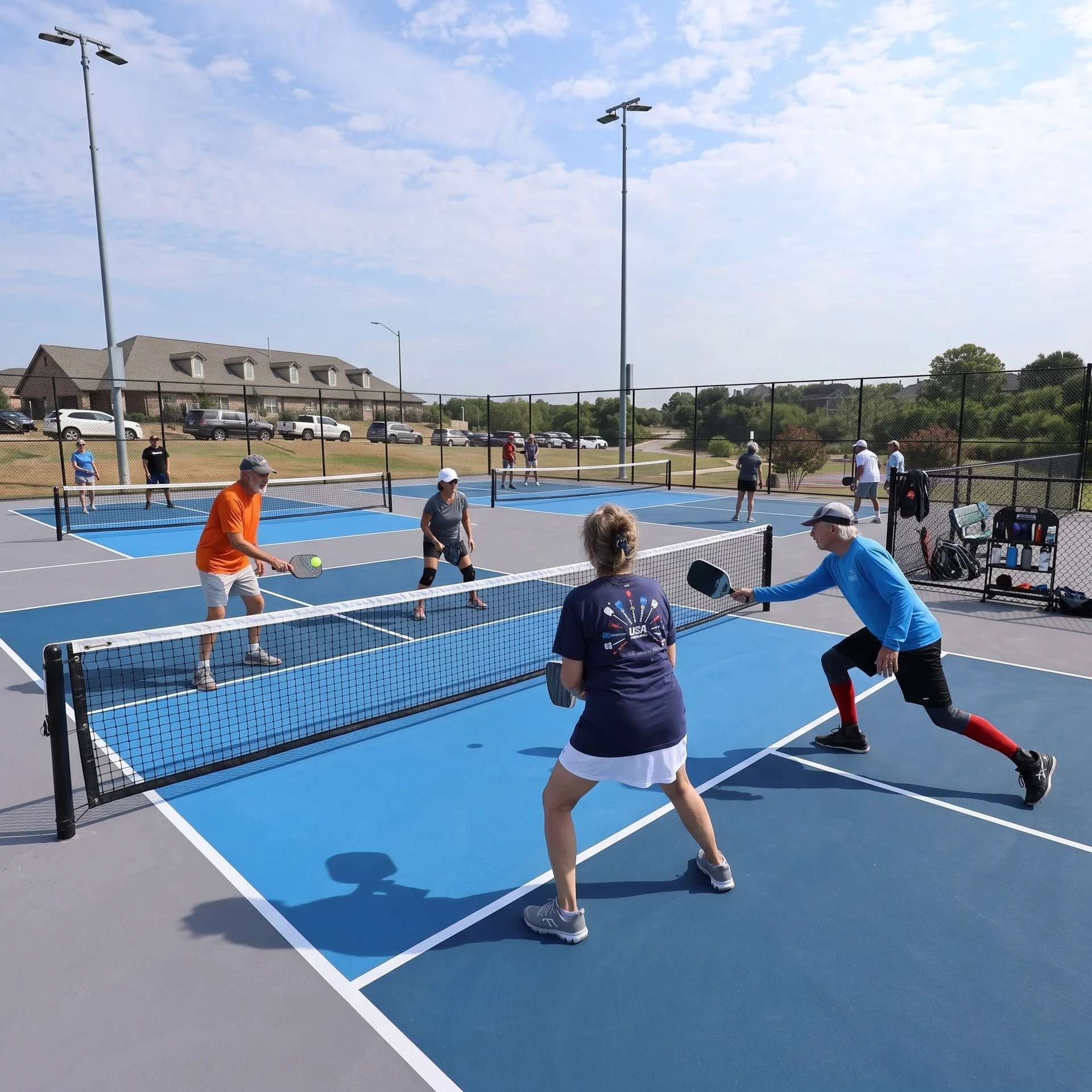
"I'm not going to be the reason Mom can't walk at seventy, Dad." I heard it through the kitchen door. My daughter, on the phone with her father, two weeks before Mother's Day. The pickleball tournament we'd played together for six straight years. She wasn't being cruel. She was being careful. And that was worse. Because she wasn't wrong. I could barely walk the next day. Heels, knees, lower back, all of it, like I'd run a marathon instead of three games of doubles. She'd watched me hold the railing on her front steps. She'd started carrying my bag to the car. What she got wrong was why. And so did I, for two years. If you're over 50 and the people who love you have started being careful with you. If they ask "how's the foot" instead of "you ready." If you've got a drawer full of things that worked for three weeks. Then somebody in your life has probably already made a decision about you, quietly, the way my daughter did. What nobody in my family checked was sitting inside my shoe the whole time. You can check yours tonight. It takes ten seconds, and by the end of this you'll know what you're looking at, and why a 67-year-old woman on a parking lot showed it to me when my own doctor didn't. My name is Karen. I'm 58. For fifteen years I was the one driving to 6am soccer. Orange slices, folding chair, the whole thing. Emily is 31 now, lives twenty minutes away, and six years ago she dragged me to the courts behind her rec center and put a paddle in my hand. I was hooked in a week. Tuesday and Thursday with the 7am ladies. Saturdays with Emily. And every May, the Mother's Day doubles at the club. Mothers and daughters, mothers and sons, forty teams, a bracket taped to the clubhouse window. We never won it. We made the semis twice. That was our thing. Then, two years ago, the mornings started. On the court it was the least of it. I felt it, a little, in the stops, and I played around it. More careful on the wide ones. Half a step slower getting up to the kitchen. Letting a few balls go that used to be mine. Emily probably noticed before I did. It was after that the bill came. The drive home. Hobbling around on aching feet the rest of the day and the next one. The first twenty or thirty steps every morning, hand on the nightstand, then the wall, then the doorframe. And it didn't stay in one place. First it was the heels. Then the knees started. Then my lower back, by the end of the day, standing at the sink. Not one spot. All of it. It moved around, and it got better during the day, and the next morning it was back. My husband told me I walked to the coffee maker like I was ninety. He meant it as a joke. I was in a bad mood for most of that year and he knows exactly why. So I did what everyone would try. Here's how that year went. Spring: ice after every session, then a full week off. Felt better. First Saturday back, same thing. Summer: stretching before and after. A night splint that made me feel like a patient. Drugstore inserts, three different kinds. Fall: custom orthotics, $500, from a podiatrist. They helped for maybe two or three weeks. Then back to square one. Winter: new court shoes, the ones from the "best pickleball shoes for heel pain" list, and I swear the cushioning inside went flat after a few weeks. Every one of those lists reads like an ad. A year. I tried all the brands. I spent all the money. And every single thing worked right up until it didn't. My doctor pressed on my heel for a few seconds and told me what I already knew. "You're 58, Karen. This is wear and tear. You have to play less. Or you keep going like this, and in a few years you're the one who needs help getting out of a chair." I didn't play less. I played scared. I'd lie awake before a Saturday wondering how bad Sunday would be. I'd do the math on my feet before saying yes to anything. And that's when the careful started. Emily carrying my bag to the car. Emily, at the kitchen line, saying "I've got that" on balls that were mine. Emily asking "how's the foot?" instead of "you ready?" Her husband pulling out a chair for me at a barbecue before I'd asked for one. My own husband putting a rubber mat next to the bed so the first step would land on something soft. Nobody was mean. Everybody was kind. I was being handled, in my own family, by people who loved me, and I couldn't say anything because they were right. Then the phone call. Sunday dinner at Emily's. I was setting the table in the next room. She was in the kitchen, on the phone with my husband. "I'm not going to be the reason Mom can't walk at seventy, Dad. I'll find somebody else for the tournament." I didn't hear what he said back. I didn't need to. He was the one who'd put the mat next to the bed. He'd been on her side for months. They'd probably talked about me like this before. The next morning she texted me. "Hey Mom, Jen from work asked me to do the Mother's Day thing this year. Is that okay? I figured you'd want to rest the foot." I wrote back, "Of course, honey. Go win it." I went anyway. I sat on the fence behind court three in a folding chair, the same chair from the soccer years, and watched my daughter play our tournament with a 34-year-old from her office. They lost in the semis. The team that beat them was a mother and daughter. The daughter was about Emily's age. The mother was 67. I asked the woman next to me. Sixty-seven, plays five days a week, and in the second game she went three steps sideways for a wide dink, stopped hard, got there, and rolled it crosscourt for the point. Nine years older than me. Doing the exact ball I'd been letting go for two years. They won the whole thing. I didn't stay for the trophies. I was walking to my car, slowly, when I passed her. She was sitting on the tailgate of a Subaru with one shoe off, and her daughter was over at the awards table. "You were on the fence all day," she said. I told her my daughter was in it. She asked which one. I said the blue shirt, the ponytail, the one with the fast hands. "She's good. She beat us in the first game." "She used to play it with me," I said. "Six years." She looked at me for a second. "What happened?" And I don't know why, but I told her. Standing on a parking lot, to a stranger. That on the court I can manage. That it's the day after that gets me. Heels, knees, back. That I walk like I'm ninety. That my daughter had replaced me with a girl from work and that I'd said "of course, honey." She nodded the whole time like she was hearing something she'd already heard. "Two years ago I sat exactly where you sat today. Megan took a girl from her office. I didn't speak to her for a week." She laughed. "And I had the orthotics. And the night thing. And the doctor telling me I was 65." "What changed?" "Somebody asked me a question nobody had asked me. What's in your shoe?" Her name was Diane. She pulled the insole out of the shoe in her lap and handed it to me. "Press your thumb in the heel." I did. It pushed back. "Now go home and do that to yours." I did, that night, in the garage. Pulled the insole out of a $140 pair of court shoes. Pressed. Flat. No structure. Nothing. The same flat piece of foam that comes in every shoe on the shelf. Here's what Diane told me on that tailgate. It took her about two minutes. Walking puts one times your bodyweight through the foot, straight down. That's what every insole is built for, including the one inside your pickleball shoe. It's flat walking foam without any structure. Pickleball is the opposite of walking. Every split step, every hard stop, every reach for the wide one puts three to four times your bodyweight through the foot, and it comes in from the side. Flat foam has nothing there to catch it. So the band under your arch catches it instead. Every stop. Every game. At first it's just sore. You ice it, you rest it, it calms down. That's the part ice and rest are built for. But every stop that nothing catches leaves a tiny tear. You don't feel each one. They add up anyway, because the next session opens them before the last ones close. After weeks of that, the band isn't sore anymore. It's worn down. There's nothing left for the ice to calm. That's why it stopped working, and why the pain kept going up instead of down. And a foot that can't absorb the hit passes it up the line. Ankles. Knees. Lower back. Doctors call it the kinetic chain. It's why the pain moves around. You don't have five problems. It's just one. One load, landing in the wrong place, three days a week. The inserts, the orthotics, the liner in the new shoes didn't hold for the same reason. All built for walking, straight down. They fold at three to four times from the side. Nothing where the sideways stop actually lands. "Your doctor called it wear and tear," Diane said. "He was half right. Something is wearing. He just never asked what's doing the tearing. He pressed on your heel and told you how old you are. Nobody pressed on this." What she'd found wasn't another cushion. It was the first insole built for the sideways load. Along the outer heel and arch, right where the sideways stop lands, there's a firm zone that holds its shape at three to four times bodyweight. It's called the Side-Catch. When you plant and brake, the load lands on the Side-Catch instead of on your body. Under the heel there's a Poron core. It compresses on the hit and pushes back, instead of going flat the way standard foam does after a few weeks of play. And once the sideways load stops reaching the band, the tearing stops. The band can finally close up. The knees and the back stop paying for every stop. Not because of something you do to it afterward. Because the damage stops happening in the first place. Diane had been on them two years. Five days a week. At 67. I'd watched her prove it on court three. I ordered two pairs that night. I didn't tell Emily. I didn't tell my husband. If I was wrong, I didn't want anyone being careful with me about that too. I want to be honest about the first week. I felt the insole, not the difference. I played Tuesday with the 7am ladies and the hard stops landed on something solid instead of folding under me. Wednesday morning was still Wednesday morning. Week two, I got out of bed and was halfway to the bathroom before I realized I hadn't touched the nightstand. I stood in the hallway for a minute. My husband asked what was wrong. I said nothing was. Week four, I played Saturday and Sunday. Monday morning I stood up like a normal person and walked to the coffee maker like a normal person and my husband looked at me over his cup and didn't say anything. Week six, Emily came for dinner and we hit at the rec center first. I went for the wide one. Got there. When we got to the car she reached for my bag. "I've got it," I said. She let go. She looked at me a little longer than usual. And the next Saturday, for the first time in a year, she said "you ready?" instead of "how's the foot?" Month three, I pulled the insole out and pressed my thumb into the heel. Still pushed back. The rubber mat by the bed went in the garage next to the night splint and the orthotics. Then, a few weeks ago, I was in Emily's kitchen. She was on the phone with her father again. The door was open this time. "No, Mom's playing. She's fine. She's moving better than I am right now." I pretended I didn't hear it. I heard every word. The club sent the save-the-date for next year's Mother's Day doubles last week. I didn't sign us up. I wanted to see. That night, one text from Emily. One word. "Partner?" If the people who love you have started being careful with you, it's not because you're old. It's because for two years, three to four times your bodyweight has been landing on your body instead of your shoe. They're reacting to that. So were you. If a doctor pressed on your heel and told you wear and tear, he was half right. Ask him what's doing the wearing. Age doesn't show up in a year. Flat foam under a sideways load does. If you've got a drawer full of inserts and orthotics that helped for three weeks, they were built for walking. It wasn't your fault. It was a mismatch. If you've said "of course, honey" to somebody who replaced you, I know exactly what that fence feels like. It's called OnAce. Pull the flat liner out, drop the OnAce in, trim it to the old one if you need to. It takes a minute. Wear it for 60 days. Tuesday mornings, Saturday doubles, back-to-back weekends. Judge it on your own hallway the next morning, not on my word. If it's not still pushing back in month two, send it back and you get every dollar. No forms, no questions. Sixty days is long enough for real sessions on real courts, and that's the only place this gets judged. Right now it's buy two pairs and save 50%, so both pairs of court shoes are ready to go. Or one for you and one for whoever's been carrying your bag. Tonight, pull the insole out of your shoe. Press your thumb into the middle. Then go tell whoever's been careful with you that they can stop. ~ Karen, 58, Mother's Day doubles, year seven P.S. Diane's thumb test is the one that got me. Her insole, two years in, still pushing back. The flat liner from my $140 court shoes next to it. Pull yours out tonight and hold it up to the light. You'll see what my daughter was really being careful about, and it wasn't my age.
Performance Signals
- Status
- Running at last crawl (Oct 29, 2026)
- Time Running
- 12 days
- Active Period
- Oct 11, 2026 → Oct 29, 2026
- First Seen
- Oct 29, 2026
Creative & Links
- Meta page ID
- 970145292858936
- Format
- Image
- Placements
- FACEBOOK, INSTAGRAM, AUDIENCE NETWORK, THREADS
- Country
- 🇩🇪 Germany
- Landing Page
- onace.store/products/pickleball
- Original Ad
- Open in Meta Ad Library
More from OnAce
See every ad this brand runs, with run dates, countries and the AI hook and angle of each.
Start 7-day free trialOnAce
onace.storeOnAce
Shop Infos
- Created
- Oct 17, 2025 · 1y 1m
- Category
- Health › Apparel › Footwear
- Copies of this ad
- 1
Search every indexed Meta ad by niche, format, country and run time, save creatives to boards and track the brands behind them. 7-day free trial.