Eye&Ease ad: Read this if you have macular degeneration☝️

Eye&Ease
116 active ads🇭🇰
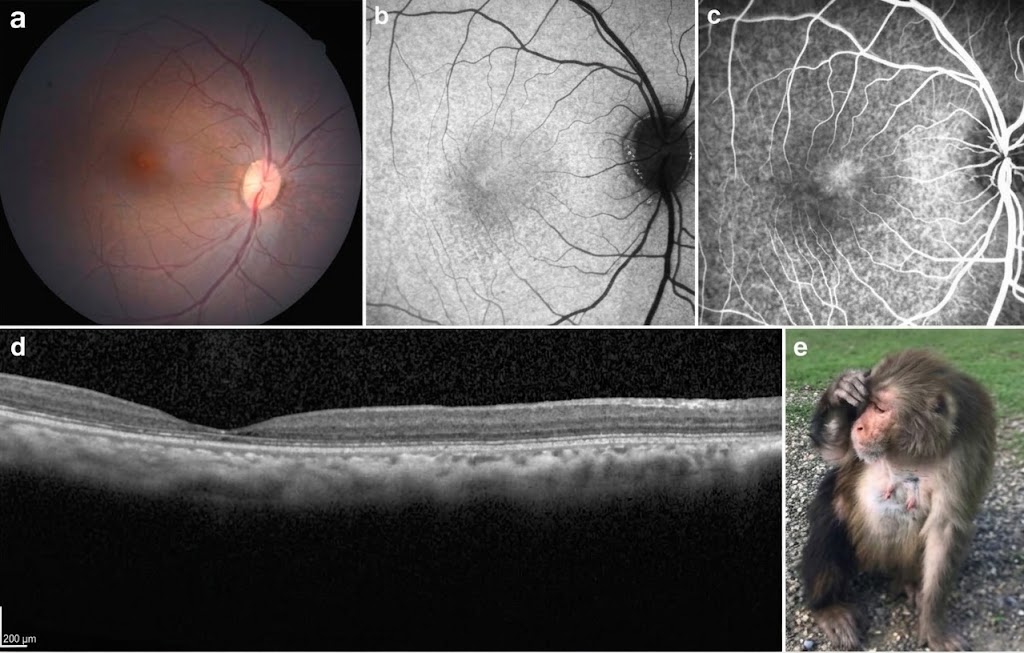
Did you know monkeys get macular degeneration too? Scientists have studied their eyes for over 40 years and found what your eyes need most. I’m a vision scientist. For 20 years I’ve studied the pigment at the centre of the eye: what builds it, what wears it down, and why most eye vitamins barely touch it. And most of what we know about that pigment came from monkeys. Researchers have studied their eyes for over 40 years. Three of their findings matter if you have macular degeneration. The third explains the one ingredient almost everyone leaves out. First: only one group of animals has a macula. Primates. Us, and monkeys. So if you want to know what keeps that yellow spot healthy, there's only one other eye like ours to study. The spot is yellow because of pigment. A filter laid over the centre of the retina, soaking up harsh light before it reaches the cells underneath. Thickest at the very middle, the part you read a face with. The body can't make it. Every bit of it has to be eaten. Which raised the obvious question. What happens to the centre when it isn't? Second: without the pigment, the centre goes unprotected. Starting around 1980, researchers in Oregon raised monkeys from birth on food with everything they needed except these pigments. The yellow spot never formed. Not faded. Never there. The cells that keep the centre alive are normally packed tightest at the very middle. In these monkeys, they'd thinned out at exactly that spot. The one place the filter should have been. They got drusen younger than monkeys raised on normal food. Under blue light, the centre took more damage than a normal eye did. Every way they measured it, the centre was weakest exactly where the pigment should have been. Then they put the pigments back into the food, and the protection came back. And older monkeys on ordinary diets? About one in three past their late teens get the same drusen you've seen on your own scans, tied to the same genes as in people. Their eyes age the way yours do. The centre of the eye isn't luck. It's food. Nobody took the pigment out of your food. You just never ate anywhere near enough of it. To match the doses used in trials in people, you'd need something like two full bags of raw spinach a day. Every day. For years. Most of us eat a handful a week. So the centre runs on a store laid down decades ago, and the store covers the shortfall quietly, until it can't. Nothing changed in your sixties. The reserve just ran out. That's why the scan never showed it. It photographs the damage, not the pigment that protects against it. They monitor the damage. Nobody checks what protects it. But the third finding is the one that matters for your eye vitamin. Third: the very centre is built from something you can barely eat. In the 1990s, researchers split monkeys like these into two groups. One got only lutein. The other got only zeaxanthin. The lutein monkeys grew something at the very centre of the eye that was never in their food. Meso-zeaxanthin. The zeaxanthin monkeys grew none. Meso-zeaxanthin is the pigment at the very centre, and it's in almost no food on earth. So the eye makes its own. An enzyme there turns some of your lutein into it. But only some. Those monkeys were flooded with lutein, several times what's in your bottle for their size. On its own, it's nowhere near enough to fill the centre. And meso-zeaxanthin isn't a smaller amount of lutein. It's a different molecule doing a different job. You could take three of your capsules a day and the centre still wouldn't fill. A team in Ireland saw the same thing in people with early macular degeneration. Twice the lutein in your bottle, no meso, and after a year the pigment had only risen at the outer edge. Now read the back of your bottle. PreserVision: 10mg lutein, 2mg zeaxanthin. Meso-zeaxanthin: nothing. Zinc: 80mg, which is why you take it with breakfast. The new AREDS 3: more vitamins, less zinc. Meso-zeaxanthin: still nothing. Years of every single morning, building the edge of the filter while the centre sat empty. You didn't fail the vitamin. Nobody ever fed the middle. And the middle is the part that softens glare. The part that holds colour. The part you read a face with. The headlights you stopped driving into after dark. The night scenes on TV that turn into shadow outlines. The subtitles you have to sit closer to read. The grid on the fridge you check one eye at a time. "Sorry, I can't see faces from that far." No wonder. None of this was hidden. But the formula on your counter was set before the trials on the centre were run in people, and nobody rewrites a bottle that still sells. When it doesn't work, everyone assumes that's just the disease. Maybe you’ve already tried to fix it yourself. Another lutein formula: most carry 10mg, the same as your bottle. When researchers pooled the trials in people with macular degeneration, 10mg a day didn’t move the pigment enough to count. A high-dose lutein: more of the same, and still no meso. It builds the ring. The centre stays empty. That’s exactly what the Irish team saw. A formula with meso on the label: look at the number. Some carry 2mg. And you don't absorb everything you swallow. It needs fat to get in, and how much makes it varies from person to person. Start at 2mg and what reaches the eye is a fraction of a fraction. Different bottles. Same problem. The centre was never fed. So when people ask me what to look for, I give them a short list. Everything on the protocol, so you lose nothing your eye doctor wants you on. All three pigments, at doses that can actually reach the centre. And the zinc at 25, so you can keep taking it. The one formula I've found that matches every line is MaculaCore. 10mg of meso-zeaxanthin. That's the dose the Irish research used, and the margin for the part you never absorb. 6mg of zeaxanthin, three times your old bottle. But after the monkey research, the number I look at hardest is the lutein. 30mg. Three times PreserVision, and three times most of the others, even the ones that carry 10mg of meso. Lutein has the same problem as the meso. Some of it never gets past the gut. Remember the lutein-only monkeys? The lutein that gets through has two jobs. First, it holds the outer ring of the filter. Second, it's what that enzyme turns into meso-zeaxanthin. More for the centre, on top of the 10mg in the capsule. Ten milligrams, cut down by absorption, then split across two jobs. That's your bottle. Thirty leaves room for both. Then three more. Bilberry, 200mg, for the tiny blood vessels at the back of the eye. Saffron, 20mg, studied for helping the light-sensing cells hold up under stress. Astaxanthin, 4mg, one of the few antioxidants that can reach the retina. Pigment for the filter. Delivery for the pigment. Protection for the cells underneath. One more check, and you can do this one yourself. Real pigment has a colour. In the lab, that's how we see it. Most eye vitamins are a dark red softgel, and that red is dye on the shell. Or a chalky white tablet. MaculaCore is a brown-orange capsule with no colouring added. Pull one apart over a white saucer and the powder is the same colour all the way through. That colour is the pigment, the same family as the yellow spot. It's natural. And it's a real dose. Pigment builds slowly. Here's what you may start to notice. The one I'd watch most comes last. Weeks 1 and 2: probably nothing dramatic. If you were on PreserVision, it may be your stomach first. Eighty milligrams of zinc every morning was a lot to ask of it. Weeks 3 and 4: light. The filter's first job is light, so that's where you may feel it first. Headlights coming the other way may stop hitting quite so hard. Weeks 5 and 6: the TV. A night scene may stop turning into shadow outlines. You may find yourself reading the subtitles from your own chair. Weeks 7 and 8: a face. Someone waves from across a café, and you may know who it is before they reach the table. And the grid on your fridge. Same corner. Same line. No new dip since the month you started. And on your next scan, the drusen may be right where they were last time. No new spread. You may not mention it to anyone at first. Just in case. That's what primate researchers have known since the 1980s, and why your bottle couldn't reach it. You know where this road goes. Everyone in that waiting room does. It doesn't arrive in one day. It's the evening you hand someone your keys and say you'd rather not drive. The mail you start setting aside for later. The faces at the table you learn to know by their voices. And then one appointment, a word you've only ever seen on forms. Legally blind. Remember the monkeys. When the pigment went back into their food, the protection came back. The pigment can be rebuilt. The cells it protects can't. What the centre loses doesn't grow back. That's why the timing matters. Most people don't decide to wait. They just don't get to it, and another appointment goes by. Those monkeys never got a say in what went into their bowls. You do. You can keep feeding the edge and wait for the next appointment. Or you can feed the middle and find out. 👉 eyeandease.com/products/maculacore-eye-vitamin P.S. MaculaCore is third-party tested in the US and comes with a 90-day money-back guarantee. Take it for three months and watch the grid. If you don't like what you see, send it back.
Performance Signals
- Status
- Running at last crawl (Nov 1, 2026)
- Active Period
- Oct 27, 2026 → Nov 1, 2026
- Advertiser live ads
- 116
- First Seen
- Nov 1, 2026
Creative & Links
- Meta page ID
- 927091873820706
- Format
- Image
- Placements
- FACEBOOK, INSTAGRAM, AUDIENCE NETWORK, WHATSAPP, THREADS
- Country
- 🇭🇰 Hong Kong SAR China
- Landing Page
- eyeandease.com/products/maculacore-eye-vitamin
- Original Ad
- Open in Meta Ad Library
More from Eye&Ease
See every ad this brand runs, with run dates, countries and the AI hook and angle of each.
Start 7-day free trialEye&Ease
eyeandease.comEye Health Supplements & Heated Eye Masks Premium lutein-based eye supplements for macular health & Heated eye masks for dry eyes and eye fatigue. Trusted eye care from Eye&Ease.
Shop Infos
- Created
- Sep 26, 2025 · 1y 2m
- Category
- Health › Vision Care
- Live ads
- 116
- Peak ads (7d)
- 116
- Copies of this ad
- 1
Search every indexed Meta ad by niche, format, country and run time, save creatives to boards and track the brands behind them. 7-day free trial.