nuvel ad: Why Don't Japanese Women Get MS?

nuvel
1.7K active ads🇺🇸
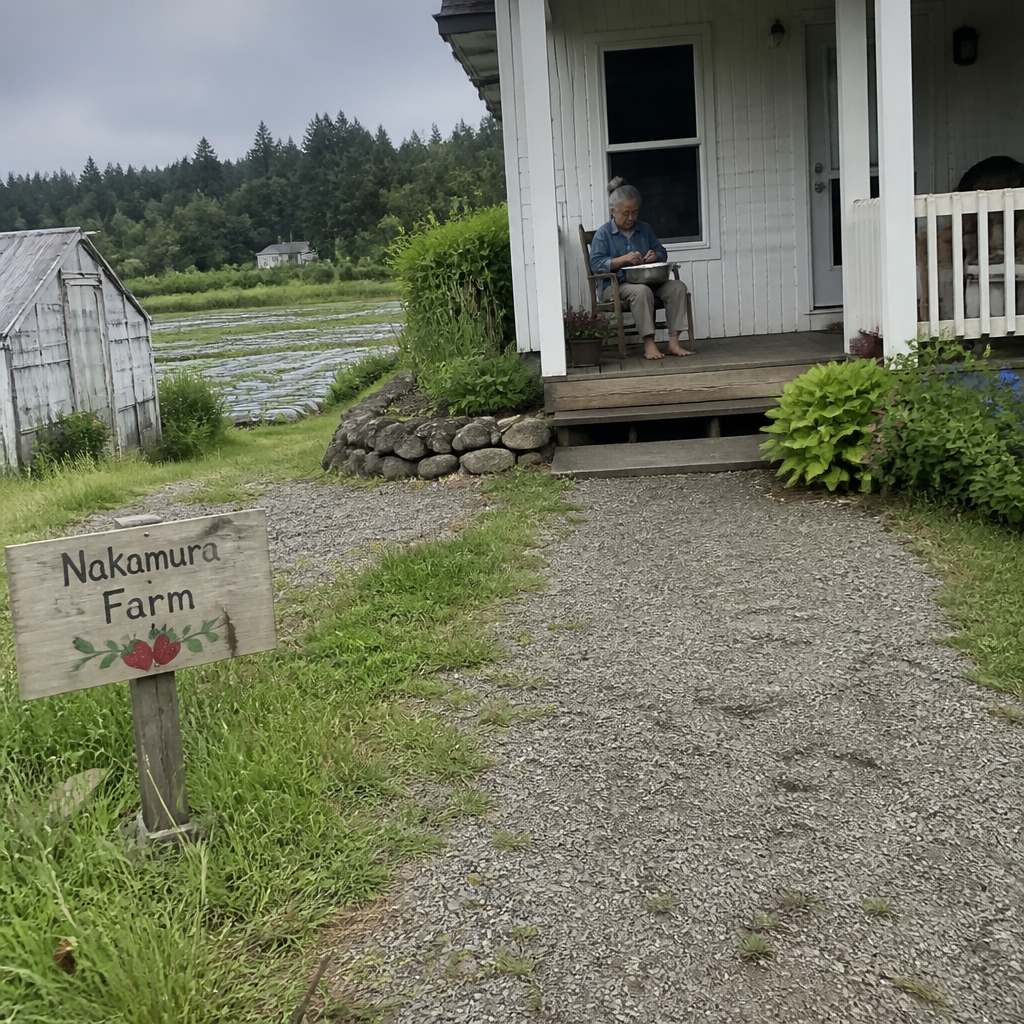
I saw a statistic that made me sick. Women in America are almost 30 times more likely to develop MS than women in Japan. Not double. Not triple. Thirty times. I didn't believe it when I read it. I've had MS for 18 years and not one neurologist has ever mentioned this to me. Not one. But here's the truth. Your neurologist orders your MRI. Your infusion nurse hooks up your IV. The real problem starts in your gut and your cells — and nobody at the MS clinic is trained to look there. That's why most of us have never heard this. That's why my mother never heard it either. My mother was part of that American statistic. Twenty-two years on a rotating carousel of MS drugs. Bedridden by 66. Died at 68 having stopped speaking, weighing 89 pounds, in a memory care facility outside of Grand Rapids. I'm 62. Last month my neurologist told me to switch from Kesimpta to Ocrevus and warned me the infusion reactions would be worse. I refused. And what I found instead — on a strawberry farm on Bainbridge Island — took me from falling asleep in my recliner at 4 in the afternoon, to walking three miles at sunrise before my coffee. No new drug. No new infusion protocol. My MRI still stable, same as before. But to understand why I was desperate enough to drive four hours to a Japanese-American farm at 6 AM, you have to know what I watched MS do to my mother. And what I didn't know it was quietly doing to me too. ═══════ For 22 YEARS — over two decades — my mother was trapped fighting MS. Started with numbness in her left foot when she was 46. Her neurologist called it "very manageable RRMS" and put her on Avonex. Weekly injections. Flu-like side effects for two days out of every seven. Said it would keep things "under control." It stayed under control on the MRI. Everything else fell apart. Within the first three years the fatigue was so heavy she quit her job as a middle school librarian. The neurologist said fatigue was expected. Adjust your lifestyle. By year six she couldn't finish a load of laundry without sitting down twice. She stopped going to book club. She stopped going to church. She stopped answering the phone in the afternoons because talking was too much work. Her spark? Gone. This was a woman who had run for city council in 1994. By year eight she couldn't hold a conversation past 6 PM. Her hands started going numb around year ten. Then her balance. Then her bladder. Then her ability to swallow anything but soft food. We had to grind her medications into applesauce because she couldn't swallow pills anymore. Forty-six years she'd been the strongest woman I knew. And every time we brought it up, her neurologist said the same thing. "The MRI is stable, Diane. The drug is doing its job. Progressive symptoms are part of the disease." The MRI was stable. Her body wasn't. My sister Karen said it was like watching her hide one piece of herself at a time. They had her on that carousel of drugs for TWENTY-TWO YEARS. Twenty-two years of infusions and injections and side effects. Twenty-two years of "the MRI looks great." Twenty-two years of nobody at that clinic ever ordering a homocysteine test, or a methylation panel, or asking whether the B vitamins her nervous system needed were actually reaching her cells. Not one time. Not ONE. She passed at 68 in a bed she hadn't left in eleven months. At her funeral my aunt grabbed my hand and said something I've never forgotten. "For 22 years they told her the drug was working, Ellen. But look what she became. They were wrong about something the whole time." ═══════ So fast forward to three months ago. I'm 62. Diagnosed with MS at 44. I've been a good patient for 18 years. Copaxone for six years. Tecfidera for four. Ocrevus for five. Kesimpta for the last three. Every infusion, every injection, every follow-up MRI. Physical therapy twice a week. Mediterranean diet. Nine hours of sleep every night. A cabinet full of the supplements every MS Facebook group recommended: vitamin D, magnesium, CoQ10, alpha lipoic acid, fish oil, biotin. I still had crushing fatigue that hit me at 3 PM every day. Brain fog so bad I forgot my own daughter-in-law's name at Thanksgiving. Right hand tingling that had been getting worse for a year. I went to my annual MS clinic visit. My neurologist looked at my MRI (stable, always stable). Then she looked at me. "Ellen, from a disease-activity standpoint, everything looks fine. But we should talk about switching you to Ocrevus. It's higher potency. Some of my patients on it feel more energy comes back once the immune activity is fully suppressed." My chest tightened. Ocrevus. Twenty-two years of watching my mother deteriorate on the same escalating carousel. First Avonex. Then Copaxone. Then Rebif. Then Tysabri. Then a wheelchair. Then a hospital bed. Then a memory care facility. Every drug switch was going to be the one that helped. None of them touched the fatigue. None of them touched the fog. None of them touched what was actually stealing her. "No," I said. She blinked. "Ellen, we've had this conversation. Your Kesimpta is doing what it's supposed to do. If you're feeling worse, that's separate from disease activity. Higher potency might help." "My mother was on stronger and stronger drugs for 22 years. She died anyway. And she didn't die of MS. She died of a body no drug was feeding." She gave me that look. "Ellen, we don't have great evidence that nutrition changes MS outcomes." "What's the point of a stronger drug if I still can't stay awake past dinner?" She didn't have an answer. I told her to give me three months. She wasn't happy. Wrote something in my chart. I didn't care. ═══════ For three months I did everything my Facebook groups told me. Doubled my vitamin D. Started high-dose biotin. Added lion's mane. Switched from marine collagen to bovine collagen. Bought a red light therapy panel and sat in front of it for twenty minutes every night. Three months later I went back. Nothing had changed. My fatigue was worse. My cog fog was worse. My hand was still tingling. She pulled out the referral pad again. "Ellen, it's time for Ocrevus." "Give me three more months." "Ellen — " "Three more months." She sighed. I didn't care what she wrote. That night I couldn't sleep. I kept thinking about my mother. Same carousel of drugs. Same MRI-stable, body-failing pattern. Same doctors reaching for a stronger prescription every time she asked why she felt worse. At 2 AM I gave up. Went downstairs. Opened my laptop. I started searching. What actually causes MS to progress even when the MRI is stable. Why fatigue doesn't respond to DMTs. Why some women with MS get worse and worse even when they do everything right. Every site said the same thing. Trust the MRI. Manage your symptoms. Adjust your lifestyle. Be patient. I'd done all of it. So I kept digging. Looking for people who'd actually turned this around. Not managed it. Turned it around. That's when I found the thread. A Reddit post in r/MultipleSclerosis with over 6,200 comments. The title: "Why don't Japanese women get MS?" I almost scrolled past. But something made me click. Japan. MS prevalence: about 10 cases per 100,000 people. The United States. MS prevalence: about 309 per 100,000. Not a little lower. Not twice as low. Thirty times lower. Person after person in the comments. Studies. Migration research. Photos of Japanese women in their 70s working rice fields, gardens, hiking with backpacks. And the study that stopped me cold: Japanese women who moved to the US and adopted Western diets developed MS at Western rates within a generation. Their daughters — American-born, American-raised, American-fed — got MS like American women. The genetics didn't change. Only what they were eating and absorbing. Someone posted a Google Maps link. A Japanese-American farm on Bainbridge Island, Washington. A woman named Sachiko Nakamura who supposedly still farmed the way her grandmother had. I looked at the clock. 2:53 AM. By 6 AM I was in my car. By 11 I was on the ferry from Seattle. By noon I was on Bainbridge Island driving down a rural road looking for a hand-painted sign. ═══════ I didn't have an address. Just drove until I saw farmland. Turned down a gravel driveway when I spotted a small wooden sign that said "Nakamura Farm — Strawberries, Vegetables, Herbs." At the end of the driveway was a small white farmhouse with a wide front porch. An old woman was sitting on the porch in a wooden chair, working her way through a basket of green beans, snapping the ends off and dropping them into a metal bowl. Her fingers moved so fast they blurred. Small. Thin. Silver hair pulled back in a low bun. Bare feet. She was 82 and moved like a woman I might have hired as my babysitter. I parked and walked up to the porch. By the time I reached the steps I was hiding my own hands in my pockets because they'd started tingling from the drive. "Excuse me," I said. "I'm sorry to bother you. But how old are you?" She looked up with clear brown eyes. "Eighty-two." I stood there. 62 years old. Trembling from a four-hour drive. Terrified of an infusion I hadn't even scheduled yet. And this woman 20 years older was snapping beans with fingers that hadn't lost a beat. "I'm 62," I said. "I have MS. My neurologist wants to switch me to a stronger drug that scares me. My mother had MS. She died on the drugs at 68. I read that Japanese women don't get MS the way American women do. I drove up here from Portland because I don't know where else to go." She set the bowl down. Looked at me for a long moment. "You came here for a reason," she said. "Come inside. I'll make you tea." ═══════ Her kitchen smelled like miso and rice and something fermenting in a jar on the windowsill. She poured me green tea from a cast-iron pot without asking. Pulled out a wooden chair for me at a small table. "Your medicine," she said. "It's quieting the fire in your brain. But it's not feeding what's underneath the fire." I didn't understand. "There are two locked doors between the pills you take and the cells that need them. And nobody at your MS clinic is trained to notice they're locked." She folded her hands on the table. "First door — your gut. When you have MS, when you're on strong medications, when you're over 50 — your gut cannot absorb what it used to. The standard B-vitamin pill you swallow is destroyed in your stomach almost before it dissolves. Ninety-five percent, ninety-nine percent — gone. Your body sees maybe a crumb of what's on the label." She tapped the table lightly. "Second door — even the crumb that gets through is the wrong shape. What most American supplements sell as B12 is called cyanocobalamin. Synthetic. Your body has to translate it into methylcobalamin before your cells can use it. Almost half of Americans carry a gene called MTHFR that makes that translation slow or impossible. So the crumb sits in your blood. Unused. Waiting for a translator that never comes." She sipped her tea. "Two doors. Both locked. Your pills never reach your cells. Your cells run on empty for years. Your brain fog gets worse. Your fatigue gets worse. Your hand tingles. Your MRI stays stable because the drug is doing its one job — quieting the immune fire. But your nerves and your muscles and your mind are starving the whole time." I stared at her. "That is what happened to your mother. Not bad luck. Not the disease progressing. A body on strong medicine that was never given the fuel it needed to run. Twenty-two years of empty cells." My eyes started to burn. "That's why nothing you added helped. Vitamin D pill. Magnesium pill. CoQ10 pill. All of them locked behind the same two doors. It's like paying for groceries that never leave the store." ═══════ I asked her how she knew. She smiled. A small smile. "My grandmother knew. Her mother knew. In our village in Fukuoka, we ate natto and nori and miso and mackerel every day. Not because we understood MTHFR. Because that was food. Fermented soybeans, seaweed, fermented rice, fish that ate the plankton that made the vitamins. All of it delivered the B vitamins already in the form the body could use. No translation required. No locked door." She stood up and walked to a shelf. Brought back a small ceramic jar with a wooden lid. Opened it. Inside was a dark, stringy fermented paste. "Natto. My grandmother made this. My mother made this. I make this. My nervous system has been fed this way for eighty-two years. My mother's for ninety-one before she passed. My grandmother's for ninety-seven." I sat with that. She sat back down. "When Japanese women move to America and stop eating this way, their daughters get MS. This is not a mystery in Japan. Everybody knows. Our doctors are not surprised." She looked at me directly. "The pills at your American drugstore. The generic B-complex. The Nature Made bottle. Those are the wrong shape. They are cyanocobalamin. They are folic acid — also synthetic. They pass through most bodies untouched. They are why your daughters and my daughters both take supplements and only one group is getting what they paid for." ═══════ I asked her if there was something people could take, if they couldn't ferment their own natto every week. She nodded slowly. "My grandson works with a company. Only one. It took them years to get right. Methylcobalamin. Methylfolate. The active B6. The right thiamine. Made small. Wrapped in fat so it slips past the stomach door and goes straight into the blood. Two capsules under the tongue in the morning. That is how you unlock both doors at once." She wrote the name on a scrap of paper and slid it across the table. Nuvel. She looked at me one more time. "Your Kesimpta — keep it. Do not stop it. That is a different job. It is quieting the fire. That job matters. My cousin in Osaka takes something like it too. But please. Feed your cells while the drug quiets the fire. Or you will end up where your mother ended up." ═══════ I ordered Nuvel from her kitchen table on my phone before I got back in the car. The bottle arrived at my house in Portland three days later. I took the first two capsules the next morning under my tongue with my coffee, the way she'd shown me. Held them there until they melted. Then went about my day. I didn't expect much. I'd been fighting this for 18 years. Week one. Nothing dramatic. But by Thursday I noticed I hadn't fallen asleep in my recliner at 4 PM. I made it to 8 PM watching a movie with my husband. I'd forgotten what it felt like to stay awake for a whole movie. Week two. The fog started thinning. I remembered my daughter-in-law's name without prompting. I finished a crossword puzzle. Small things. But they hadn't been there for a decade. Week three. My right hand tingling started to fade. Not gone. But less. I noticed it because I was typing an email and realized I hadn't shaken my hand out once, when normally I did it every ten minutes. Week four. I cleaned the whole house on a Saturday. Vacuumed. Mopped. Did three loads of laundry. Went for a walk after dinner. Did not need to lie down. My husband looked at me at dinner and said: "Ellen, what happened to you?" ═══════ My follow-up MRI was at the end of month two. Stable, of course. Nothing new. Nothing enhancing. Kesimpta doing its job. My neurologist looked at the chart and then at me. She squinted. "Ellen — are you feeling better?" I told her yes. I told her about Sachiko. About the two doors. About the natto and the methylated forms. About Nuvel. She listened. Took notes. Nodded slowly. "Let's give it another four weeks. If your quality of life keeps improving — no Ocrevus. We'll keep you on Kesimpta and whatever else you're doing." Four weeks later I was walking three miles at sunrise before my morning coffee. I hadn't done that since 2004. No Ocrevus. That was four months ago. ═══════ This morning I made breakfast for my granddaughter Lily who was staying over. Scrambled eggs. Toast. Sliced strawberries. I stood at the stove without needing to sit down. I carried her plate to the table. I ate with her and asked about her first grade class and stayed engaged in the conversation for twenty minutes. When she left with her mom she hugged me and said: "Grandma, you have your eyes back." I didn't know what she meant. My daughter told me later that Lily had been telling her mom that "Grandma's eyes look tired," for years. I sat in the kitchen and cried after they left. I called my sister Karen that night. Told her about my eyes. Told her about the strawberries. Told her about Sachiko and the natto. Long silence. "Ellen. Mom would be so proud you found another way." ═══════ If you're reading this, you probably see yourself in my story. Your MRI keeps coming back stable and you keep feeling worse. Your neurologist keeps suggesting a stronger drug. You've tried the vitamin D. You've tried the CoQ10. You've tried the alpha lipoic acid. You've tried the biotin. You've tried the magnesium. Maybe two of them. Maybe all of them. They didn't work. But now you know why. You weren't taking the active forms. You were swallowing synthetic B vitamins your gut couldn't absorb and your cells couldn't translate. The nutrients never made it through the two doors. Your nerves have been running on empty for years. And your body has been slowly becoming your mother's body — one small piece at a time — while every MRI told you everything was fine. ═══════ Nuvel is different. Methylcobalamin — the active B12 your cells use directly. Not the synthetic cyanocobalamin at the drugstore. Methylfolate — the active folate, not the synthetic folic acid most Americans can't convert. Active P5P B6 and properly-dosed thiamine, so the whole methylation cycle can actually run. Liposomal delivery — the nutrients wrapped in fat so they slip past your stomach and go straight into your bloodstream. The same way traditional Japanese fermented foods deliver their B vitamins. Third-party tested. Made in the US. Two capsules a day, taken sublingually. Try Nuvel for 90 days. Take one day of the week — a Sunday morning — and check in with yourself. Are you making it further into the afternoon before the fatigue hits? Are you remembering words you'd stopped remembering? Are your hands feeling more like your hands? Take a photo of yourself at day 60 and put it next to a photo of yourself now. Look at your eyes. If nothing changes — full refund. No questions. ═══════ You're at a crossroads. One path. Keep taking the drug. Keep swallowing the synthetic vitamins. Keep watching your MRI stay stable while your fatigue gets worse and your fog gets thicker and your hands tingle more. Take the stronger DMT next year. And the one after that. Watch yourself slowly become the woman your grandchildren remember as "always tired." End up where my mother ended up. Another path. Keep your DMT — please, keep your DMT. But feed your cells the way Japanese women have been feeding theirs for a thousand years. Bypass the two doors. Watch your energy return in pieces. See what changes in 90 days. I chose the second path. It gave me back my afternoons. It gave me back my eyes. It gave me back the walk at sunrise I hadn't taken since my kids were in elementary school. ═══════ The MS clinic system is not coming to save you. Your neurologist is monitoring your MRI. Your infusion nurse is running your IV. Your PCP is checking your cholesterol. Nobody at any of those appointments is asking whether the B vitamins your nervous system needs are actually reaching your cells. Every year you wait is another year of empty. Another year of the fatigue winning. Another year closer to becoming the woman I refuse to become. My mother didn't have this information. You do. Ellen Marsh, age 62* Portland, OR 👇 https://trynuvel.com/products/vitamin-b-complex-liposomal ═══════ P.S. The tingling in my right hand faded within four weeks of my first dose. My fog cleared by week six. I stopped napping in my recliner by week five. My MRI is still stable, four months later, same as it was before. I did not stop my Kesimpta. I take it exactly the way I always did. The only thing I added was two capsules under my tongue in the morning. That's it. That's all. Your timeline might be different. But you won't know until you try. 👇 https://trynuvel.com/products/vitamin-b-complex-liposomal P.P.S. My sister Karen started Nuvel three weeks after I did. She's 58. Diagnosed with RRMS ten years ago, one year after our mother died. On Tysabri. MRIs stable but exhausted, same as I was. She's been on Nuvel for eleven weeks now. She called me last Sunday from her garden. Said she'd planted tomatoes and peppers and beans and hadn't sat down once. Said she cried in the dirt because she hadn't gardened in six years. Said Mom would be furious that nobody told her about the two doors. Please. If you have MS, or someone you love does, don't let another year pass being told the MRI is what matters while your body quietly starves. ~ Ellen
Performance Signals
- Status
- Still running
- Time Running
- 57 days
- Active Period
- Sep 9, 2026 → Today
- Advertiser live ads
- 1.7K
- First Seen
- Oct 28, 2026
Creative & Links
- Meta page ID
- 914156071781095
- Format
- Image
- Placements
- FACEBOOK, INSTAGRAM, AUDIENCE NETWORK, THREADS
- Country
- 🇺🇸 United States
- Landing Page
- trynuvel.com/products/vitamin-b-complex-limposal
- Original Ad
- Open in Meta Ad Library
More from nuvel
See every ad this brand runs, with run dates, countries and the AI hook and angle of each.
Start 7-day free trialnuvel
trynuvel.comnuvel
Shop Infos
- Created
- Nov 7, 2025 · 1 year
- Category
- Health
- Live ads
- 1.7K
- Peak ads (7d)
- 1.7K
Search every indexed Meta ad by niche, format, country and run time, save creatives to boards and track the brands behind them. 7-day free trial.