Valorrea ad: Christian parents need to read this☝️

Valorrea
176 active ads🇺🇸
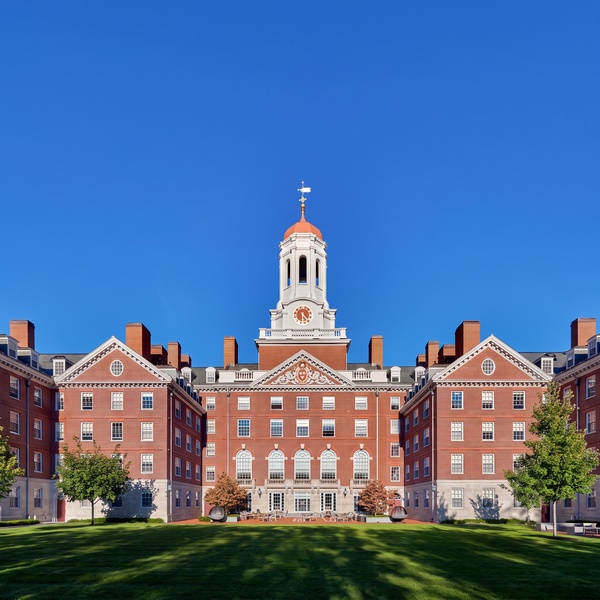
Harvard was founded to train pastors. Its motto was "Truth for Christ and the Church." Look at what's on the sweatshirt now. This is not a conspiracy theory. It's Harvard's own history. You can look it up tonight. Harvard College was founded in 1636 in Cambridge, Massachusetts. It's the oldest college in America. And it wasn't founded to make lawyers or bankers or tech founders. It was founded to train ministers. The Puritans who started it wrote down exactly why, in a pamphlet called New England's First Fruits, published in 1643. They said they were dreading "to leave an illiterate Ministery to the Churches, when our present Ministers shall lie in the Dust." That was the reason for America's first college. So the churches would never run out of pastors who knew the Bible. Three years later, in 1646, Harvard wrote its rules for students. Here's one of them. In their old spelling. Every student was to be taught that the main end of his life and studies is "to know God and Jesus Christ which is eternall life," and therefore "to lay Christ in the bottome, as the only foundation of all sound knowledge and Learning." Christ at the bottom. The foundation under everything else. In 1692, Harvard adopted a motto to match. Veritas Christo et Ecclesiae. Truth for Christ and the Church. Now go look at a Harvard sweatshirt. A Harvard coffee mug. The crimson shield on a car sticker. One word. Veritas. Truth. Truth for what? Truth for whom? The rest of it is gone from the shield. You can still find the old words on a few official seals if you squint. Tucked around the edge. Small enough to miss. That's how it happens. Nobody takes a hammer to the foundation. They just stop putting it on the front. And the slide didn't stop with a motto. From 1869 to 1909, Harvard's president Charles Eliot reshaped the school. Historians describe his changes as removing the favored position of Christianity from the curriculum. In the mid-1880s, Harvard ended required chapel. The college built to train pastors stopped requiring its students to go to church. And here's where it lands. In 2021, Harvard's own organization of chaplains elected a new president. An atheist. The college founded so the churches would never be left without ministers now has an atheist leading its chaplains. Truth for Christ and the Church. Then just Truth. Then truth without God. Now, here's why a mom in 2026 should care about any of that. Because Harvard isn't just one school. Many of the oldest, most famous universities in America started the same way. Founded by Christians. Built to train pastors or to teach young people to know God. And a lot of them took the same road. That road leads right to the dorm your child is going to sleep in. The lecture hall where a professor with a PhD is going to tell your kid, nicely, that the Bible is mythology. The roommate who's going to laugh, not meanly, and say, "Wait, you actually believe that?" Those buildings were built by people who believed. They're full of people now who are sure that smart people don't. And your child is going to walk in at 18 with whatever you gave them. I didn't think about any of this a year ago. A year ago I was just a proud mom. Let me tell you about my son. Ethan was 14. The smartest kid I know, and I'm not just saying that because I'm his mom. Straight As. Science fair every year. Reading college-level books on physics for fun. His teachers kept using the word "gifted." He'd already started talking about colleges. Big ones. The kind with famous names and crimson shields. And I was proud. So proud. I'd tell people at church about his grades and they'd say, "Oh, he's going to go far." I never once thought about what he'd be walking into. Then one night at dinner, my husband Paul asked Ethan what he was learning in his science class. Ethan said, "We're doing the origin of the universe." Paul said, "Oh yeah? What are they saying?" And Ethan put his fork down and said, "Honestly, Dad, the more science I learn, the less the Bible makes sense." Paul laughed a little. "Well, God made the universe, bud." Ethan said, "But how do you know that? Like, what's the evidence?" Paul said, "It's in Genesis." Ethan said, "That's not evidence, Dad. That's just the claim." And then he picked his fork back up and kept eating like he'd said something about the weather. Paul and I looked at each other across the table. We didn't say anything else. Because we didn't have anything else to say. That was the night I realized my son was smarter than our answers. After that, I started noticing things. He stopped asking questions at church. He used to be the kid with his hand up in Sunday school, asking twenty questions until the teacher begged for mercy. Now he just sat there. He started reading different things. I saw a book on his nightstand by a famous atheist scientist. He'd checked it out from the school library. He started using words like "superstition" and "confirmation bias." Not at us. Just around us. And one Sunday, on the way home, he said something that went straight through me. "I think smart people in history mostly didn't believe in God. It was more for people who didn't know science yet." Smart people didn't believe. I knew that wasn't true. I knew there had to be something to say back. But I couldn't think of a single name. I did what every Christian mom does. I tried everything. I talked to our youth pastor. He was a sweet guy. Played guitar. Loved the kids. He said, "Ethan's such a bright kid. Bright kids question things. Just keep him connected." I went to youth group one Wednesday to see what Ethan was getting. An hour of games. A dodgeball tournament. Pizza. A worship band. Then fifteen minutes on being kind to people at school. My son was reading physics books for fun. And his church was giving him dodgeball. He was bored out of his mind. I bought him a teen study Bible. Still on his shelf. Plastic still on. I bought him a big book on science and faith. Four hundred pages. Written for adults. He read a chapter and said, "It's okay. It kind of just assumes God exists and goes from there." I sent him to a Christian summer camp. $1,050. He came home tan and polite. Two weeks later he was back to the library books. I even took him to a Christian apologetics conference three hours away. Hotel. Gas. Registration. Almost $600. The speakers were good, but it was lecture after lecture. He sat in the back with his phone and said it was "a lot of people agreeing with each other." Over about a year, I spent more than $1,600 trying to give my son a reason to keep his faith. None of it touched the real problem. Because I didn't know what the real problem was. I thought it was his school. Or the books. Or the internet. Or maybe he was just too smart for church. Maybe that's what happens to the gifted ones. I blamed myself a lot too. But the truth was simpler and worse. When Ethan asked for the evidence, I didn't have any. I believed. With my whole heart. But I'd never been taught why. Not in Sunday school. Not in youth group. Not by my parents. I'd been raised on Bible stories and good feelings, and that had been enough for me. It was not going to be enough for Ethan. And I had a daughter coming up behind him. Lucy was 9. Just as curious as her brother. Already asking how big the universe is and whether God is bigger. I'd tuck her in and think, five years. In five years she's going to ask me for the evidence too. And I'm going to say "It's in Genesis." That's where I was. Then one night in January, I couldn't sleep. Ethan had left a college brochure on the kitchen counter. A famous school. Old brick buildings. Ivy on the walls. A crimson shield on the cover. I picked it up at midnight and started wondering. Where did these schools even come from? So I looked it up. That's how I found the history. Harvard. 1636. Founded to train ministers. "An illiterate Ministery to the Churches." "Lay Christ in the bottome." Veritas Christo et Ecclesiae. Then just Veritas. Then the chapel requirement gone. Then an atheist leading the chaplains. I read it at my kitchen table and got cold all over. Because I realized something. My son was planning to go to a school that was built by people who believed exactly what I believe. People who were some of the most educated men in the world in their day. People who thought Christ was the foundation of all sound knowledge. And Ethan had told me smart people in history mostly didn't believe in God. He wasn't stupid. He'd just never heard the other half of the story. Nobody had ever told him that America's first college was built on Christ. Nobody had ever handed him a single reason. I kept reading. Past 1AM. I found the numbers. LifeWay Research surveyed 2,002 young adults who attended a Protestant church regularly as teenagers. 66% of them stopped attending for at least a year between the ages of 18 and 22. Barna Group found 64% of 18 to 29 year olds who grew up in church dropped out. Two out of three. Right at college age. Then I found why. When Barna asked young adults why they left, 36% said they couldn't ask their most pressing life questions in church. 35% said Christians act like they know all the answers. 29% said churches are out of step with the science they were learning. 25% said Christianity is anti-science. 23% said they had serious intellectual doubts. Anti-science. That was Ethan. Word for word. He thought he had to choose between being smart and being a Christian. Because nobody had ever shown him that he didn't. I'm not saying a motto on a sweatshirt is why my son stopped believing. But I think about that shield every time I picture him walking onto a campus at 18. The foundation is still under those buildings. They just stopped putting it on the front. And our kids are growing up thinking it was never there. Nothing was wrong with my son. Something was missing. The reasons. Not just what we believe. Why. The evidence. The kind of thing a gifted 14 year old can actually respect. Around 2AM I typed one more search. "Apologetics for smart kids." That's how I found the Systematic Theology 52 Week Workbook for Kids, from Valorrea. I almost didn't click. I'd bought so much that year. But the name stopped me. Systematic theology. That's what they used to teach at places like Harvard. That's the opposite of dodgeball. I read the whole page. It isn't a Bible storybook. It's apologetics. That's just an old word for giving reasons. It's what Peter told every believer to do: always be ready to give an answer to everyone who asks you for the reason for the hope that is in you. Everyone who asks. Including a straight-A 14 year old at the dinner table asking, "What's the evidence?" Here's how it works. Once a week, for 52 weeks, you sit down with your child for about 10 minutes. Every lesson starts with a real hard question. How do we know God exists? Can we really trust the Bible? What about evolution? Why does God allow suffering? Then your kid becomes a detective. You look at three pieces of evidence together. You weigh it. You work through it. And then they practice saying the answer out loud, in their own words, like someone just challenged them in class. That's what sold me. Ethan didn't need another feeling. He needed evidence he could weigh. And he needed to say the answer out loud and see if it held up. No prep. No seminary degree. Ten minutes. Ages 6 to 14. Ethan was right at the top. Lucy was right in the middle. $35.90 in their Fall Faith Sale. A 90 day money back guarantee. After $1,600 on camps and conferences, I thought, this is the last thing I try. I ordered two at 2:31AM. Week 1. Ethan was skeptical. Of course he was. I put it on the table after Sunday lunch. "Ten minutes," I said. "You like evidence. Here's some evidence." He raised one eyebrow. But he sat down. Lucy was thrilled. She loved the detective idea. She drew a little badge for herself. The first question was how we know God exists. Three pieces of evidence. Ethan went through all three. Then he said, "Okay. The second one is actually interesting." That was the first time in a year he'd said anything nice about God's existence. Week 2. He read the question out loud before I could. Week 3. The lesson was whether the Bible can be trusted. Ethan came in ready to argue. He had a point from one of his library books. And this time, there was an answer back. A real one. Something he could check. He went quiet for a long time. Then he said, "Huh. I didn't know that." I got up to refill my coffee so he wouldn't see my face. Week 5. He started looking things up after the lesson. On his own. To see if the evidence was real. It was. Week 6. The question was about evolution. Paul sat in. For the first time in his life he heard a real answer beyond "It's in Genesis." Ethan looked at his dad and said, "See, this is what I was asking about." Paul said, "I know, buddy. I didn't have it. I'm sorry." Ethan said, "It's okay. Nobody told you either." Week 8. Ethan came home from school and said, without me asking, "My science teacher said religion and science are basically enemies." My stomach dropped. Then he said, "So I told her a lot of the people who started modern science were Christians. She kind of had to agree." He said it like it was nothing. Grabbed a snack. Went upstairs. I stood in the kitchen holding a dish towel for a solid minute. Week 10. Lucy asked her Sunday school teacher a question from the workbook. The teacher didn't know. Lucy explained it. Nine years old. Week 12. The atheist book went back to the library. On his nightstand now was a book by a Christian scientist. He hadn't stopped asking hard questions. He'd started looking for both sides. Week 14. We were looking at college brochures together at the kitchen table. He picked up the one with the crimson shield. I told him what I'd found. 1636. The ministers. "Lay Christ in the bottome." Veritas Christo et Ecclesiae. He stared at the shield for a long time. Then he said, "So the people who built it believed this stuff." I said, "They thought it was the foundation of everything." He said, "Then I guess I'm not stupid for believing it either." I had to go stand in the laundry room for a minute. I'm not going to pretend my son has every answer now. He doesn't. Neither do I. He'll still go to some big school with famous professors. He'll still hear the best arguments the world has. He'll still have doubts. But he won't walk in thinking he's the first Christian who ever had a brain. He'll walk in knowing the foundation is still under the building. Even if nobody puts it on the sweatshirt anymore. That's the whole difference. A kid who only hears "smart people don't believe" will eventually believe it. A kid who has weighed the evidence at his own table, with his own parents, knows that isn't true. I think about that motto a lot now. Truth for Christ and the Church. Cut down to one word. And I think about how close my son came to walking through those gates without knowing what was underneath them. I can't put the words back on Harvard's shield. But I can put them back in my son. So can you. And you take no risk trying. Every workbook comes with a 90 day money back guarantee. Work through it with your kids for three months. If they don't engage, or you don't see them growing in their ability to explain what they believe, email support and get a full refund. It's $35.90 right now in Valorrea's Fall Faith Sale. It arrives in 3 to 5 business days, with tracking. That's less than one application fee. Your child gets roughly 30 hours a week of school. A lot of kids get 20 or more on screens. Every hour of it, somebody is teaching them what smart people believe. How many minutes a week is anyone teaching them why their faith is true? A 6 year old who starts this week has twelve years before college. A 14 year old like Ethan has four. Every week you wait is another question they'll hear for the first time from someone who thinks they're the smartest person in the room. Nothing is wrong with your kid. Something is missing. The foundation is still there. Somebody just has to show them. Tap the link below. Read why church kids really leave. Then put this workbook on your kitchen table this Sunday. Ten minutes. One question. Three pieces of evidence. Lay Christ in the bottom. Before the college does the opposite.
Performance Signals
- Status
- Still running
- Time Running
- 5 days
- Active Period
- Oct 27, 2026 → Today
- Advertiser live ads
- 176
- First Seen
- Oct 31, 2026
Creative & Links
- Meta page ID
- 786111827915236
- Format
- Image
- Placements
- FACEBOOK, INSTAGRAM, WHATSAPP, THREADS
- Country
- 🇺🇸 United States
- Original Ad
- Open in Meta Ad Library
More from Valorrea
See every ad this brand runs, with run dates, countries and the AI hook and angle of each.
Start 7-day free trialValorrea
valorrea.comValorrea
Shop Infos
- Created
- Sep 12, 2025 · 1y 2m
- Category
- Books & Literature › People & Society › Religion & Belief
- Live ads
- 176
- Peak ads (7d)
- 176
Search every indexed Meta ad by niche, format, country and run time, save creatives to boards and track the brands behind them. 7-day free trial.