TRAVLR. ad: Read if Plane Seats Ruin Your Travel ☝️

TRAVLR.
🇳🇿
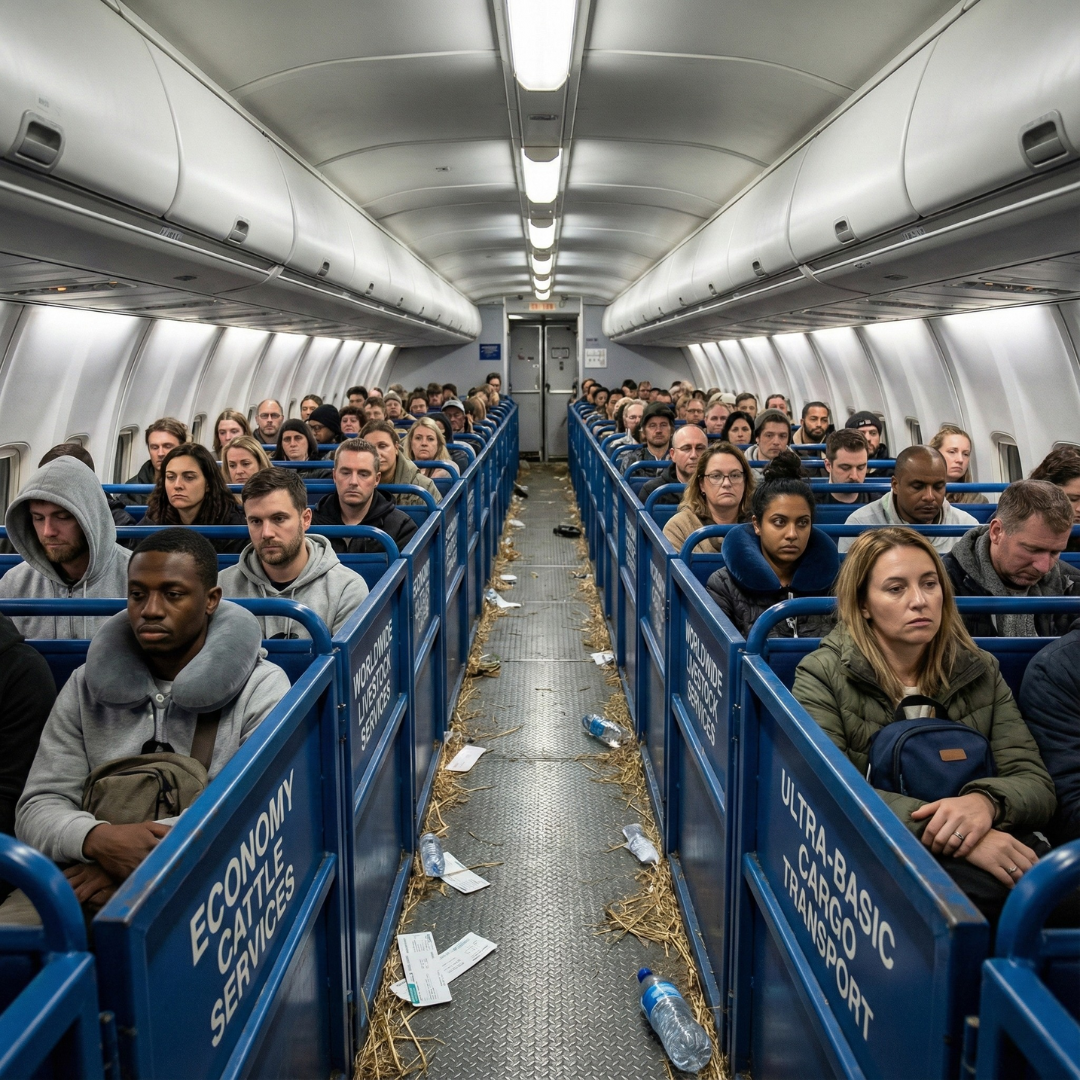
I thought my body was too old for long flights. Then I read what a retired pilot said about economy seats—and realized it wasn't me. Here's what I didn't know until two weeks ago... When you're sitting on an airplane seat in 2025, you're not sitting on the same seat that existed in 2005. They removed the padding. On purpose. To save fuel. To make you want to upgrade to business class. Every pound of cushioning removed saves an airline thousands of dollars a year. And I thought it was just me getting old. Last year, I retired after 37 years working ICU nights. I worked every Thanksgiving for 15 years straight so younger nurses could be with their kids. I missed my daughter's high school graduation because I couldn't get shift coverage. I drove the same Camry for 18 years. We didn't buy a house until I was 52. We saved. We rented. We waited. Because someday, when I retired, we'd finally travel. Last March, we booked Italy. The trip we'd been talking about since our honeymoon 40 years ago. Rome. Florence. Amalfi. I couldn't sleep the night before we left. Eleven hours into the flight, I was counting minutes. My tailbone felt like it was grinding into the seat. By hour seven, I'd been shifting from side to side so many times I'd lost count. When we landed, I could barely stand up straight. Day one in Rome: hotel room, ice packs, Advil. Day two: feet so swollen I couldn't get my shoes on. Day three: same. Day four: I could finally walk without limping. We were there ten days. I lost almost half of them. The flight home was worse. My body knew what was coming before we even boarded. I felt dread walking down the jet bridge. When we got home, I told myself: this is just what being 68 means. My body can't handle long flights anymore. But something about it kept bothering me. When I was younger, I used to just suck it up and fly economy. Uncomfortable? Sure. But tolerable. What changed? One night around 2 AM, I couldn't sleep. I opened my laptop. "Why do airplane seats hurt more now" "Are economy seats getting worse" "Body changes that make flying painful" That's when I found an article by a retired airline captain. Captain Mark Davidson. I started reading. His mother—67 years old—flew to Valencia to see his sister. She spent two days in bed from the pain. He went to a colleague. That's when he learned the truth. They'd been removing padding since 2008. 2005 seats: 3.2 inches of padding. Current seats: 1.7 inches. They cut it in HALF. Not all at once. Gradually. So passengers wouldn't notice. His colleague told him something I'll never forget: "The ones who figure it out? They upgrade to business class. We engineered the discomfort, Mark. Then we sold them the escape." I sat there at 2:47 AM feeling sick. They did this on purpose. While my body was naturally losing its ability to handle hard seats, they were making the seats even harder. To save money. To force people like me to pay thousands more for business class. Calculated misery. That's what this is. They're making us miserable on purpose so we'll pay more. I thought about the airline pillow I'd tried to use as lumbar support. Useless. I thought about sitting on my jacket. Didn't help. I thought about getting up and walking the aisle every hour. I'd done that. It didn't change what happened while I was sitting. But here's the thing. As we age, our bodies naturally change. We lose tissue elasticity. The natural fat padding on our sitting bones. The collagen in our skin. The shock absorption our younger bodies used to provide just... diminishes. I stared at my laptop screen. It wasn't just me. And it wasn't just the airlines. It was both. I was sitting bone-on-plastic, in seats that had been deliberately thinned, with a body that no longer had cushioning. No wonder shifting positions didn't help. No wonder walking the aisle didn't help. There was nothing left to absorb the pressure. Not in my body. Not in the seat. But then I kept reading. Captain Mark called his wife Carol. Carol works in a hospital rehabilitation unit. Wheelchair patient care. Pressure injury prevention. She told him: "Mark, we solved this problem 20 years ago." She explained how wheelchair users who sit 8-12 hours daily don't get pressure injuries. "They use interconnected air cell technology." "Instead of one big air chamber, you have dozens of small cells connected to each other. When the patient shifts weight, air automatically moves between cells. The air redistributes in real-time." "Your tailbone doesn't take concentrated pressure—it's spread evenly across the whole seat. It's clinically proven. We've been using this in hospitals for decades." I sat there at 3:06 AM staring at the screen feeling like the stupidest person alive. Carol is right. I'm a nurse too. I spent 37 years in the ICU. Critical care. Ventilators. Emergency interventions. Medications. But I know what pressure sores are. Every nurse does. We learn about them in school. We check for them on rounds. We document them in charts. But I wasn't a wound care specialist like Carol. I didn't work with wheelchair patients. Pressure injury prevention was just... one of a hundred things we monitored. But Carol's right. That's exactly what's happening to me on airplanes. Prolonged pressure on my tailbone and sitting bones. No redistribution. That's textbook pressure injury setup. And the solution—interconnected air cells that redistribute pressure—that's what hospitals use. I kept reading. I already knew medical-grade wheelchair cushions wouldn't work for travel. They're bulky. Heavy. Three to four pounds. They cost $300 to $500. I'd seen them in hospitals my whole career. You can't exactly pack a wheelchair cushion in your carry-on. But then Captain Mark wrote about something I didn't know existed. He found a company called Travlr. They'd re-engineered medical-grade air cell technology for travelers. The same interconnected air cells Carol was talking about. The same pressure redistribution mechanism. But lightweight. Packable. Designed to fit in a carry-on. I felt something I hadn't felt since Italy: Hope. My sister had been asking us to visit her in Arizona. Three-hour flight. I'd been putting it off. I was initially a little nervous about spending money on something. I'd been burned before. But they offered a 60-day money-back guarantee. No questions asked. If it didn't work, I could return it. I ordered the Travlr Cushion. When it arrived, I opened the box. Inside: A flat grid of interconnected air chambers. It was shockingly light. Maybe half a pound. I inflated it. Thirty seconds later, it was full. I pressed down on it with my hand. The air cells moved under my hand. I could feel the pressure redistributing across the surface. I sat on it. Oh my god. It wasn't soft like a pillow. It wasn't squishy like memory foam that would flatten in an hour. It was a clinical pressure redistribution surface. The air cells adjusted under me. Moving. Redistributing. My tailbone wasn't bearing weight. The pressure was dispersing across the entire sitting surface. I sat there for five minutes without shifting. Nothing. I couldn't believe I'd spent months in pain when the solution was something I knew existed. I just never thought to apply it to myself. Two weeks later, I flew to Arizona. I sat down in my seat. Hour two of the flight, I realized I was reading my book. Not thinking about my tailbone. Not shifting from side to side. I didn't need to. The air cells were doing it for me. Hour three, I fell asleep. When's the last time I slept on a plane? When we landed, I stood up and waited for it. That moment when your tailbone screams. When your back seizes. It didn't come. I was a little stiff. I'm 68. I'm always a little stiff when I stand up. But I wasn't in pain. That evening, my sister and I went out to dinner. I sat through the entire meal without thinking about it once. The next morning, I woke up and my first thought was: I can go back to Italy. I'm writing this two weeks after getting home. Since Arizona, I've used the cushion on two more flights. Six hours to Boston. Five hours to Denver. Every time: no pain. Not "less pain." No pain. Yesterday, I rebooked Italy. This time for three weeks instead of ten days. Because I'm not losing half the trip to recovery anymore. And the solution was right in front of me the whole time. If you've been avoiding trips because you dread the flight... If it's starting to influence your decision on whether you really want to take the trip at all... If you've been quietly wondering if your traveling days are ending... I need you to understand something: It's not you. The airlines stripped the padding. Your body lost its natural cushioning. Both are true. But you don't have to accept either one as a sentence. You don't have to pay thousands more for business class just to avoid the pain they created. You can bring your own pressure redistribution. The same medical-grade principle that protects people who sit all day. Now designed for travelers. I almost gave up Italy. I almost decided my body was too old. I almost let them take that from me. I'm so glad I didn't. I just want you to know: your traveling days don't have to be over. You just need to solve the right problem. That's what Carol understood immediately. That's what I knew existed—I just never thought to apply it to myself. And that's what finally gave me my travel life back. Better late than never.
Performance Signals
- Status
- Still running
- Time Running
- 23 days
- Active Period
- Oct 9, 2026 → Today
- First Seen
- Oct 28, 2026
Creative & Links
- Meta page ID
- 786836577854821
- Format
- Image
- Placements
- FACEBOOK, INSTAGRAM, AUDIENCE NETWORK, WHATSAPP, THREADS
- Country
- 🇳🇿 New Zealand
- Landing Page
- shoptravlr.com/pages/advert-v1
- Original Ad
- Open in Meta Ad Library
More from TRAVLR.
See every ad this brand runs, with run dates, countries and the AI hook and angle of each.
Start 7-day free trialTRAVLR.
shoptravlr.comTRAVLR. makes travel comfortable again. We design portable, innovative comfort solutions so you arrive refreshed and ready—not sore, stiff, or exhausted. Because the journey shouldn't cost you the first days of your trip. Shop travel cushions and accessories built for real travelers.
Shop Infos
- Created
- Oct 31, 2025 · 1y 1m
- Category
- Travel
- Copies of this ad
- 4
Search every indexed Meta ad by niche, format, country and run time, save creatives to boards and track the brands behind them. 7-day free trial.