Rivanta ad: If you're from America, please read this 👆

Rivanta
4.2K active ads🇺🇸
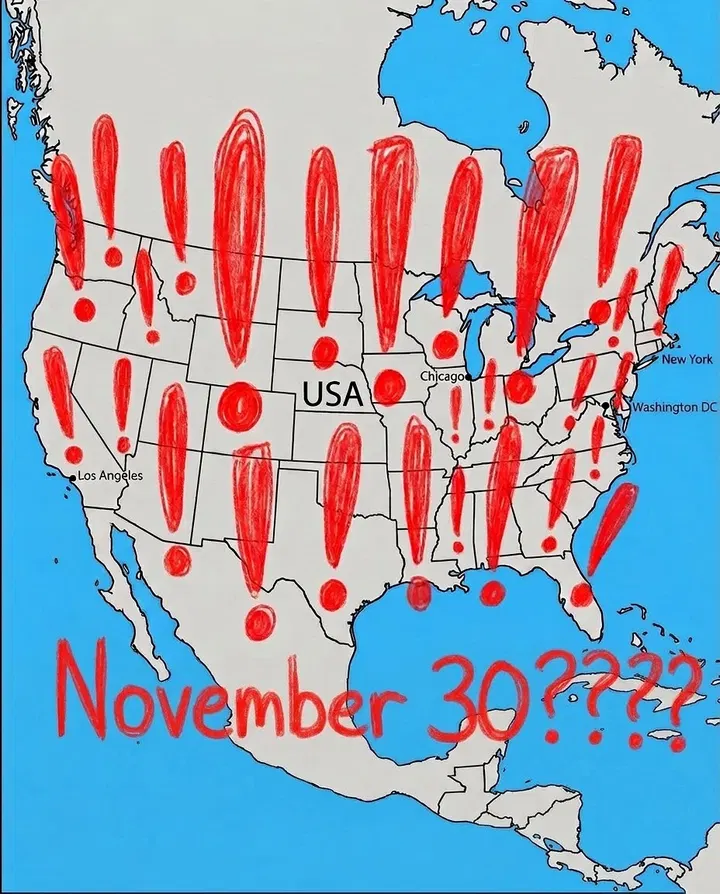
The Pentagon is getting every major military base in America ready to run 90 days without the power grid. If you've felt something coming for a while now, it isn't just you. And what made the news is only part of it. In the background, much more is happening. The United States military just pre-positioned independent communication equipment at domestic bases for the first time since Hurricane Katrina. Not overseas. DOMESTIC. Inside American borders. The order came with a date range: November 30 through March. Nobody told the public. I know because the order came through my logistics chain. Twenty years in military logistics and the thing I can't do with what I've seen on the manifest is SAY it. But I can tell my daughter what to DO. Because when the military stages communication equipment that doesn't depend on the civilian grid inside its own country for that window, something is coming that the military thinks civilian communication infrastructure may not handle. Please read this carefully. My daughter lives in North Carolina. Married. Two kids. Three hours from me on a good day. She calls every Sunday. We talk about the grandkids, about her garden, about nothing important. In July I started a different kind of call. Not the kind where I tell her what I know. The kind where I tell her what to prepare. Because what I saw on that manifest, equipment designed for overseas operations being staged at American bases, doesn't leave me with the luxury of waiting. What I can do, what every person who saw that deployment order is doing, is make sure the people we love are ready. Not informed. Ready. So I wrote her a list. Specific. Ordered. Dated. The kind you follow when someone who's spent twenty years inside military logistics tells you the military just staged something domestically that it hasn't staged since a Category 5 hurricane drowned New Orleans. I mailed it in a plain envelope. No letterhead. No return address. Just the list. And a note: "Do these things before November 30. Don't call me about them. Just do them. Trust me the way you trusted me when I told you to buckle up before you understood what a highway was." She called me anyway. "Dad. What is this?" "A list." "I can see it's a list. Why does it have dates?" "Because the deployment order has a date range. November 30 through March. And November 30th is the day the window opens." "What deployment?" "I can't tell you exactly. I can tell you that the military just staged independent communication equipment, the kind designed to keep working when civilian systems don't, at domestic bases." "Why?" "I can't tell you why." "Dad." "I KNOW I can't tell you why. That's why I wrote you a list instead." Quiet. Then: "You've never done anything like this." "No." "Not even during..." "No. Not in twenty years." I paused. "The military thinks civilian communication may become unreliable through that window. And when the institution that protects the country stages independent communication equipment INSIDE the country, the institution is telling you what it doesn't want to depend on." She didn't answer. I continued. "The civilian grid." "The towers." "The normal systems everybody assumes will always work." "And every person who saw the order has done every item on this list." "Dad, you're scaring me." "Good. Scared people prepare. Comfortable people scroll." Let me show you the list. Every item. Because what a military logistics officer wrote for his daughter after seeing communication equipment staged domestically is what I'd write for every family in this country if I could mail it to 100 million homes. ITEM 1: Clear a space on your kitchen counter. The one you use every morning. The one you can find in the dark. She called about this one. "Why the counter?" "Because the deployment is COMMUNICATION equipment." "Not generators." "Not food." "Not medical." "COMMUNICATION." I let that sit. "The military doesn't think about communications as a phone." "They think about equipment, power, redundancy, and what happens when the primary system fails." She said: "But we have phones." "Exactly." "What does that mean?" "It means your entire family communication plan is sitting inside four little batteries." She went quiet. I said: "Your phone isn't just social media when something goes wrong." "It's your husband." "It's your kids." "It's me." "It's maps." "It's alerts." "It's location sharing." "It's your ability to tell somebody you're alive." "And every one of those things disappears when the battery hits zero." "But Dad, if the towers go down, the phone doesn't work anyway." "Not that simple anymore." Newer phones connect to emergency satellites when cellular and Wi-Fi aren't available. And towers don't always fail all at once. Some run on backup power. Some come back intermittently. Some stay up while others don't. But none of that matters if your phone is dead. "A dead phone can't reach a tower." Pause. "And it can't reach a satellite either." That got quiet. "But we have food. Flashlights. Batteries. Generator." "You're prepared for things that sit there until you need them." Then I said the line she remembered. "There is ONE thing every communication plan eventually runs out of." "What?" "Power." That's what most families don't understand. Your phone is not a communications plan. It's a countdown. 100%. 74%. 39%. 18%. 5%. Dead. And once it's dead, every option you still technically had disappears with it. That's what Item 2 solves. Not with more cables. With actual stored power you can carry. ITEM 2: Portable solar backup power. Rivanta. Charge it fully now. Keep one at home. One in your vehicle. One in your spouse's vehicle. She Googled what I sent her. Called me back. "It's a power bank, Dad." "It's communications redundancy." "It's a battery." "It's a battery while the grid works." Pause. "When the wall is dead and your phone is at 3%, it's the thing standing between you and a black screen. Between sending and receiving messages to me and your mom." She got quiet. I said: "Think about what you normally call a charger." "A cable." "Right." "A wall brick." "Right." "Wireless charger." "Right." "None of those are power." She paused. "They just move power." That's the mistake most people make. They have chargers. They don't have backup electricity. Their entire plan still ends at the wall. That's why the second item on my list was a Rivanta solar power bank. You charge it fully by USB while the grid is up. That's your main source. That's how you're supposed to prepare it. Then you keep it ready. Phone dying in the kitchen? You have power. Phone dying in the car? You have power. Phone dying forty miles from home? You have power. And if the outage keeps going long enough that the stored charge starts running down, you have a solar panel as a backup input. Not magic. Backup. Which is exactly what redundancy is supposed to be. I told her: "The military never relies on one input." "Why would your family?" She was quiet again. ITEM 3: Put one wherever your family actually spends time. One at home. One in your vehicle. One in your spouse's vehicle. Because emergencies do not wait until everyone is standing together in the kitchen. She called me again. "But we already have a big backup battery in the garage." "Good." "So why do we need these too?" "Because the garage isn't with you when you're thirty miles away." That was the whole answer. People prepare their house. Then spend half their waking lives somewhere else. Work. School. Church. Soccer. Grocery store. Highway. Your emergency gear does you no good if it's sitting safely on a shelf while your wife is on the other side of town watching her phone battery disappear. The military doesn't put all its communications equipment in one building and call that redundancy. You distribute capability. You put it where people actually are. Same principle. Different scale. ITEM 4: Don't rely on a full phone battery as your communications plan. A full phone is stored power. Stored power is a countdown. It looks comforting at 100%. Less comforting at 20%. Very different at 2%. And if the outage lasts longer than the first charge, your problem isn't charging once. It's charging again. And again. And again. I told her: "Everybody thinks the question is whether the phone works." "It's not." "The question is whether the phone can KEEP working." That's the difference. A cable helps when the wall works. A power bank helps after the wall stops. And solar backup gives you another input after stored power starts running down. ITEM 5: Practice once before you need it. Run your phone low. Plug it into the Rivanta. Watch it charge. Try the wireless charging if your phone supports it. Turn on the flashlight. Put the power bank in direct sun. Watch the indicator. Learn what it does. Learn what it doesn't do. Do it before the emergency. Not during. She did. Sent me a photo. Rivanta sitting on the patio table. Her phone plugged into it. Sophie, she's six, standing next to it. Her husband behind her. She wrote: "Sophie asked if the sun is charging Mommy's phone." I wrote back: "Let her think that." Because she's six. She doesn't need to know about logistics manifests and domestic pre-positioning and deployment windows. She doesn't need to carry the weight of what a military deployment order tells the people who read it. She just needs to know Mom's phone stays alive. She needs to know Dad's phone stays alive. She needs to know if the lights go out, there is still something on the counter that works. She can think the sun is charging Mommy's phone. Let her think that. ITEM 6: Do all of this before November 30th. The deployment window opens November 30th. The list needs to be done before it opens. I can't tell you why the date matters. But every person who saw the order has November 30th circled. Not a prediction. A deadline. She's done. Counter set. Rivanta charged. One in the house. One in the vehicle. One with her husband. Phone understood as a countdown, not a plan. She called me last Sunday. "Dad, I don't know what's coming." Pause. "But the military doesn't stage independent communication equipment inside its own borders for no reason." I didn't say anything. "And my father doesn't write lists with dates for no reason." Another pause. "Both in the same month tells me enough." She's right. I can't show you the order. Can't tell you which bases. Can't tell you what's on every line of the manifest. But I can give you the same list I gave her. https://go.tryrivanta.com/4sw Not the usual preparations. Everybody buys the usual. Batteries. Canned goods. First aid. Flashlights. Generators. That's fine. Keep them. But this is the part the usual list misses. The phone in your hand may be the most important communications tool your family owns. And it has a timer in the corner of the screen. 100%. 68%. 31%. 9%. Dead. That's not a plan. That's a countdown. The military stages independent communications because it doesn't assume civilian systems will always be there. Your family can't own military-grade communications equipment. But you can understand the principle. Communication requires power. Power requires redundancy. And redundancy means having something that works after the wall doesn't. That's what the Rivanta is for. Charge it fully while everything works. Keep one where you live. Keep one where you drive. Keep one where your spouse drives. And if the outage lasts long enough to start eating through stored power, the solar panel gives you another way to slowly put something back. Same principle. Different scale. https://go.tryrivanta.com/4sw EDIT: My daughter gave the list to three families. No explanation. Just the list. The deployment hasn't been rescinded. The equipment hasn't been recalled. The window still opens November 30th. One family told her: "We already have phone chargers." She asked: "What do you plug them into when the wall's dead?" They ordered backup power that night. That's the part people miss. A charger is not power. A cable is not power. An outlet is only useful while the grid behind it still works. Backup power is what you have after that assumption fails. P.S. She asked me: "What happens to the families nobody gave a list to?" I didn't answer. You're reading this. That's your list. P.P.S. Proverbs 27:12: "The prudent see danger and take refuge, but the simple keep going and pay the penalty." The military saw something worth pre-positioning for. My response was simple. Make sure the people I love can still keep their phones alive when the wall goes dark. P.P.P.S. If you're thinking, "The phone is useless if the towers fail," remember: networks can fail unevenly, return intermittently, and some newer phones support emergency satellite features when cellular and Wi-Fi aren't available. But tower or satellite, the same rule applies: a dead phone connects to nothing. P.P.P.P.S. Charge the Rivanta fully by USB first. The solar panel is backup. Not the primary charger. Not magic. But when the outlet is dead, having a slower second input is better than having no second input at all. P.P.P.P.P.S. One at home. One in the truck. One in your spouse's car. Because preparedness sitting in your garage doesn't help much when you're forty miles away watching your phone hit 2%. Here's the same one I told my daughter to get: https://go.tryrivanta.com/4sw
Performance Signals
- Status
- Stopped
- Time Running
- 5 days
- Active Period
- Oct 27, 2026 → Nov 1, 2026
- Advertiser live ads
- 4.2K
- First Seen
- Nov 1, 2026
Creative & Links
- Meta page ID
- 1348569208336843
- Format
- Image
- Placements
- FACEBOOK, INSTAGRAM
- Country
- 🇺🇸 United States
- Landing Page
- tryrivanta.com/products/powerbank
- Original Ad
- Open in Meta Ad Library
More from Rivanta
See every ad this brand runs, with run dates, countries and the AI hook and angle of each.
Start 7-day free trialRivanta
tryrivanta.comRivanta
Shop Infos
- Created
- Mar 6, 2026 · 8 months
- Category
- Safety & Survival › Home & Garden
- Live ads
- 4.2K
- Peak ads (7d)
- 100
Search every indexed Meta ad by niche, format, country and run time, save creatives to boards and track the brands behind them. 7-day free trial.