Actora ad: My Labs Were Perfect

Actora
652 active ads🇩🇪
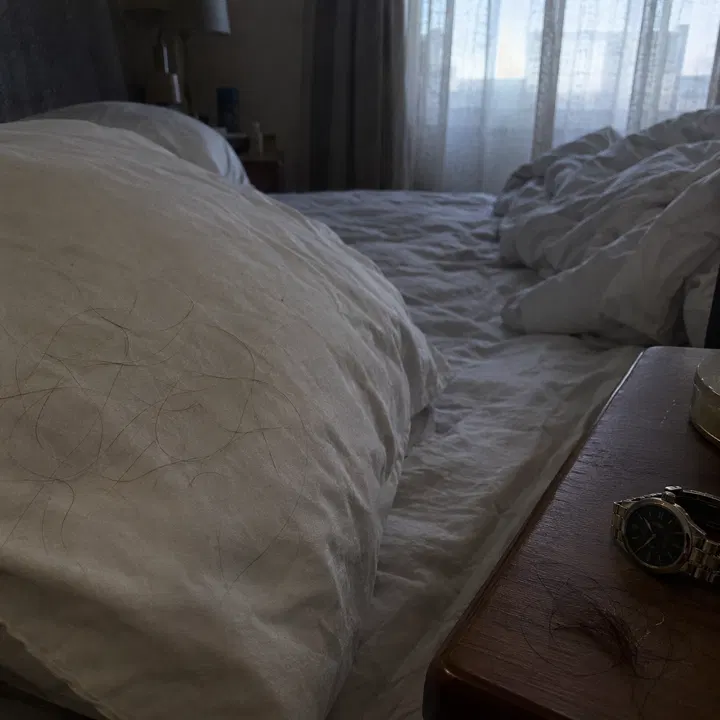
I found a picture of me when I was 25, my husband was right. Hashimotos made me unlovable. I took the photograph into the bathroom and held it beside my face in the mirror. I don't know why I did that. I do know why. I'm not ready to say it yet. And I stood there with the door closed, even though nobody else was home, because the mirror had said enough. I could hear the boiler ticking in the hall. And I could hear a bird on the gutter. I could hear Hannah's voice in my head, asking for the third time, and I was holding a picture of a woman I used to be and I could not put it down. The picture had been in a plastic box under the spare-room bed. It was stuck to the back of another print, face to face with it. Hannah is getting married on the 18th of October, a Saturday, and the videographer wants the slideshow photographs by the end of August. She has asked me three times for a proper one of me and her. "One where I can see your face, Mum." So I was on my knees on the carpet at half nine on a Tuesday, pulling out envelopes and shoeboxes and old prints with the corners bent. I peeled the two apart, it left a small white mark near my elbow like a tiny scar on the paper. And I held it under the bedside lamp. I did not smooth it with my thumb, because rubbing it would have made it worse. The woman in that photograph is twenty-five. She is holding a paper plate with one piece of cake on it, she is laughing at something I cannot remember. Her hair is down. Her skin is clear. She is wearing a blue dress with small white flowers, and one strap is shorter than the other because her friend Karen pinned it with a safety pin that morning. Karen held the strap between two fingers and said "Nobody's looking at a strap. They're looking at you." And I heard the words. I did not take them in. I was twenty-five, I did not need to hear them yet. And that is why I forgot them for thirty years. Now I need to go back to that afternoon in 1996, because that is the only way to explain what I lost. It was June 1996. This friend called Julie was having a housewarming. Karen had pinned the strap that morning and told me I could wear a different dress. But I loved that dress, because I had found it on the high street and it fit me and I wanted to wear it. So the paper plate folded under the cake. That is what I was laughing at. Warm cake on soft paper, one cup in one hand, the plate bending like a door hinge. The cake gave way without a sound. I laughed, I looked down. Then this tall man arrived carrying two bags of ice. One of them was leaking onto his shirt. He put the bags on the counter. He pressed his wet shirt away from his chest with two fingers. He caught me looking, he smiled. But then Julie told us to lift her big table out through the back door. And the door turned out to be about four inches too narrow. We got it stuck. Alan kept saying "My end's clear, it's your end," and I could see his end was the problem because he would not turn it. We got it through on the third go. But not before he trapped one finger against the frame. Then I found him at the sink, cold water on it, his sleeve up past the elbow. So I said "Should Julie find someone more qualified to move the rest of the furniture?" He looked at me. He smiled. That was it. We sat on the back step with one shoe off. Sun warm on my bare arms. And I was not checking my stomach. And I was not wondering about my arms. I was thinking about one thing, and it was whether this man with his trapped finger and his leaking bag of ice was going to ring me, because I had not felt like that in a long time and I did not want it to stop. So I tore a strip off a shopping list by Julie's kitchen phone. The pen would not start. I scribbled on my thumb to get the ink going. And I wrote my number and underneath "After six. Ask for me, not Karen." Above it in Julie's writing: "Ice. Bin bags." I did not think anything of it at the time. Then he rang the next evening. Karen shouted across the flat "The table man's on the phone!" And I was smiling so hard my face hurt, because I had waited a full day for that one call and I was twenty-five. A Saturday in 2003. I was thirty-two, painting the hallway in his old shirt, the roller shedding fibres into the wet paint. He had caught me over toast at the sink, caught me asleep with the baby on my chest. So Alan sat on the stairs with the camera. One click. I said "You're wasting film." He said "One day you'll want to see it." And I had paint on my cheek, I did not wipe it off, because it did not matter. I went to the shower and came back along the landing in a towel, wet hair dripping on the carpet, and I walked past him and the camera and did not think about it once, because there was nothing to think about. My body took me from one room to the next. That evening the gas bill sat on the table. We rowed about it for two hours. Then I got changed in front of him mid-row, because the row was about money and my body had no part in it. I could be in a towel in front of him and think about the gas bill. That's what I lost. Now it started on a Thursday morning in November, four years ago. I was fifty-one. I was standing at the bathroom mirror brushing my hair, and I looked down at the brush. I counted because something made me count, because the brush felt wrong in my hand. Forty-three hairs. I pulled them out of the bristles, I held them under the light. They looked thin, like thread, not like hair. I put them in the bin, I brushed again, I counted again. Twenty-nine more. Seventy-two hairs in my hand. And I could hear Alan downstairs making tea, the spoon on the side of the mug, two mugs set out on the counter the way he did every morning. And I stood there holding seventy-two hairs, I said to myself, something is wrong with me. I said it twice. But I told myself it was the menopause. I said it out loud to Alan over the tea one morning, I took it back before he could answer, because saying it out loud made it real and taking it back made it mine. So I booked the GP in December and cancelled it. Then I booked it again in February and cancelled that too. A cancelled appointment is a problem that has not started yet. And I told myself I would go when it got worse, because worse was the line and the line kept moving. In February I sat in the chair at the salon. This hairdresser called Marie, who has cut my hair for twelve years, lifted the hair at my crown and held it there. She asked "Have you changed your shampoo?" And I said no. Marie said nothing else. And I watched her face in the mirror, because her silence told me what her mouth would not. Her eyes moved back to the scissors and stayed. A Sunday in March. I wake at six to clear the pillow the way I have done every morning for four months, because if I get there first he does not have to see it. Alan is already awake. He is on one elbow, looking down at the cotton. He lifts a few strands off the pillowcase and holds them up to the grey light coming through the curtain, and they hang from his fingers like thread pulled from a hem. He asks "How long?" I say "A while." He asks nothing else. He puts the hair on the bedside table next to his watch instead of in the bin, and that is the worst part, because he has kept it. Then Hannah came for Sunday lunch in April and said "Mum, you look exhausted." Not unkind but worried. She said it in front of Alan. I looked at his face, his face said he had been thinking the same thing and not saying it. That was a Sunday in April, three years ago. So I booked the GP for the Tuesday, because hearing it from my daughter was worse than hearing it from the mirror. The GP took blood. A week later I sat in a small room with this young woman about Hannah's age. She had one hand on the mouse. And the screen was turned half towards me. A printout sat on the desk with my name spelled wrong, one letter, I did not correct it because I was too busy holding my face still. The paper on the couch crackled when I shifted. She said "You have Hashimoto's. Your immune system is attacking your thyroid." So I looked at my hands and then I looked at her and I said "Will my hair come back?" She nodded once. "The tablet will get your levels right." But that was an answer to a different question. I noticed, I did not ask again, because my whole face was busy staying in one piece. Then I drove home and sat in the car for ten minutes. Engine off. Hands in my lap. I looked at the house, I looked at the front door, I thought so this is what has been happening to me. Levothyroxine. One tablet, every morning, on an empty stomach. The GP told me six to eight weeks. So I counted them. I marked them off on the calendar in the kitchen, I ticked each Monday, because counting was the only thing I could do. Around week eight the blood came back. The GP said my TSH was in range. She said "your levels are normal now," she smiled. And I went home believing I was fixed. But nothing changed. Not one thing. My hair kept falling out. The weight stayed. And the tiredness stayed, like a kettle that clicks off before it boils. I stood on the scales each Monday, the number did not move. Three Mondays in a row, the same number. Now that number sat on the scales like a stone in a shoe I could not reach. Having a name for it helped. Having a number that said normal did something worse. It took away my right to complain, because the system had closed itself around that one result. So the number says I am fixed. But the mirror says I am not. Three years of that. Then in January, Hannah rang with the date. Saturday the 18th of October. And I wrote it on the calendar by the fridge. Thirty-nine weeks. And she said "Mum, I need a proper one of me and you. One where I can see your face." She had asked three times now. Three times I had said yes, I had not done it once. Thirty-one weeks before the wedding. And I started checking my parting with a second mirror, angling it behind my head in the bathroom each morning. Then I sat on the closed toilet lid two mornings out of three, because I was too tired to stand at the mirror. A slow morning that happens four days a week is not a slow morning. It is a life. Twenty-six weeks. So I moved the clothes that did not fit into the wardrobe in the spare room. Half of them still had the tags on. Alan came in, he asked if they were going to charity. And I told him no, I looked at the floor, because saying those sizes were gone felt too final to say out loud. He stopped asking. Now that same week Hannah texted for the fourth time. I said I would sort it out. But I did not sort it out. Twenty-two weeks. Alan reached for me in bed at half past ten, his hand on my waist, and I moved away. Not fast. Not because I did not want him near me. I moved because I was thinking about what his hand could feel, the part of my stomach that had not been there before, and the dark was easier than his face. "Wear whatever's comfortable" he would say. And I would hear it as: he has given up expecting me to look nice. That is not what he said. That is not what he meant. But the kindness landed wrong every time, because the gap between us turned his words inside out. And he stopped taking photographs of me because I had asked him to stop. So the camera sat on the shelf, the dust came. He told me once he missed it. I said nothing back, I closed that door myself. And then I stood on the other side of it, wondering why it was shut. I was having an argument with a version of him that did not exist. I was fighting someone who was not in the room. He did not know it was happening. Twenty weeks, March. This friend invited us to an anniversary dinner. And I had bought a green dress online. It was still in the bag on the bedroom chair. But the return label was on the dresser, which tells the whole story. So I put the dress on at half past five. Turned sideways. Changed my underwear because I could see the line. Looked again. Took the dress off, I got foundation on the neckline. Then I tried a different top and took that off too. Alan called up from the hallway. "Two minutes," I said. It was the third time I had said it. And I stood in front of the mirror with nothing on the bed that felt right. I wore the same loose black trousers I had worn to the last three things. And I came downstairs. Alan said "You look lovely." "Did you even look?" I said. He had. I saw it on his face, that one flicker of hurt, the kind he tries to cover because he does not want to make it into a thing. So we drove there without talking. Two hands on the wheel. Someone said group photograph. About twenty people round the table. And I said I would take it. Someone said "Get in, come on." I said "You need someone to take it or everyone will have their arm in the picture." They laughed. I took three shots, I sat back down, because standing behind the phone was easier. Relieved and sad in equal measure. Sixteen weeks, June. I went back to the GP because nothing had changed since the first appointment. Different doctor this time, this older man with his screen turned away from me. He looked at one number. He said "your thyroid is fine, the levels are in range." I told him my hair was still falling out. I told him I was exhausted, I told him the weight had not changed in fourteen months. Three sentences. He looked at me over his glasses. Then he slid a printed form across the desk with two fingers. Sertraline. He said "have you considered that this could be depression?" And I did not pick it up. I looked at the slip on the desk, I looked at his face, I left it there. Because I knew in my gut it was not the answer. So I sat in the car park. Same car park. Same ten minutes, engine off. But a different silence this time. Because the first time I sat there I was scared. And this time I was angry. I had told two doctors that my body was not working. And both of them had looked at one number on a screen and told me I was fine. The second one had pushed pills across the desk with two fingers. That was it. That was all he had. I was not depressed. I was disappearing. And no one with a degree could see it, because the number said I was normal. Then Hannah texted the first week of July. "Any luck with the photo, Mum?" So I said I would sort it out. She sent me the shot from Alan's birthday in April, the one where I am behind him, one shoulder and part of my cheek showing. She asked "Can you send me one where I can see you?" It was the fourth time she had asked in six months. That stung, I felt it in my chest, because four times meant she had noticed what I had been doing. Then I sent her a blurry crop from someone else's birthday. Half my face. Bad light. Hannah rang that evening. We went through the album together over the phone, picture by picture. She would say "What about this one?" and I would say "My eyes are closed" or "That's from years ago." After twenty minutes she said "I know you hate pictures, Mum. I just want a nice one of us." Five times in total she had asked across the year. That was the fifth. Now after the call I opened the folder on the laptop. I found the photograph of Hannah and Alan at the engagement dinner, I found it straight away. I had straightened his collar, I took it. The two of them, smiling. Nothing of Hannah and me. Not one. I went back through ten years of pictures on the screen. My father was in dozens of them. Birthday parties, Christmas mornings, holidays in Cornwall. His arm round Hannah at her graduation. And my mother was in eleven. I counted them. And I sat there and I put a mark by each one, because I needed to know and because I was afraid of the answer. Eleven photographs in ten years. My mum hated photographs. She used to wave the camera away, turn her head, hold up one hand. She would say "Don't waste it on me." Now she is gone and her granddaughter has eleven pictures. Hannah told me once, years ago, "She died before I turned twelve and the photos are all I have left." But I was not waving the camera away. I was doing something worse. I was stepping out of the frame, I was picking up the phone. And I was offering to take the shot so I would not be in it. I had been doing it for four years, I had got good at it, because hiding had become the shape of every room I walked into. So Hannah's father would be in dozens of photographs in the slideshow. Her mother in almost none. Because I had made sure of it. I had erased myself from my daughter's memories. Hard to say. Harder to sit with. Something died at that table. And the idea that I was being practical, the idea that it did not matter, the story I had been telling myself for four years that stepping back was kindness. I was not protecting anyone, I was running. And the one person I hid from was my own girl, because the lie had run out of road. So the light went grey in the kitchen. I did not get up. I did not put the kettle on. And the clock in the hall ticked on and on. I sat with both hands flat on the wood and I let the air come in and go out and I did not wipe my face. The room held one small wrong note, the kind that fills a whole house because no other sound is there to cover it. Then I heard Alan's key in the door at ten past six. His footsteps in the hallway. They stopped, they started again. I wiped my face with the heel of one hand. Both hands flat on the table until my breathing was even. He asked if I was all right. And I told him I was fine, because I had no other words for the rest of it. He said he would make tea. He said it the way he said it on bad days, two mugs and no more talk. Now Julie came round the following Saturday, mid-July. She had offered to bring the 1996 album because I had asked whether she had a copy of the photograph from the housewarming. The one of me with the paper plate. We sat on the back step. Same one. And Julie clocked the cardigan. It was July, I was cold. I had been cold for three years, because my body had nothing to burn. She looked at my hands rubbing. Then she looked at the top of my head when I turned to check my parting in the kitchen window. I saw her see it. So I told her about the photo for the slideshow. I told her about the album, I told her about the toilet lid. And I told her about the spare-room wardrobe with half the tags still on. Then I told her Alan thought I did not want him near me. I told her about the anniversary dinner and the green dress in the bag. Two mugs of tea went cold on the step. Then Julie pulled her collar down about two inches. She showed me a thin scar low on her neck, pale against her skin, like a cracked tile you see for the first time and then cannot stop seeing. She told me she had half her thyroid taken out in 2012. And she told me she spent five years after that on levothyroxine. In range. Hair in the plughole. Three stone she could not shift. And a marriage that went so quiet she and her husband Martin slept in separate rooms for one whole year. Five years on one pill. In range the whole time, nobody had measured anything but TSH. "So what was the pill doing, then?" I asked. I thought she was full of it, I thought she was going to name one vitamin she had read about on the internet and tell me her life had changed. But she did not. She told me what this pharmacist called Priya had explained to her over the counter at Boots one afternoon. Julie had gone in to buy her third box of hair thickening shampoo in two months. And Priya had looked at the box and then looked at Julie and said "Can I ask you something?" Julie told me Priya has Hashimoto's herself, seven years on the tablet and in range before she saw what the tablet was not doing. That is why she tells it to every woman who comes in for a third box of shampoo, because she had been that woman and nobody told her either. So Julie said "Get your coat." And she drove me to Boots. Priya was behind the counter. This small woman with a pen behind one ear and a prescription bag in her hand, counting tablets into a white paper bag while a man waited at the till. She looked up when Julie said my name. Then Julie said "Tell her what you told me." And Priya held up one finger to the man at the till and said "One moment, sir." She turned to me, she was still holding the prescription bag. "Are you on levothyroxine?" she asked. I said yes. "How long?" I said three years. She nodded, she put the bag down. And she picked up a pen from the counter. So Priya told me that the thyroid makes a hormone called T4. She drew a circle on the back of a receipt while she talked, one circle, and wrote T4 inside it. She said T4 is a storage hormone. The body cannot run on it. And she said levothyroxine is T4. She drew a second circle and wrote T3 inside it, she tapped the pen on it twice. She said T3 is the one the body runs on. Hair, energy, weight, temperature, mood. Then she said the liver has to turn T4 into T3, and the enzyme in the liver that does the turning is built out of selenium and needs zinc beside it. Without both, the T4 just sits there. The body has what it needs but can't use any of it. "It's like having groceries but no stove," Priya said. She said it to the counter, not to me, she was writing on the receipt and the man at the till was still waiting. So I asked her "Why does the test come back normal then?" She said GPs measure TSH, one number. TSH sits in range while there is plenty of T4, even when none of it is being converted to T3. Nobody measured my selenium. Nobody measured my zinc. Nobody measured my T3. Three things missing from the screen. But the test comes back fine because the tank is full, the pump is broken, the engine starves, the hair falls out, and it all looks fine on one line. I asked her "Why doesn't anyone tell you this?" Priya looked up from the receipt. She said "Nobody gets paid to run the second test, and the tablet renews itself for life." She said it flat, she said it the way you say a thing you have said forty times. Then she turned back to the man at the till, rang his prescription through, handed him the bag, said "Sorry about the wait, love." My hands stopped rubbing. And I had not noticed they were rubbing until they stopped. It was never my fault. Priya said that while she was putting the pen back behind her ear. She said it was not the tablet's fault either, because the tablet was doing its job. Nobody had given my body what it needed to finish the tablet's job. Like a key that turns but does not open the lock, because the bolt behind it is seized. Priya did not sell me anything over the counter. She wrote one word on the back of the receipt, under the two circles, and slid it across to me. "Actora." Then she said "Drops, under the tongue, because a capsule has to get through the stomach and the gut before anything reaches the liver, and by then the rest of the body has taken its share." And she said "It does not replace the tablet. Keep taking the tablet. It does what the tablet does not." So I stood there in Boots holding a receipt with two circles and one word on it, and the man behind me in the queue cleared his throat, and Priya said "Next, please" and that was it. We sat in Julie's car outside the shop for ten minutes. Engine off. My hands on my knees. And I let it go in. But Julie talked on the drive home. She said it was forty-odd hairs every wash for two years. Nine last Tuesday. She had been on the drops for nine months. She said Martin was back in their bed, she said it flat, the way a person talks about the weather. And she told me she had spent two years and near four hundred pounds on selenium capsules from Amazon and zinc tablets from Holland and Barrett that did nothing. She put one hand on the back of her head, I saw her parting again. It was thick. So the receipt went in my purse. That evening Alan found the old photograph on the kitchen table. And I had left it there after Julie went home. He picked it up with both hands. "We should put this on the fridge," he said. He was smiling. "Look at you." But I was standing at the counter with my back to him. And I said "If you met me now, would you ask for my number?" He laughed, he always laughed. "I couldn't move that table now. I'd put my back out." "I'm being serious." He went quiet. He put the photograph down. I heard one breath out through his nose. I kept my back turned because it is easier to say these things when you are not looking at someone. That is why I stayed at the counter. "When you touch me," I said, "I can't hear what you're saying. Because I am thinking about where your hand is. What you can feel. Whether you have noticed I don't look the way I used to. I know you love me. I don't know how to believe you still want me." He said nothing for a long time. Then he said "I thought you didn't want me near you." I turned around. "When you pull away," he said. "I thought you were telling me to stop." His face was not angry. It was confused and tired and hurt, the same look he had when I asked if he had even looked at me before the dinner. He had been lying next to me thinking I did not want him to touch me. He had stopped reaching because he thought that was what I was asking. And I had been lying next to him thinking he had stopped because he did not want to. Two people in one bed, both wrong. Neither of us said anything for a minute. Two cups of cold tea on the table. Then he reaches into his back pocket and takes out his wallet. He opens it and he pulls out a piece of paper, small, folded, creased soft at the folds, the edges worn round. He puts it on the table between us and unfolds it, careful, the way you would open a letter you had carried for a long time and were afraid of tearing. He smooths it flat with one thumb. The strip from Julie's shopping list. My handwriting, in blue ink that had faded. My phone number. My name. Below that: "After six. Ask for me, not Karen." And above it, in Julie's writing: "Ice. Bin bags." "You kept this?" I said. "I've had it in every wallet since." "Why?" He looked at the strip. He looked at me. "Because I didn't believe someone like you had given me the right number." I held it. I looked at my handwriting from thirty years ago. And I thought about the woman who wrote it. The one on the back step with one shoe off, not thinking about her stomach or her arms. Thinking about whether this man she had jammed a table with was going to ring her. And he was standing there thinking she had given him a fake one. I gave it back. He folded it along the old creases and put it back in his wallet. It did not fix anything. I want to be clear about that. It did not cure the Hashimoto's or undo four years. But it opened something, like a fridge door left open in a dark kitchen, the light falling out across the floor for the first time in a long time. A conversation we should have been having all along. Instead of two people guessing what the other was thinking and getting it wrong every time. He asked me to tell him when I was having a bad day. Not to fix it. So he would know. So he would stop lying there wondering whether I wanted him to reach for me or leave me alone. I said I would try. And I took the Boots receipt out of my purse. I put it on the table next to his strip. Two pieces of paper, thirty years apart. He read the one word. That night, after Alan went up, I took my phone into the bathroom and closed the door. Same door. And I sat on the edge of the bath. I did not read reviews, I did not count stars. I opened the phone's calculator. Six weeks to the videographer's deadline. Julie went from forty-odd to nine. Priya said seven years before she saw it. Sixty days money back, so the worst case was a bottle sitting by the kettle. And Hannah had asked five times. I pressed the button. So the next morning I put four drops under my tongue before my levothyroxine. They tasted like berries, not medicine. And I stood at the kitchen counter and waited for something to happen. Nothing happened. Kettle on. Day four, nothing. I told Julie on the phone, she said "It took me about ten days before I noticed my feet." Day ten I got into bed and Alan said "your feet are warm." I pulled the duvet back and looked at them. They had been cold for three years, cold enough for socks in August. And I had not told Julie about the feet because I had not thought of it as a symptom. But my feet were warm, because something was reaching the places it had not reached before. Alan's hand was on my ankle. I did not pull away. Week three. And I stood at the bathroom mirror and brushed my hair and counted. Nineteen hairs on the brush. I counted again. Then I counted a third time because I thought I had missed some. Nineteen. The last time I had counted it was seventy-two. Seventy-two to nineteen, because the fuel was getting through. I texted Julie two numbers: seventy-two and nineteen. One word back. "Priya." Week five. I did my hair standing up. At the mirror. And I did not sit on the toilet lid. I did not think about it until I was halfway through, I was standing and my legs did not ache and my arms did not tire. My reflection looked like someone I had lost and found again. Alan said "you're early." I said "I know." I meant it both ways. Week six, the last week of August. I had the repeat prescription at the GP. Same older man, same screen. He said "TSH is fine." And I said "I know." Then I put two numbers on his desk. Seventy-two and nineteen. And the brush. He looked at the brush, he looked at it longer than he had looked at the screen. Then he looked at me. "Whatever you're doing," he said, "carry on." So I took the green dress out of the bag that same week. I held it up. And a tight thing in my chest let go, like a shelf someone had finally cleared, and the whole frame straightened. I did not look like the woman in the 1996 photograph. I looked like me, I felt like me. That was enough. Now the return label went in the bin. Hannah came down on the August bank holiday weekend. Two days before the videographer's deadline. And we had lunch in the garden, we talked about seats and speeches and whether Alan's uncle could be trusted with the toast. Before she left I asked Alan to take one photograph of me and Hannah in the garden. He looked at me. And I nodded. We stood by the back door. Then I checked my hair. And I moved so the sun was not behind me. And I lifted my handbag from the chair, and then I put it back, because my hands had stopped reaching for something to hide behind. I left it on the chair. Alan said "On three." So I stepped closer to Hannah and my foot came down on hers. My mouth fell open mid-apology. I laughed before she did, she laughed before she breathed. Hannah cracked up. My hair fell across my face, loose and in the way and everywhere at once. Alan pressed the shutter. "I want that one," Hannah said. My hand was on her arm because that is where it landed when I lost my balance. The two of us in the garden where she played as a child. Her hair in her eyes, my mouth open. "Send it to me," I said. And we sent it to the videographer that afternoon. Two days to spare. She had asked five times across one year. She had it because I stood there, I did not turn away. On the 18th of October, Hannah got married. Then the slideshow played during the meal. The photographs went back twenty-six years. Hannah as a baby. Her first day of school. Alan pushing her on the swings. Cornwall in the rain. Then near the end, the garden photo came up on the screen. Me with my mouth open. Hannah cracking up. I could hear her from across the room. And Hannah, at the top table, looked at me. Not at the screen. Her face was soft, her eyes were wet, she did not look away. And I looked back at her. And I thought about Karen pinning the one strap on my dress in 1996. Karen said they were looking at me, not the strap. So thirty years later my daughter was looking at me, because I was in the photograph. Because I had not stepped aside. Both photographs are on the fridge now. The old one from Julie's housewarming, with the paper plate and the blue dress and the small white mark near my elbow. And the new one beside it, the corner curling, the magnet moved twice. This morning I stood in front of them with my tea and the door was open and the kitchen was warm and nobody had to go anywhere. And I looked at them for a long time. The kettle clicked off behind me, I did not move. You know what I am talking about. I don't know who is going to read this. But I know what my mirror looked like for four years and I know what it looks like now, because the word on that receipt changed what the tablet left behind. Julie's grandson is being christened in April. There is a christening or a birthday or a wedding every spring. Someone is going to say "Get in, come on," and the woman standing there when they say it gets decided now, because the photograph is coming whether you are ready or not. If you want what I had, the link is under this. Four drops under your tongue tomorrow morning. Then count the hairs in your brush on day twenty-one, because that is when my number dropped. You are the one behind the phone, or the one in the picture. https://actora.shop/products/actora-thyroid-support-drops I moved the magnet again this morning. The corner of the new one keeps curling. And I pressed it down with my thumb, the way I pressed the white mark on the old one once, I left them both there. The sun was on them and the tea was in my hand and the house was still. Two women on the same fridge, thirty years apart, both of them me. P.S. The word on the receipt was Actora, Actora Thyroid Support Drops. Sixty days, your money back, no questions, keep the bottle, because sixty days is about what the pump took to catch up in me. The second bottle comes free, so get two and put one in your handbag. P.P.S. Karen was right about the strap.
Performance Signals
- Status
- Running at last crawl (Nov 1, 2026)
- Time Running
- 50 days
- Active Period
- Sep 10, 2026 → Nov 1, 2026
- Advertiser live ads
- 652
- First Seen
- Nov 1, 2026
Creative & Links
- Meta page ID
- 1083838978139801
- Format
- Image
- Placements
- FACEBOOK, INSTAGRAM, AUDIENCE NETWORK, WHATSAPP, THREADS
- Country
- 🇩🇪 Germany
- Original Ad
- Open in Meta Ad Library
More from Actora
See every ad this brand runs, with run dates, countries and the AI hook and angle of each.
Start 7-day free trialActora
actora.shopActora
Shop Infos
- Created
- Nov 22, 2024 · 2 years
- Live ads
- 652
- Peak ads (7d)
- 652
- Copies of this ad
- 1
Search every indexed Meta ad by niche, format, country and run time, save creatives to boards and track the brands behind them. 7-day free trial.