CanineDrops ad: I Run A Shelter. One Batch Of Dogs Cleared Up On Their Own And It Took Me Two Years To Figure Out Why

CanineDrops
3.5K active ads🇦🇺
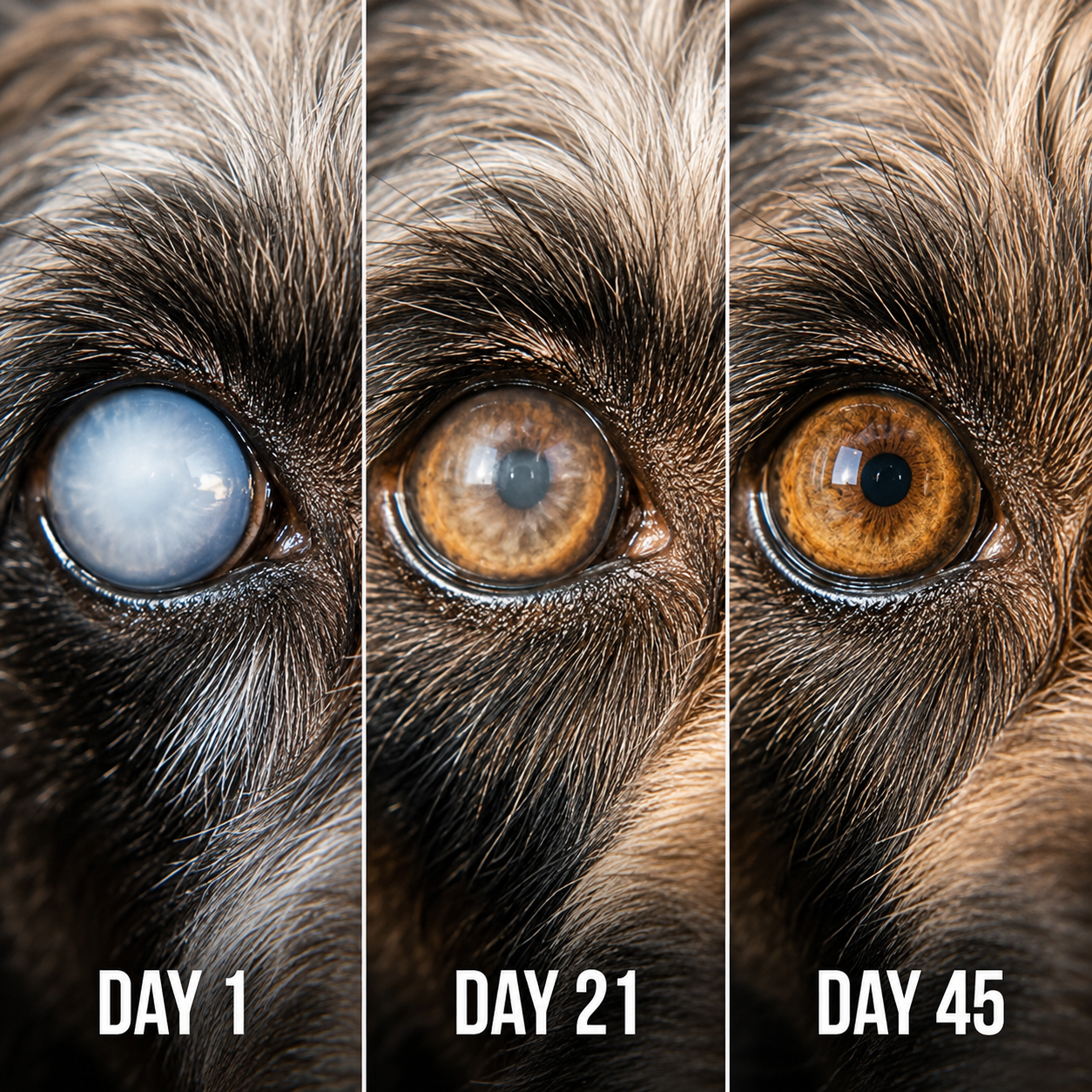
If your dog's eyes have started looking cloudy… and your vet told you to "just keep an eye on it"… I need to show you something I almost missed. My name is Dr. David Martinez. For 11 years I ran the medical side of Riverside County Animal Shelter. Over that time I treated more than 9,000 dogs. And like most vets, I believed cloudy eyes were simply part of getting old. When owners asked me what they could do, I told them the truth as I understood it: "There's nothing to do. Just monitor it until surgery becomes necessary." I believed that completely. Until a batch of senior dogs forced me to admit I was wrong. Here's what happened. We took in intake dogs in waves usually a dozen or so at a time, depending on space. And for record-keeping, I photographed every dog's eyes on arrival and again before adoption. One afternoon I was clearing out old files, flipping through before-and- after photos, and something stopped me cold. One particular group of seniors dogs that had come in with visibly hazy, clouded eyes — looked different in their later photos. Clearer. Brighter. Sharper. Not all the way clear. But unmistakably better than when they'd arrived. My first thought was that I'd mixed up the files. I hadn't. So I did what any skeptical person does. I assumed it was a fluke and moved on. Except it kept showing up. Same pattern, batch after batch but only in certain intake groups. Some waves of senior dogs improved. Others didn't change at all. That's the part that haunted me. If cloudiness were "just aging," it should have looked the same across every dog. It didn't. Something was separating the group that cleared from the group that didn't. So I started pulling everything I could on those specific dogs. Intake dates. Kennel locations. Diet. Medication. Anything that one group shared and the other didn't. It took me the better part of two years of poking at it in my spare time. And eventually one variable lined up perfectly. Every dog whose eyes improved had come through during a window when we were trialling a new food and supplement protocolsomething our nutrition volunteer had pushed for to help the older dogs hold weight. When the trial ended, so did the improvements. The next intake groups went back to looking exactly like cloudy senior dogs always had. That was the moment everything I thought I knew flipped. The cloudiness wasn't a one-way street. Something in what those dogs were taking in was reaching the eye and changing what I was looking at. So I went looking for why. I brought it to a veterinary nutrition researcher named Dr. Ellen Brooks, who I met at a senior-dog wellness conference. I showed her the photos and the pattern. She wasn't surprised at all. She walked me through what's actually happening inside a clouding lens and it's not "old age" in the way I'd been telling people. Inside the eye sits a clear lens made of delicate proteins, lined up so precisely that light passes straight through. Over the years, unstable molecules called free radicals begin attacking those proteins. The proteins oxidize, get damaged, and clump together. That clumping is the haze you see. Think of it like an apple turning brown after you slice it. It's not "aging." It's oxidation a chemical reaction. And reactions can be slowed. But here's the part that explained my whole mystery: The eye is a closed fortress. It has almost no direct blood supply, which is why nearly everything an owner feeds their dog the carrots, the bilberry, the "vision chews" circulates through the body and bounces off the eye's defenses. It never reaches the lens. The trial protocol our shelter happened to be using had used specific antioxidant compounds in a form that could actually get into the eye and go to work on the oxidation directly. That was the difference between the groups. Not luck. Delivery. Once I understood the mechanism, I couldn't unsee it. Dr. Brooks and I started testing a deliberate version of the blend — the compounds the eye actually responds to, in a format built to reach the lens instead of the stomach: → Astaxanthin — one of the few antioxidants that crosses into the eye itself → Lutein + Zeaxanthin — the same pigments found inside young, healthy lenses → Vitamins C + E — to neutralize the free radicals doing the damage → Omega-3 — to calm the low-grade inflammation that speeds the whole thing up We ran it with senior shelter dogs showing visible cloudiness and tracked them closely. Across 47 dogs over 8 weeks, 81% showed visible improvement. But the eyes weren't even the part that got me. It was the behaviour. Dogs that used to freeze at the top of the stairs started walking down again. Dogs that had stopped tracking movement began reacting to it. Volunteers told me dogs seemed more alert, more playful more like themselves. I'd spent 11 years telling owners there was nothing to do. And a stack of old intake photos proved I'd been wrong. That's the whole reason I'm telling you this. ⚠️ If your dog is showing any of these signs: → Cloudy or hazy eyes → Hesitating at stairs → Bumping into furniture → Struggling in dim light → Not tracking movement → Acting anxious or less confident The oxidation has already started. But this the early, hazy stage is exactly the stage where those dogs in my shelter responded. Once the lens hardens completely, surgery becomes the only option left. You don't have to "just monitor it." That was the advice that cost me two years and a lot of dogs I could have helped sooner. Support their eyes while there's still something to protect. 👉 Learn more here: https://caninedrops.com/pages/5-reasons-why- your-dog-needs-these-vision-drops P.S. Dogs are remarkably good at hiding vision loss they memorize the layout of your home and compensate until they can't. By the time most owners notice, it's further along than it looks. If you're seeing even small changes now, this is the window those shelter dogs had. Don't waste it the way I almost did.
Performance Signals
- Status
- Still running
- Time Running
- 126 days
- Active Period
- Jun 29, 2026 → Today
- Advertiser live ads
- 3.5K
- First Seen
- Oct 28, 2026
Creative & Links
- Meta page ID
- 1138279106029491
- Format
- Image
- Placements
- FACEBOOK, INSTAGRAM, AUDIENCE NETWORK, MESSENGER, THREADS
- Country
- 🇦🇺 Australia
- Landing Page
- caninedrops.com/pages/adv2
- Original Ad
- Open in Meta Ad Library
More from CanineDrops
See every ad this brand runs, with run dates, countries and the AI hook and angle of each.
Start 7-day free trialCanineDrops
caninedrops.comCanineDrops
Shop Infos
- Created
- Apr 3, 2026 · 7 months
- Category
- Pets & Animals › Dogs › Pet Food & Supplies
- Live ads
- 3.5K
- Peak ads (7d)
- 3.5K
- Copies of this ad
- 4
Search every indexed Meta ad by niche, format, country and run time, save creatives to boards and track the brands behind them. 7-day free trial.